
Lieferung heute & morgen

Qualitätsgarantie

Willkommens-Angebote freischalten: KOSTENLOSE Lieferung | Bis zu 80 % RABATT | Kostenlose 30-Tage-JoyPlus-Testphase
App herunterladen
Family board games should bring different age groups together, have easy-to-understand rules and fit the time you have available. In practice, though, it’s easy to end up with the wrong game: one may be too complicated for younger children, a card game may be too short for a large group, or a board game may need more space and time than you expected.
This buying guide explains which details to check before buying board games, card games and other games for the family. You’ll also find recommendations to suit different needs, whether you’re planning a family games night, a birthday party or a get-together with a larger group.
“Age 4+” doesn’t automatically mean a child will understand the game without help. With younger children, check whether the rules need to be read aloud, turns explained or small pieces supervised. A game for ages 8+ or 10+ may also be unsuitable for a mixed-age family group if it involves a lot of reading, counting or tactical planning.
So, check:
A game for two to four players won’t go far at a family gathering with eight guests. On the other hand, a game designed for a large group may feel less lively with only a few players. Choose a game that suits the size of your usual games-night group, not just the occasional get-together.
A complex board game can take up a lot of table space and need a lengthy explanation. For a quick, spontaneous game, a compact card game or one with a short playing time is often more practical. Also check whether you’ll need batteries, a smartphone or an app.
For games for children aged 4 and over, safety warnings are particularly important. Small parts may pose a choking hazard and should be kept out of reach of children under three. Check the age recommendation on the packaging and read the manufacturer’s guidance.
Electronic games may also require you to check the battery compartment, battery type and, where relevant, how to dispose of used batteries. Traditional games often include components made from card, paper, plastic or metal. Liquids and high humidity can damage cards and game boards.
First, work out which type of game you’re looking for:
As well as the playing time, check the size of the packaging and game components. A compact card game is easier to store and take with you. Music games may require a smartphone, an internet connection or a streaming service. Remember to check these requirements before ordering.
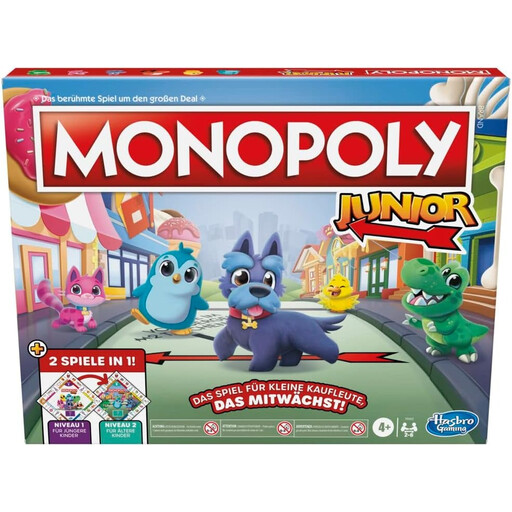
Why it suits this profile: Designed for 2 to 6 players aged 4 and over, this game features a double-sided board with two levels of rules for younger and older children.
The two difficulty levels make it easier to match the rules to the players’ ages. Small parts should still be kept out of reach of children under three.
Double-sided board, German edition, no batteries required and suitable for 2 to 6 players.

Why it suits this profile: This co-operative board game for 1 to 4 players aged 6 and over combines a rotating game board, event cards and shared decision-making.
The co-operative format takes the pressure off direct competition. Check the age recommendation and warning about small parts before you buy.
Shared goal, rotating game mechanism, cardboard and plastic components, and no batteries required.
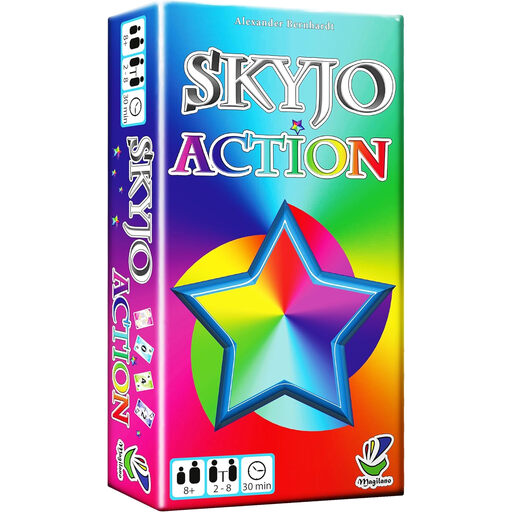
Why it suits this profile: This compact card game is suitable for 2 to 8 players aged 8 and over. It’s easy to take along to games nights, on trips or when visiting friends and family.
Its compact size makes it less likely you’ll buy a game that’s too big for your table. Store the cards in their original packaging and keep them dry.
For 2 to 8 players, compact deck of cards, no batteries required and designed for repeat play.
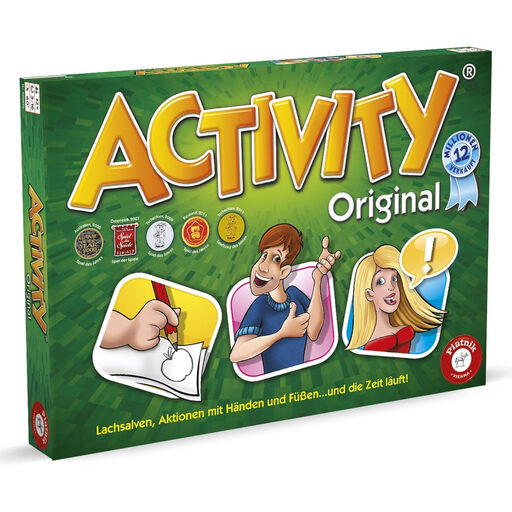
Why it suits this profile: Designed for 3 to 16 players aged 12 and over, this party game combines drawing, explaining and acting things out.
It’s clearly designed for larger groups. Before buying, consider the players’ ages, how noisy the game may get and how much space you’ll need for teams and activities.
For up to 16 players, 2,640 terms according to the product information, and three different ways to act things out.
We’ve put together a complete, regularly updated list of products that meet these strict selection criteria and fully comply with the safety regulations in force in the EU.
Look for games with clear rules, a manageable playing time and an age recommendation that’s right for the youngest player. Co-operative games can help bring together players with different levels of experience. Card games with simple basic rules are often quicker to explain than complex strategy games.
It depends on how often you play. A practical collection to start with might include a quick card game, a board game for two to six players and a game for larger groups. If you play regularly, you could also add a co-operative game or a themed party game.
Compare the age recommendation, player count, playing time, language, materials, safety warnings and what’s included. Also check whether the game requires batteries, an app or a smartphone. If you have young children, pay particular attention to safety information and how to store small parts.