
Lieferung heute & morgen

Qualitätsgarantie

Willkommens-Angebote freischalten: KOSTENLOSE Lieferung | Bis zu 80 % RABATT | Kostenlose 30-Tage-JoyPlus-Testphase
App herunterladen
Family board games bring generations together around the table. In practice, though, not every game suits every group. Rules that are too complex can overwhelm younger children, a two-player game won’t work for a family get-together, and small parts can pose a safety risk for children under three.
So if you’re looking to buy family games, board games for children and adults, or a games collection, don’t focus only on familiar names and eye-catching packaging. Three common buying mistakes are particularly likely to lead to the wrong choice:
The age recommendation is the manufacturer’s guidance on who the game is suitable for; it doesn’t replace adult supervision. If a game contains small counters, dice or cards, check the warnings on the product page and packaging.
For families with younger children, games for ages 3+ may be a good option. Games for older children, such as games for ages 6+ or games for ages 8+, may involve more rules and tactical decisions. A 1,000-piece jigsaw puzzle with a recommended age of 12+ is more likely to appeal to teenagers and adults.
Before you buy, think about how many people will usually be playing. Some dice and card games work particularly well with two players, while party games are designed for larger groups.
The length of the game matters, too. For a short game night, rounds of around 15 to 30 minutes are often more practical than a game that takes several hours.
Checking the dimensions, materials and components included can help you avoid disappointment. For example, a game board measuring 47.5 × 28 cm needs more table space than a compact card game in a small box.
For games collections, check that all the accessories you need are included. These might include dice cups, playing pieces, counters, cards or a score pad. For games with lots of small parts, a resealable storage solution is also useful. It helps keep everything together, so the components are ready for your next game night.
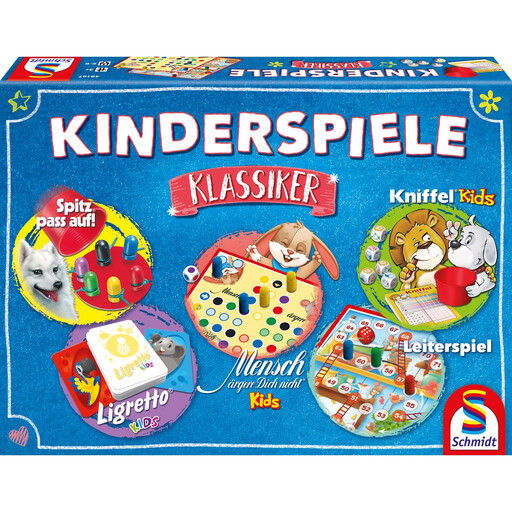
Why this product suits this profile: According to the product information, this collection is suitable for children aged 3+ and includes five well-known children’s games. It’s a good choice for families looking for several simple games in one box.
The age recommendation and specific contents are clearly stated, so you know you’re getting classic children’s games with short, easy-to-understand rules.
Five classic games, no batteries required, measures 37,5 × 27,5 × 5,7 cm.
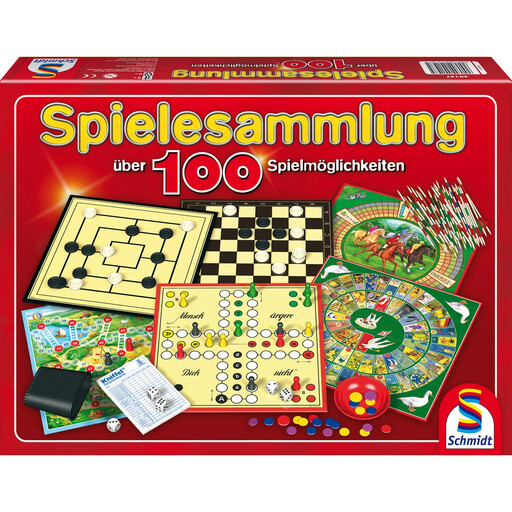
Why this product suits this profile: This collection offers 100 ways to play and is suitable for ages 6+. It’s a good fit for households looking to cater for different tastes, from Ludo and Yahtzee to pick-up sticks.
The collection lists the classic games included and gives a specific age recommendation, rather than making vague claims about versatility.
100 games, including board, card and dice games; no batteries required.
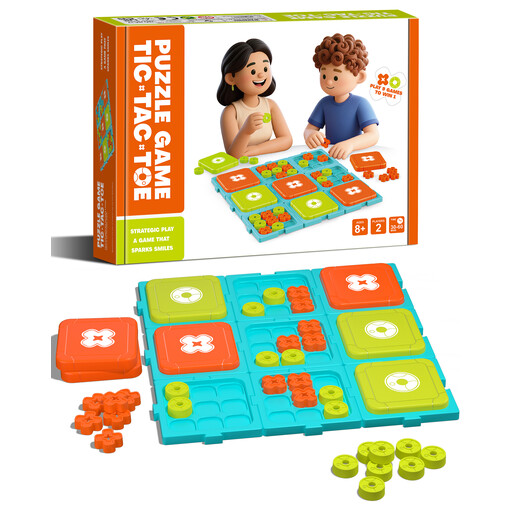
Why this product suits this profile: Designed for two players aged 8+, this game puts a new spin on Tic-Tac-Toe with nine interconnected playing grids. It’s ideal for quick duels and tactical game nights.
The recommended number of players, age guidance and game layout are all clearly stated. According to the product description, its compact format makes it easy to take with you.
Nine small playing grids, 41 mini X pieces, 40 mini O pieces and five large playing pieces; no batteries required.
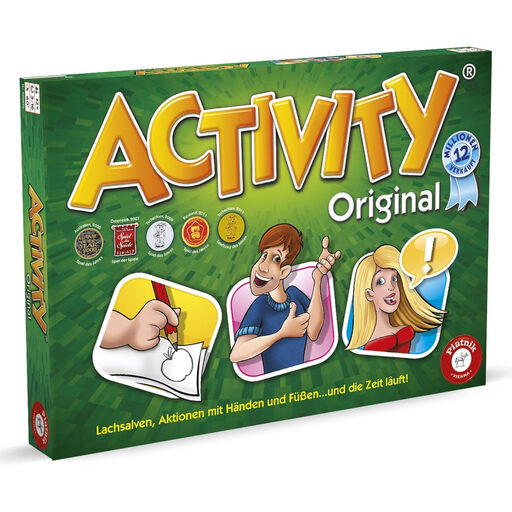
Why this product suits this profile: According to the product information, Activity Original is designed for three to 16 players aged 12+. Drawing, acting and explaining make it a good choice for larger game nights and parties.
The maximum number of players and age recommendation are clearly stated, so you can check in advance whether the game is right for your group.
2,640 words, three ways to play and suitable for up to 16 players.
We’ve put together a complete, regularly updated list of products that meet these strict selection criteria and fully comply with the safety regulations in force in the EU.
Look for games with simple gameplay, large, easy-to-handle components and a clear age recommendation of 3+. Adults should check the warnings and keep small parts out of reach of younger siblings.
There’s no set number. For many households, a combination of a quick card game, a dice game, a two-player strategy game and a group game is plenty. If you regularly play with people of different ages, you can add individual games for ages 8+ or 12+ to a collection aimed at ages 3+ or 6+.
Store games in a dry place, away from direct sunlight, and lay them flat or stack them securely upright where possible. Cards and small playing pieces are easier to keep organised in separate bags or compartments. Before putting everything away, it’s worth checking that all the components are there so you can spot anything missing straight away.