
Lieferung heute & morgen

Qualitätsgarantie

Willkommens-Angebote freischalten: KOSTENLOSE Lieferung | Bis zu 80 % RABATT | Kostenlose 30-Tage-JoyPlus-Testphase
App herunterladen
Family board games should bring different age groups together, offer easy-to-understand rules and be enjoyable to play time and again. In practice, though, choosing the right game can quickly lead to disappointment: the rules are too complicated, the stated number of players doesn’t suit your group, or the components aren’t sturdy enough for regular use.
This guide explains what families, grandparents and groups of friends should look for when buying a game. Our selection ranges from cooperative board games and family card games to travel games, strategy games and party games for adults.
‘Ages 6+’ or ‘ages 8+’ isn’t just a marketing category. It gives you an idea of the level of rule comprehension and concentration required, as well as whether the game may contain small parts. A game rated ages 8+ may not be suitable for a younger child, even if they’re a confident reader, if it involves several stages and tactical decisions.
Also check the safety labelling. Games containing small parts must be kept away from children under 3, as they could pose a choking hazard.
A player count of ‘2 to 10’ sounds flexible. But when deciding what to buy, it’s important to check whether the game works just as well with two players as it does with a larger group. Some games only really come into their own with four or more players. If you have several children, also check whether everyone can play at the same time or whether there are long waits between turns.
Learning games for children can involve counting, concentration, logical thinking or communication. But that doesn’t automatically mean a particular game guarantees educational benefits. It’s more useful to look for verifiable details such as the number of challenges, game mechanics, age rating and whether it’s a solo or group game.
Before you buy, check at least the following:
For families with children aged 6 and over, games with clear rules, visible objectives and straightforward decisions are often a good choice. Games for ages 8 and over can involve more strategy and planning.
In a cooperative board game, players work together to complete a challenge or reach a shared goal. This can be a good option if competition leads to arguments, or if older and younger children are playing together. Classic strategy games such as chess, on the other hand, pit two players against each other and call for long-term planning.
Family card games are usually easy to store and quick to set up. A travel game should also be packed securely and take up as little space as possible.
Check whether the game includes cards, cardboard pieces, plastic figures or a game board. If it’s going to be played often, clear details about the contents and care are useful. For games with digital features, check whether you’ll need a smartphone, an app, a Spotify account or an internet connection.
Power requirements may also matter: a game that doesn’t need batteries is easier to take on the go. If it includes a scanner or electronic accessory, check which batteries it needs and whether they’re included.
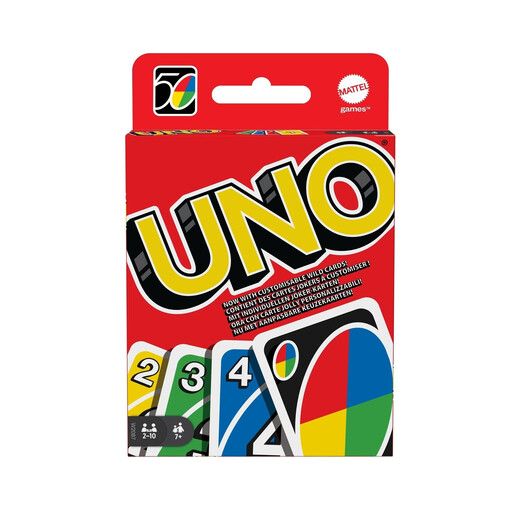
Why this product suits this group: This card game is designed for 2 to 10 players aged 7 and over, with no set-up or batteries required. That makes it a great choice for impromptu family games and as a gift for families.
The player count and age recommendation are clearly stated. The rules are based on colours, numbers and action cards, with no additional app required.
112 cards, a compact size and room for 2 to 10 players.

Why this product suits this group: This cooperative board game is for children aged 6 and over and can be played by 1 to 4 people. The spinning board, event cards and animal tokens keep every game different.
The shared goal helps reduce direct competition. The age recommendation and warning about small parts make it easier to choose the right game and supervise play appropriately.
Cooperative play, a spinning board and no batteries required.
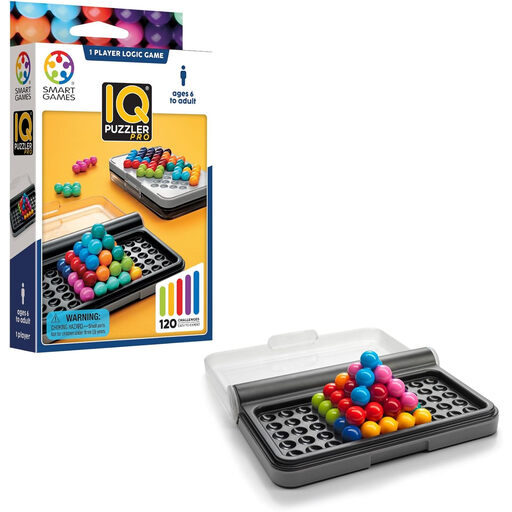
Why this product suits this group: This solo game is designed for children aged 6 and over and includes 120 challenges across three game modes. Its compact size makes it ideal for car and train journeys or for keeping you occupied while you wait.
The set number of challenges and solo format make it easy to plan when and how to play. There’s no need for a group, and no batteries are required.
120 challenges, 2D and 3D puzzles and a compact size.

Why this product suits this group: This music game is designed for 2 to 10 players aged 16 and over. The cards are played using an app and Spotify, making it a good choice for game nights with adults and older teenagers.
The technical requirements are clear: you’ll need a smartphone, an app, an internet connection and a Spotify account. Check that you have these before buying.
More than 300 music tracks and room for up to 10 players.
We’ve put together a complete, regularly updated list of products that meet these strict selection criteria and fully comply with the safety regulations in force in the EU.
Depending on the occasion, these categories may also be worth considering:
Look for games with short rules, straightforward gameplay and a clear age rating. Cooperative board games can make it easier for everyone to play together. Always check the safety labelling if the game contains small parts. For a child playing alone, a compact logic game with several challenges can be a good option.
How long a game lasts depends on its materials, how it’s stored and how often it’s played. Store cards and cardboard pieces somewhere dry and clean, away from direct sunlight. To keep all the components together, put figures, tokens and cards back in the original packaging after every game.
Many board and card games have no ongoing costs. A music game, however, may require a smartphone, internet access and a Spotify account. Also check whether batteries are included or need to be bought separately. This will help you get a realistic idea of any extra costs before you buy.