
Lieferung heute & morgen

Qualitätsgarantie

Willkommens-Angebote freischalten: KOSTENLOSE Lieferung | Bis zu 80 % RABATT | Kostenlose 30-Tage-JoyPlus-Testphase
App herunterladen
A good family game shouldn't end up gathering dust on the shelf after just one round. Yet product images, well-known names and generic promises often lead to disappointing purchases. What really matters isn't flashy packaging but age recommendation, number of players, playing time and game mechanics.
This buying guide helps families, grandparents and groups of friends compare board games for the whole family objectively and choose the right game for any occasion.
A game for two to six people doesn't automatically suit every group. With some board games, the experience changes significantly when only two people play. Other card games work better with more players because there's more interaction.
So check before you buy:
"Age 6+" doesn't just indicate the expected difficulty. The rating also takes into account small parts, rule comprehension and the attention span required. For games with small pieces, the general rule is: heed the warnings on the packaging and keep away from children under three years old, if such a warning is present.
A game for children aged 4 and up should also have short rules, easy-to-grip components and a manageable playing time. Complex strategy games can be too challenging for younger children, even if adults explain the rules.
Product descriptions often mention a simple game concept. However, the actual playing time depends on the number of players, their experience and the scope of decision-making. For a short games evening, rounds of about 15 to 30 minutes work well. For a longer family afternoon, board games lasting 45 minutes or more can be a good choice.
These three details should be considered together. HABA Animal upon Animal is designed for ages 4 and up and can be played by two to four people or solo. This makes a stacking game of this type suitable for smaller families too.
For older children and adults, consider the following:
Check whether the game requires batteries, how many components are included and whether setup is quick. For travel, compact dimensions and secure storage of pieces are important. This applies, for example, to portable editions of Connect 4 or the Triominos Tour Edition with storage trays.
For games with cards and tokens, the packaging should be able to close fully after the round. This way, individual pieces are less likely to get lost.
Board games often use cardboard, plastic, wood or natural stone. However, the material specification alone is not a guarantee of quality. More important are:
For wooden and stacking games, cleaning with a dry cloth is recommended. Plastic parts should be cared for according to the manufacturer's instructions. If in doubt, always follow the information on the packaging and instruction manual.
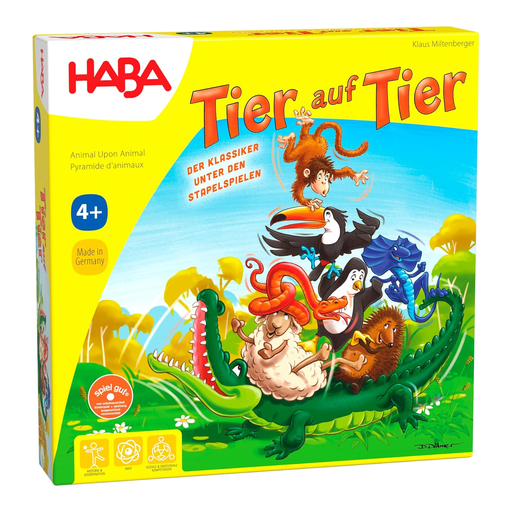
Why this product fits the profile: This stacking game is designed for 2–4 players aged 4 and up and, according to the product information, can also be played solo. The rules are limited to just a few simple actions.
The age recommendation, number of players and the option for solo play are clearly stated. This makes it easier to judge its suitability before buying.
Includes wooden figures, requires no batteries and is designed for short game rounds with younger children.

Why this product fits the profile: This cooperative strategy game is designed for two players aged 10 and up. The 21 airport scenarios offer varied challenges for regular game nights for two.
The target audience, number of players and scenarios are clearly specified. This makes it clear that the game is designed as a two-player experience, not a large group game.
Cooperative dice-based gameplay, no batteries required and a clear focus on communication and shared decision-making.
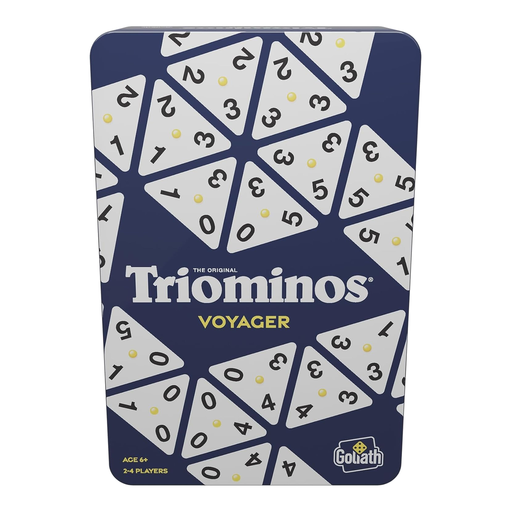
Why this product fits the profile: This compact edition is designed for 2–4 players aged 6 and up and is ideal for travel, holiday homes or a games evening where space is limited.
Dimensions, number of pieces and storage trays are clearly stated. This reduces the risk of buying a game with impractical storage for taking on the go.
56 triangular tiles, four storage trays and a multilingual instruction manual including German.

Why this product fits the profile: The Junior edition is designed for 2–4 players aged 6 and up. Simplified trading rules make it easier for both children and adults to get started.
The Junior version is not equated with the more complex version for older players. The age range and simplified rules are clearly described.
Game board with an island theme, resources, ships and hideouts; adults can help younger children with the setup.
We've put together a full, regularly updated list of products that fully meet these strict selection criteria and the safety regulations in force in the EU.
For quick rounds with children aged 6 and up, the Das NEINhorn card game is a good choice for 2–6 players with a stated playing time of around 15 minutes. For larger groups aged 12 and up, Activity Original accommodates up to 16 players and combines drawing, explaining and acting out.
If you're looking for classic family games with tactical decisions, consider DOG for 2–6 players aged 8 and up, or Phase 10 for 2–6 players aged 7 and up. For short duels, Connect 4, Hus or a compact Four in a Row are good options.
For children aged 4 and up, games with simple rules, short rounds and easy-to-grip components are usually more accessible. Before buying, check the age rating and the warning about small parts. Animal upon Animal, for example, is recommended for ages 4 and up.
There's no fixed number required. A practical combination is one short card game, one board game for several people and one game for two players. This way, you can adapt the choice to group size, time available and age range.
Games should be stored in a dry, dust-free place and, if possible, laid flat. Cards should go back in the box, and game pieces into sealable bags or their designated tray. Before putting them away, it's a good idea to do a quick check that all pieces are present.