
Lieferung heute & morgen

Qualitätsgarantie

Willkommens-Angebote freischalten: KOSTENLOSE Lieferung | Bis zu 80 % RABATT | Kostenlose 30-Tage-JoyPlus-Testphase
App herunterladen
Board games for the whole family are designed to bring different age groups together. In practice, though, one game won’t automatically suit every household. People often buy games because of their eye-catching design or familiar brand name, even when the number of players, age recommendation or playing time doesn’t suit the occasion.
A board game may be suitable for families but still only really playable from age 8, 10, 12 or 16. Complex rules, small playing pieces or abstract tasks can be too much for younger children. So always check the manufacturer’s age recommendation and any warnings about small parts.
For board games for children aged 4 and over, simple gameplay, short rounds and easy-to-recognise components are usually more important than a large number of features.
A game for 2 to 4 players is of limited use for a larger family gathering. Conversely, a party game for up to 10 or 16 players may not be practical for a game night for two. The number of players should suit how you’re most likely to use the game, not just the occasional exception.
Music games connected to an app need a smartphone, an internet connection and, depending on the product, a streaming service. Electronic children’s games may need batteries. With travel games, on the other hand, pack size, weight and secure storage for the pieces matter more than having lots of features.
Check the age rating and any warnings about small parts that could be swallowed. Games with small cards, figures or counters should be kept out of reach of children under 3. Younger children should be supervised by an adult, particularly when setting up the game and explaining the rules.
The age recommendation is not a statement about educational or medical effectiveness. It mainly indicates the level of complexity and handling the product is designed for.
For regular family game nights, clear information about the number of players and a realistic playing time is helpful:
Not every game can be sensibly shortened. With strategy or cooperative games, a wide age range can also mean that some players need ongoing support.
Cardboard board games should be stored somewhere dry. Don’t leave cards exposed to damp or direct sunlight for long periods. For games you’ll take on trips, check whether all the pieces will fit in a bag or box. A compact format reduces the risk of losing individual components while you’re out and about.
For party games, music games and escape room games, also check whether you’ll need an app, batteries or other devices.
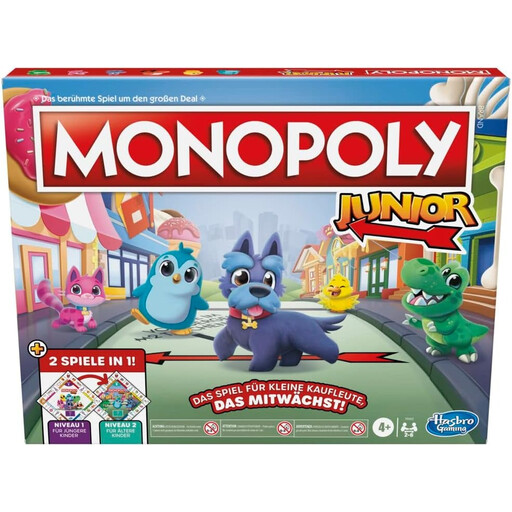
Why it’s a good fit: The double-sided version offers a simpler game for children aged 4 to 5, plus another version for ages 6 and up. It’s designed for 2 to 6 players and doesn’t need batteries.
The age ranges and number of players are clearly stated, making it easier to judge whether the game suits your family size and the children’s ages.
Double-sided game board, 2 to 6 players, recommended for ages 4 and up, and no batteries required.
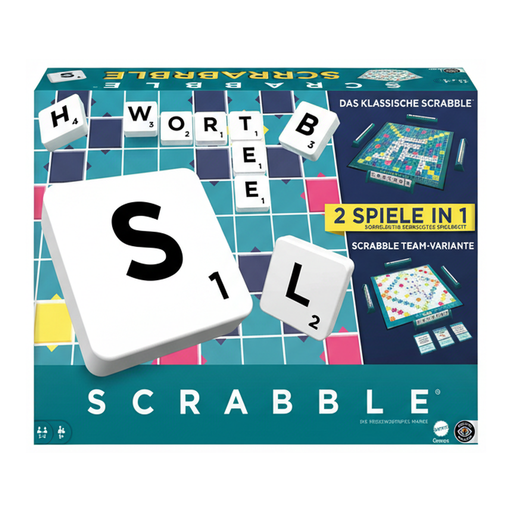
Why it’s a good fit: This game combines classic Scrabble with a cooperative mode. The double-sided game board and goal cards offer different ways to get started, for players aged 10 and over.
The two game modes mean the product isn’t aimed at just one type of player. The goal cards help players get to grips with the cooperative version.
Two ways to play, 50 goal cards and a game designed for 4 players aged 10 and over.

Why it’s a good fit: The storage pouch is designed for trips, visits and compact game nights. The game is for 2 to 4 players aged 7 and over.
The pieces can be stored in a dedicated pouch, making it easier to take along than a large game box.
Travel pouch, 2 to 4 players, ages 7 and up, and no batteries required.

Why it’s a good fit: This music game is designed for 2 to 10 players aged 16 and over, using cards featuring tracks from different decades. The Spotify connection requires a smartphone and internet access.
The technical requirements are clearly stated. If you’d rather play without a smartphone or streaming service, you can rule out this version before buying.
A large group of up to 10 players, more than 300 music cards according to the product description, and a challenge to arrange tracks in chronological order.
We’ve put together a complete, regularly updated list of products that meet these strict selection criteria and fully comply with the safety regulations in force in the EU.
When choosing a gift, think about how it will be used as well as its theme:
For children aged 4 and over, games with short rounds, simple symbols and few rules are usually easier to get to grips with. Picks from our selection include Monopoly Junior and Lotti Karotti. Check the age recommendation and any warnings about small parts before buying.
There’s no set number. A practical mix is a quick starter game, a family game with a medium playing time and a game for larger groups. This lets you choose according to everyone’s ages and mood, as well as how much time you have.
Check whether you’ll need a smartphone, internet access, a streaming account or batteries. For music games such as Hitster, the technology is part of the gameplay. Electronic games should also be used according to the instructions and stored safely.