
Lieferung heute & morgen

Qualitätsgarantie

Willkommens-Angebote freischalten: KOSTENLOSE Lieferung | Bis zu 80 % RABATT | Kostenlose 30-Tage-JoyPlus-Testphase
App herunterladen
A games night should bring everyone together – but not every product marketed as a family game will suit every group. Vague age recommendations, an unsuitable player count or overly complicated rules can often lead to disappointing purchases. Check a few key details before you buy and you’ll be more likely to find a game that gets played regularly at home.
‘Ages 4+’ doesn’t automatically mean that every child of that age can play independently. Some games already require confident number skills, sustained attention or an understanding of tactical decisions. When choosing board games for ages 4+, parents should check that the rules and game components suit the youngest player’s stage of development.
Small cards, playing pieces and tokens matter too: products with small parts are generally not suitable for children under 3. Check the information on the packaging and in the instructions before buying and before your first game.
A game for 2 to 4 players won’t necessarily suit a large family gathering. Equally, a party game for 3 to 8 players may not work well with just two. So check how many people will actually be playing. Compact card games or two-player games are often better for smaller groups; larger group games are an option for a games night with friends.
Easy-to-understand rules make it easier to get started, but they don’t tell you how long a game will take. If you’re looking for games for a children’s birthday party, you may want something that takes around 10 to 30 minutes. For a longer evening, several rounds or a game with changing difficulty levels may be a better fit.
For younger children, look for clearly structured turns, easy-to-spot colours and simple matching activities. Card games for children with number sequences, for example, can introduce counting in a playful context. For educational games for children, the learning benefit should be clearly explained: is it about numbers, vocabulary, reaction, fine motor skills or social rules?
For children aged 6 and over, strategy games with manageable choices can be an interesting option. Rather than choosing a game based only on an educational buzzword, consider the activities and rules it actually includes.
Before buying, compare at least these details:
For games for 2 to 8 players, the range is especially important. A game that accommodates different player counts can be more practical for families whose numbers vary than one designed for a fixed group size.
Store children’s card and board games somewhere dry, making sure all the pieces are accounted for after playing. A compact box is handy for card sets, while sturdy inserts or well-organised compartments are useful for board games. Also check whether batteries are needed. Games without batteries are quicker to get started; electronic features, on the other hand, can add movement or reaction-based activities.
For products with plastic or electronic parts, read the manufacturer’s safety information. Games with small parts that could be swallowed are not suitable for children under 3.
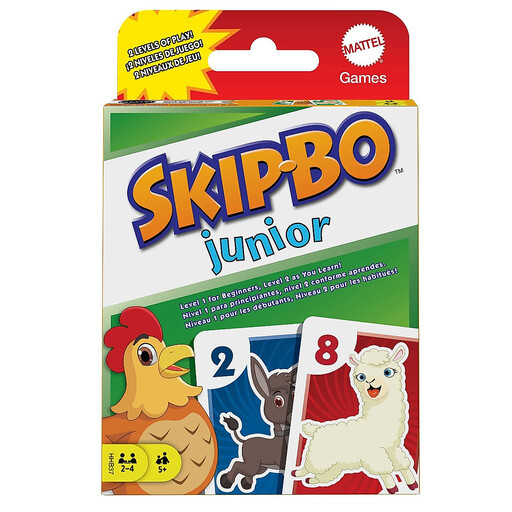
Why this product suits this profile: This card game is designed for children aged 5+ and 2 to 4 players. Two difficulty levels make it easy to get started, with extra discard piles and strategic decisions to add later.
The recommended age and player count are clearly stated. The number sequence from 1 to 10 and the two difficulty levels make the scope of the rules easy to understand.
2–4 players, no batteries required, card game with two rule levels.
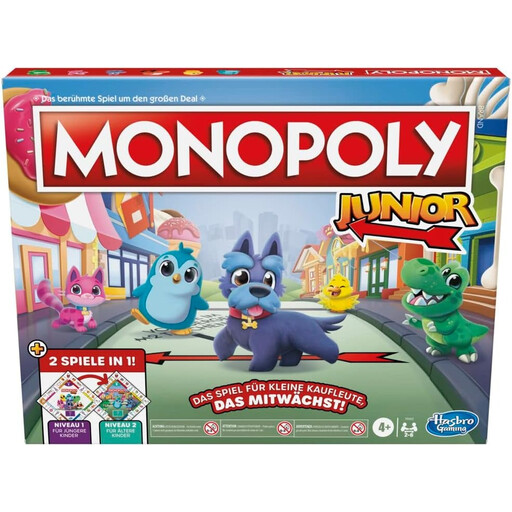
Why this product suits this profile: Designed for 2 to 6 players aged 4+, the game has a double-sided board: one version for ages 4–5 and another for ages 6 and up.
The two sides of the board mean the game’s difficulty can be adapted to different age groups. The included banknotes and cards are clearly listed.
2–6 players, two difficulty levels, no batteries required.

Why this product suits this profile: This card game is for 2 to 7 players aged 10+. With a stated playing time of 15–30 minutes, it’s ideal for quick games with family, teenagers or friends.
The player count and playing time are clearly stated. The rules use letter and category cards and, according to the product description, can be explained in just a short time.
2–7 players, 15–30 minutes playing time, 240 categories according to product details, FSC-certified paper.
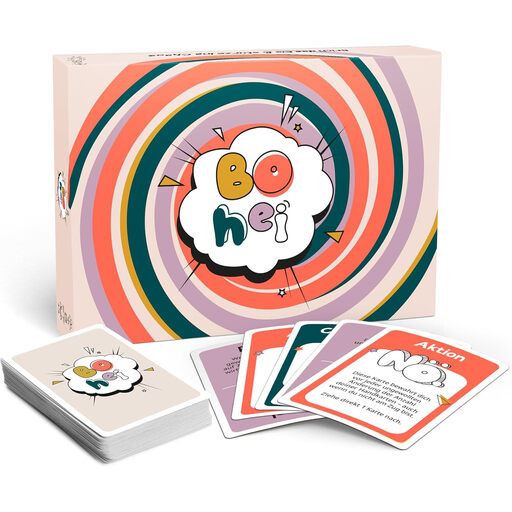
Why this product suits this profile: For 3 to 8 players aged 12+, the game includes 110 cards featuring actions, challenges and rule changes. That makes it a good fit for larger groups and adult party games.
The recommended group size and minimum age are clear. The three types of cards give you an idea of the interactions to expect before you buy.
3–8 players, 110 cards, compact packaging, no batteries required.
We’ve put together a complete, regularly updated list of products that meet these strict selection criteria and fully comply with the safety regulations applicable in the EU.
Look for short turns and clearly explained rules, along with an age recommendation of 4+. Monopoly Junior has two sides to its board for different age groups. For games with small parts, follow the safety guidance: they’re not suitable for children under 3. Younger children may benefit from adult supervision.
For families with children, two or three games with different playing times can work well. A quick game of around 10 to 20 minutes can make it easier to get started. For larger groups, you could also choose card games with a flexible player count, such as games for 2 to 7 or 3 to 8 players.
How long a game lasts depends above all on how it’s stored and how the cards, playing pieces and boards are handled. Store all the pieces somewhere dry, keep them together and, where possible, use the original packaging. For battery-powered games, remove the batteries after a long break from playing, if the instructions recommend it.