
Lieferung heute & morgen

Qualitätsgarantie

Willkommens-Angebote freischalten: KOSTENLOSE Lieferung | Bis zu 80 % RABATT | Kostenlose 30-Tage-JoyPlus-Testphase
App herunterladen
Finding the right game for the family sounds simple at first. In practice, however, board games vary considerably in their recommended age, playing time, group size and complexity of the rules. Even an attractive puzzle can prove impractical if the pieces are difficult to sort or the surface creates a lot of glare.
As a Joybuy Product Recommendation Officer, I assess market information using clear, transparent criteria. What matters is not bold advertising claims, but the key question: does the product suit the number of players, their ages and the planned games evening?
The phrase “for the whole family” reveals little about the actual complexity of the rules. A game for ages 8 and up may be suitable for younger children, while adults may find it offers little strategic challenge. So check whether it includes different difficulty levels, a junior version or co-operative rules.
“Suitable for groups” may mean that the game only works with four or more people. For couples or smaller families, games for 2 to 4 players are often a better fit. If you regularly play with lots of friends, look for games for 2 to 6 players or larger groups.
An award-winning board game may be interesting in terms of quality, but it will not necessarily suit every household. Awards often relate to the concept, design or game mechanics. They do not automatically tell you anything about playing time, noise levels, space requirements or how easy the game is for everyone to understand.
The manufacturer’s age recommendation is an important starting point. Many family games for ages 8 and up contain small playing pieces, cards or tokens and are therefore not suitable for children under 3 years of age. Also follow the information on the product packaging and, where necessary, supervise children when playing with games containing small parts.
Games for ages 10 or 12 and up may include more complex rules, longer decision-making phases or materials that can be altered. For families with children aged 8 and over, clear game sequences and quick-start guides are particularly useful.
The stated number of players should match how the game will typically be used. For a relaxed evening for two, for example, a co-operative board game with exactly two roles may be ideal. Family games are often designed for 3 to 5 people, while party games may be suitable for larger groups.
Also pay attention to:
For board games, sturdy cardboard boards, cleanly cut cards and easily recognisable symbols are useful indicators of quality. With a 1000-piece puzzle, precision-cut pieces, a matt, linen-textured surface and minimal glare are particularly important.
A 1000-piece puzzle for ages 12 and up is generally intended for adults and experienced teenagers. Check the completed dimensions before buying to make sure you have enough space both for assembling it and storing it afterwards. For beginners, a design with clearly separated colour areas may be easier than a uniformly textured landscape.
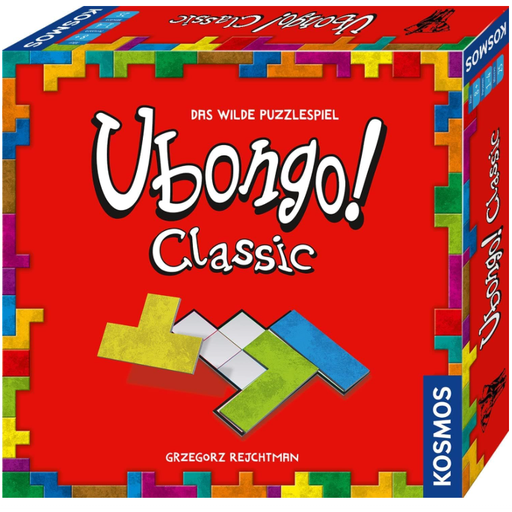
Why this product suits the profile: This game is designed for 1 to 4 players aged 8 and over and offers two difficulty levels. This makes it suitable for families with different levels of gaming experience.
The different difficulty levels reduce the risk of the game being too easy or too demanding for individual family members.
648 challenges, simultaneous play and an optional explanation app; no batteries required.
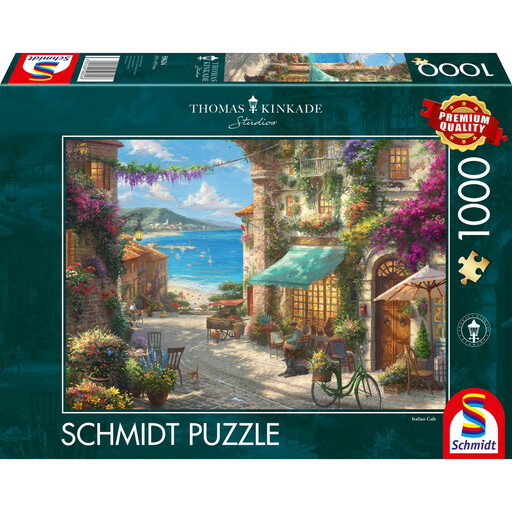
Why this product suits the profile: This 1000-piece puzzle for ages 12 and over is aimed at people who value detailed imagery and a well-defined puzzle surface.
The information about the precision cut, linen texture and matt surface makes important material features clear before purchase.
1000 cardboard pieces, a matt surface and completed dimensions of 37,3 × 27,2 cm.
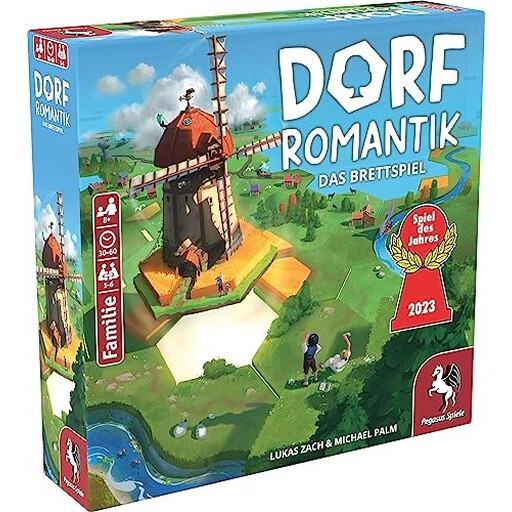
Why this product suits the profile: This co-operative board game can be played alone or with up to 6 players. It is ideal for families who want to plan together rather than compete against one another.
The specified player range of 1 to 6 and the co-operative game concept are clearly stated, making it easier to plan for different group sizes.
Strategic challenges, unlockable materials and set-up without assembly or batteries.

Why this product suits the profile: This co-operative strategy game is specifically designed for 2 players aged 10 and over and offers several airport scenarios with different challenges.
Its fixed design for two players prevents a small group from being underpowered in a game intended for larger groups.
21 scenarios, dice placement and co-operative decision-making without batteries.
We have put together a complete, regularly updated list of products that fully meet these strict selection criteria and the safety regulations applicable in the EU.
For children and occasional sessions, puzzles with fewer pieces are often easier to manage. A 1000-piece puzzle is more suitable for adults or teenagers aged 12 and over and requires a sufficiently large, level surface. The design and distribution of colours affect the difficulty just as much as the number of pieces itself.
When stored in a dry, protected place, cardboard components can be used for a long time. The important thing is to keep cards, playing pieces and puzzle pieces complete and, wherever possible, sorted in the original packaging after every session. Moisture, direct sunlight and loose storage can damage the materials and printed image.
Most classic board games and puzzles require neither batteries nor ongoing additional costs. Games with an optional app generally do not involve usage charges, although the app is not essential. For escape-room games designed for one-time use, buyers should bear in mind that playing again with the same materials is usually not intended.