
Lieferung heute & morgen

Qualitätsgarantie

Willkommens-Angebote freischalten: KOSTENLOSE Lieferung | Bis zu 80 % RABATT | Kostenlose 30-Tage-JoyPlus-Testphase
App herunterladen
Family board games should bring different age groups together, have easy-to-understand rules and be games you’ll want to play regularly. In practice, though, a game isn’t automatically right for your family just because it’s advertised as a ‘family game’. The key things to consider are the number of players, age rating, playing time, materials and actual level of difficulty.
A game rated for ages 6 and over won’t automatically suit every child of that age. Some children may need help with reading, counting or understanding rules with several steps. Games for ages 8, 10 or 12 and over often call for more planning, concentration and language skills.
Small parts can also pose a safety risk. Games with small figures, chips or cards should be kept out of the hands of children under 3. Take extra care with magnetic games: strong magnets must not be swallowed and should be kept away from medical devices such as pacemakers.
A game for 2 to 8 players won’t necessarily suit every group. With some card games, the pace changes considerably when more people join in. Party games often work best with at least four players, while strategy games are designed for two to four.
So before you buy, check:
A large game board, lots of cards or numerous special rules don’t automatically make for a better playing experience. For families with younger children, short explanations and straightforward turns are often more important. Adults and older children, on the other hand, may enjoy strategy games, tactical card games or cooperative games with several scenarios.
Go by the age rating given by the manufacturer and read the warnings on the packaging and product page. For games rated for ages 6 and over, an adult should explain the rules before the first game. For games rated for ages 10 or 12 and over, check that the amount of reading, vocabulary and range of decisions are right for your group.
For a quick game night, card games or compact travel games with short rounds are a good choice. If you play regularly with the whole family, look for a game that works with a flexible number of players. For larger groups, party games with clear roles and quick turns are often a better fit than a strategy game designed for two.
Store boxes, cards and game boards in a dry place. Unless the manufacturer advises otherwise, clean them with a soft, dry cloth only. Keeping everything organised helps prevent pieces from going missing. If a game has lots of small parts, check whether it comes with compartments, bags or built-in storage.
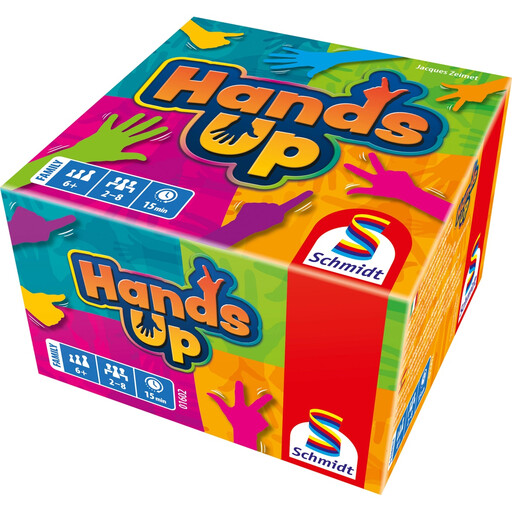
Why this product suits this profile: According to the product details, this compact card game is suitable for ages 6 and over and requires no batteries. Its handy packaging makes it ideal for quick games at home or on the go.
The age rating, number of players and compact dimensions are clearly stated. This makes it easier to check whether the game is right for your family before you buy.
Rated for ages 6 and over, with sturdy cards and a box measuring 10 × 10 × 6,8 cm.
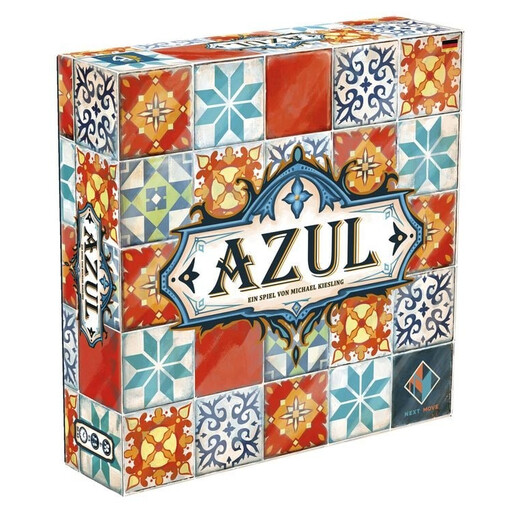
Why this product suits this profile: Azul combines a structured game board with tactical choices. According to the product details, it’s designed for 2 to 4 players aged 8 and over, with a playing time of around 30 to 45 minutes.
The stated playing time and number of players give you a clear idea of the time and space you’ll need. The rules focus on a clearly defined tile-laying system.
For 2 to 4 players, rated for ages 8 and over, with a stated playing time of 30 to 45 minutes.
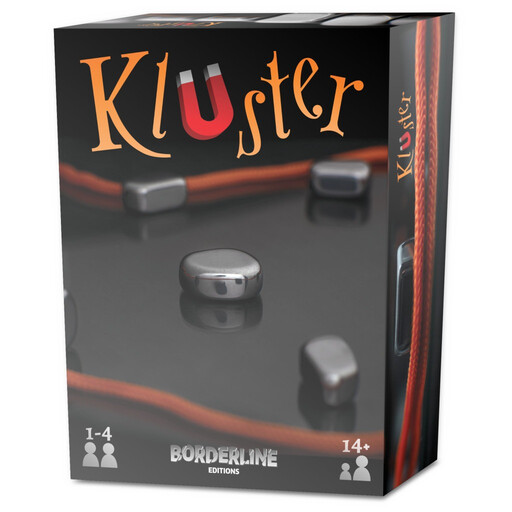
Why this product suits this profile: According to the product details, this magnetic game is designed for 1 to 4 players aged 14 and over, with a playing time of around 10 to 15 minutes. Its compact components make it a good choice for quick games or trips away.
The age recommendation and warning about strong magnets are clearly stated. This helps you avoid choosing a game that’s unsuitable for younger children or the intended setting.
For 1 to 4 players, with quick rounds of 10 to 15 minutes and compact components including magnetic stones and a playing-field boundary.
For children and adults who want to plan together, cooperative games such as ‘Die Schule der magischen Tiere – Unbelievable’ for ages 6 and over or ‘Sky Team’ for ages 10 and over are worth considering. In a cooperative game, the whole group wins or loses together.
Card games such as SKYJO or UNO need little setup and are easy to take along to a game night with friends. For larger groups aged 12 and over, party games such as Piatnik Activity Original or Top Ten are options to consider. If you’re looking for strategy board games, you could compare Catan Junior for ages 6 and over, Ticket to Ride: Europe for ages 8 and over, or Monopoly for ages 8 and over.
Compact learning and travel games such as SmartGames IQ Mini or IQ-Puzzler PRO also make great gifts for children and families. They’re designed for solo play and usually need very little setup.
We’ve put together a complete, regularly updated list of products that fully meet these strict selection criteria and the safety regulations in force across the EU.
Look for games rated for ages 6 and over, with short rules and a manageable playing time. Catan Junior, Hands Up and cooperative children’s games could all be good options. If there are small parts, be sure to check the warning on the packaging.
Its lifespan depends on the materials, how it’s stored and how it’s handled. Cards and game boards will last longer if they’re kept dry, not bent and put back in order after each game. Damaged parts should be replaced or, for safety reasons, no longer used.
Easy-to-explain card games, short strategy games and cooperative games are practical choices for mixed-age groups. Check the age rating, number of players and playing time beforehand. For larger groups of four or more, party games are often a better fit than games limited to two or three players.