
Lieferung heute & morgen

Qualitätsgarantie

Willkommens-Angebote freischalten: KOSTENLOSE Lieferung | Bis zu 80 % RABATT | Kostenlose 30-Tage-JoyPlus-Testphase
App herunterladen
Finding the right game for the family is not always easy. Packaging often features phrases such as “educationally valuable”, “for the whole family” or “easy to explain”. However, such claims reveal little about whether a game is actually suitable for the child’s age, the number of players and the time available. When choosing board games for children and families, specific product details matter more than marketing language.
A game recommended for children aged six and over may be easy for one child to understand, but still unsuitable for younger siblings if it contains small playing pieces or magnets. The level of mental challenge also varies: a cooperative dice game often works very differently from a strategy game involving several decisions per round.
As well as checking the recommended age, look at:
Many board games for children are designed for two to four players. If you regularly play with a larger family, check the maximum number of players. A card game for two to ten people is suitable for different situations than a game designed exclusively for two players.
The game dynamic is also important: in a competitive game, players may have to wait for their turn, whereas cooperative board games often involve everyone at the same time.
Paper and cardboard components should be stored in a dry place to prevent them from becoming misshapen. For games containing small parts, follow the warning on the packaging. Products with balls or magnetic components should only be used in accordance with the manufacturer’s instructions and under supervision when used by younger children.
A compact travel game is not automatically sturdier than a large board game. The specified materials, the quality of the components and suitable storage after playing are what really matter.
For children’s toys, the manufacturer’s recommended age should match the child’s stage of development. Look for a CE marking, safety and warning information, and details about small parts that could be swallowed. The CE marking is a declaration of conformity by the manufacturer, not an independent quality seal.
Games containing balls, small figures or magnets are generally unsuitable for children under three. Extra care is recommended with magnetic components, as they must not be put in the mouth.
Games with a flexible number of players are practical for regular games evenings. Families with younger children often benefit from games lasting between 15 and 30 minutes. Strategy games such as “Ticket to Ride: Europe” or “Azul” require more time and are better suited to occasions when everyone can stay focused.
Also check whether the stated duration applies to one round or to a complete game. With family card games, the playing time can often be adjusted flexibly by playing just one round.
The game mechanics should suit the occasion:
Claims about possible educational benefits should be understood objectively. A game may include particular thinking or perception-based activities, but it does not replace educational support.
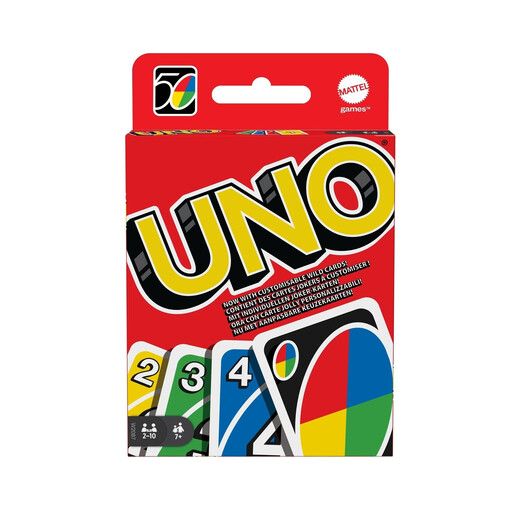
Why this product suits this profile: This card game requires no set-up and is designed for 2 to 10 players aged 7 and over. That makes it ideal for spontaneous games, children’s parties and family evenings with changing numbers of players.
The recommended age and number of players are clearly stated. The rules are based on colours, numbers and action cards, and can be explained quickly before the first round.
112 cards, no batteries and customisable Wild Cards. Small parts must be kept out of the reach of children under three.
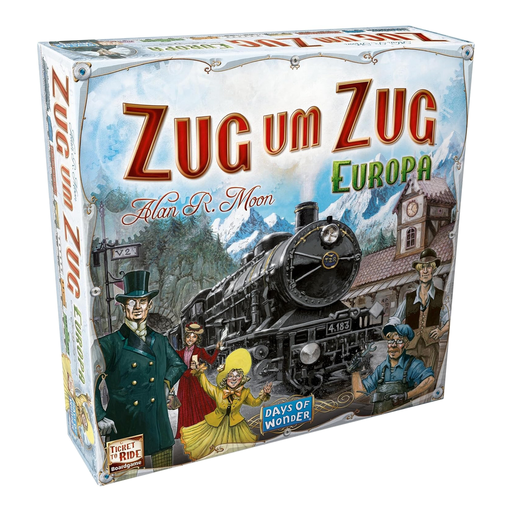
Why this product suits this profile: For families with children aged 8 and over who are looking for a board game with enduring appeal and tactical decision-making. It is designed for 2 to 5 players and, according to the product details, takes around 45 minutes or longer.
The playing time and maximum number of players are stated transparently. The game is available in German and requires neither batteries nor any technical set-up.
Build routes through European cities, 250 stated game components and a set of rules that, according to the product description, can be explained in around five minutes.
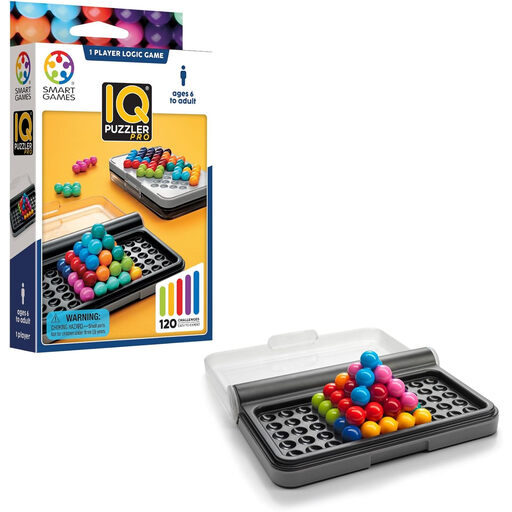
Why this product suits this profile: This compact solo game is ideal for travel, waiting times and quiet play at home. It is aimed at children aged 6 and over and includes 120 challenges in two- and three-dimensional formats.
Its suitability for one player is clearly stated. This avoids buying a group game when what is really needed is something to keep one person occupied while out and about.
Compact design, 13 PVC pieces and a challenge booklet. Because the product contains small parts, it should be stored out of the reach of younger children.

Why this product suits this profile: This cooperative board game is designed for 1 to 4 players aged 6 and over. It is ideal for families who want to make decisions together rather than compete against one another.
The shared game objective and number of players are clearly defined. A rotating game board creates changing routes without requiring an app or batteries.
Dice, event cards and animal tokens combine simple gameplay with team decisions. Small parts require safe storage and, where necessary, adult supervision.
We have put together a complete, regularly updated list of products that fully meet these strict selection criteria and the safety regulations applicable in the EU.
Games with manageable rules, a short playing time and a clear age recommendation are suitable. Cooperative board games such as “The Twisted Game” can make it easier to get started because everyone works towards a shared objective. Even so, parents should check the warnings and the size of the playing pieces before buying.
Its lifespan depends on the materials, how often it is used and how it is stored. Cardboard and paper components should be kept dry and handled carefully. A storage box or the original packaging can help prevent pieces from going missing. For frequently used games, clear storage rules are useful, particularly when there are small parts in the household.
Once you have bought a classic board or card game, there are normally no ongoing costs. Exceptions include optional apps, replacement parts or consumables. With escape-room games designed to be played once, buyers should bear in mind that cards and puzzle materials may be altered or used up. Before buying, check whether the game is intended for one-time or repeated use.