
Lieferung heute & morgen

Qualitätsgarantie

Willkommens-Angebote freischalten: KOSTENLOSE Lieferung | Bis zu 80 % RABATT | Kostenlose 30-Tage-JoyPlus-Testphase
App herunterladen
Board games for children and families should bring together different age groups, interests and levels of experience. In practice, however, a game does not automatically suit its advertised target audience. Some titles require stronger reading skills than stated, while others involve long playing times or only work well with a larger group.
If you are looking for family games, board games or an educational gift, you should therefore consider more than just the theme and packaging design. The key factors are age recommendation, number of players, playing time, complexity of the rules and materials.
“From 6 years” does not mean that every six-year-old will understand the game without help. Differences in reading ability, concentration and experience with rules are perfectly normal. With strategy games, the recommended age limit may also primarily reflect the complexity of the decisions involved.
You should therefore check:
A game for two to five people is not automatically ideal for a family of four. Some games work particularly well with two players, while others only develop their full dynamic in a larger group. The maximum number of players stated on the product page should also match the contents provided.
For a games evening with lots of guests, party games or titles for four to twelve players may be suitable. For quiet solo entertainment, on the other hand, travel games and compact logic games are a better choice.
A stated playing time of 45 minutes or more may be too long for younger children. With strategy games, a round often takes even longer when players are still learning the rules. For spontaneous gaming sessions, short card games or simple educational games for children are usually more practical.
You should also check whether an app, batteries or a smartphone is required. A music game may need a connection to a streaming service, whereas a classic board game generally works without electricity.
The age recommendation should match the child’s development and experience with games. For children’s games from 6 years, clear symbols, short rules and manageable turns are helpful. Cooperative board games can make it easier to get started, as the family works together towards a shared goal rather than one individual player necessarily winning.
The language used in the game is also relevant. A German-language game is suitable for children who are not yet confident reading English. With imported card games, buyers should check the language of the instructions and cards.
Compare the minimum and maximum number of players with how you intend to use the game:
A playing time of 15 to 30 minutes is often suitable for younger children or several games in a row. Longer games usually offer more strategic decisions, but require a sufficiently large table that can remain available throughout.
Board game components are often made from paper, cardboard, plastic or wood. For frequent use, sturdy cards, well-made playing pieces and practical storage are important. Cardboard should be stored in a dry place and cleaned only with a dry cloth.
For products containing small parts, the following applies: Safety instructions and age limits on the packaging take priority. Small parts must be kept out of the hands of children under 3 years. With electronic games, batteries must be inserted correctly and removed if the game will not be used for an extended period.

Why this product suits the profile: This junior edition is designed for 2–4 players aged 6 and over. It features simplified trading rules and child-friendly game elements.
The age recommendation, number of players and simplified rules are clearly stated. Adults can help with setting up the game and explaining it for the first time.
For 2–4 players, from 6 years, no batteries required, and a family-friendly introduction to resource management and building decisions.
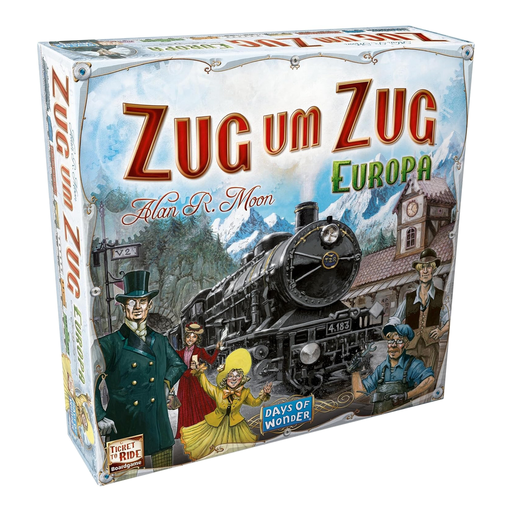
Why this product suits the profile: This strategy game combines a thematic game board with route building and destination tickets. It is designed for 2–5 players aged 8 and over.
The product details specify the number of players, minimum age, approximate playing time and materials. This makes it easier to assess the space and time required before buying.
For 2–5 players, around 45 minutes or longer per game, with cardboard, paper and plastic components.
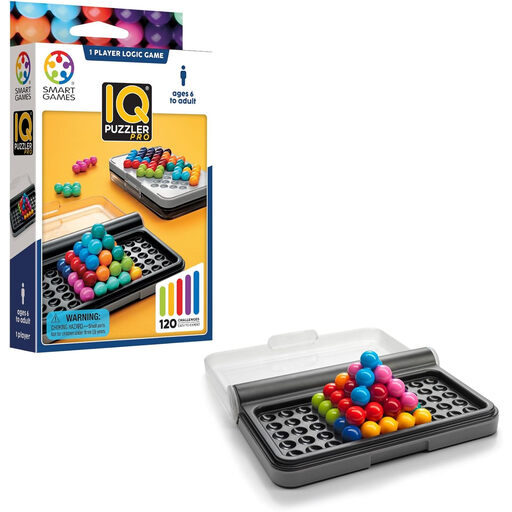
Why this product suits the profile: This compact solo game is designed for children aged 6 and over and is suitable for playing at home, on train journeys and while out and about.
It requires no batteries and does not depend on a minimum group size. This removes organisational hurdles when travelling or during short breaks.
120 challenges in three game modes, compact dimensions and a concept designed for solo play.
For family games evenings with children, a cooperative board game can be a good choice, with all players working towards a shared goal. The KOSMOS game “Die Schule der magischen Tiere” is designed for 1–4 players aged 6 and over and uses a rotating game board, dice and animal tokens.
For larger groups, party games such as UNO may be suitable. The German product description states that it is for 2–10 players aged 7 and over. If you are choosing a game as a birthday or Christmas gift, you should also consider the language, packaging size and small parts.
Titles with manageable rules, little preparation time and a clear age recommendation are suitable. Catan Junior, cooperative children’s games and compact logic games can cater to different interests. With more complex strategy games, an adult should accompany the first round.
Lifespan depends primarily on the materials, storage and frequency of use. Cards and cardboard components should be stored in a dry place and not folded. A box with separate compartments helps keep all the small parts together. With frequent use, robust plastic components or sturdy playing pieces are practical.
Classic board games normally have no ongoing costs and do not require batteries. Additional expenses may arise if a game requires an app, smartphone or streaming service. Before buying, you should therefore check whether the digital features are optional or essential to the gameplay.
We have put together a complete, regularly updated list of products that fully meet these strict selection criteria and the safety regulations applicable in the EU.