
Lieferung heute & morgen

Qualitätsgarantie

Willkommens-Angebote freischalten: KOSTENLOSE Lieferung | Bis zu 80 % RABATT | Kostenlose 30-Tage-JoyPlus-Testphase
App herunterladen
Board games for the whole family should bring different age groups together, offer easy-to-understand rules and be suitable for regular play. In practice, however, many family games do not suit the occasion: the player count is too low, the rules are too demanding for children or a round takes much longer than expected.
The following criteria will help you assess marketing claims objectively and choose a game based on age, group size, playing time and playing style.
The age recommendation on the packaging is an important guideline, but it does not replace an assessment of the individual group. A game for ages 8 and over may be unsuitable for a younger child, while teenagers or adults may want greater strategic depth after several rounds.
You should therefore check:
Some family games only work with two or four players, even though they are generally marketed as family entertainment. Party games or games for 2 to 12 players are more suitable for larger groups, as they help keep waiting times and turn lengths short.
Before buying, check the minimum and maximum number of players. If you regularly have five or more people taking part in family game nights, the game should explicitly support that group size.
A well-known title or an award may spark interest, but it does not automatically mean that a game is right for your household. Objective details such as materials, dimensions, age rating, game mode and any additional equipment required are what really matter.
For games with music or app connectivity, you should also check whether a smartphone, internet connection or batteries are required.
For families with children aged 8 and over, clear age recommendations and easy-to-read rules are particularly important. Small parts may present a choking hazard. Always follow the safety information on the packaging and do not allow children to use games below the recommended age without suitable supervision.
For products intended for the European market, information about the CE marking, the responsible manufacturer or importer, and the language of the instructions should also be available. Always check the specific markings on the product and its packaging.
The game mechanics affect how well a round works with different age groups:
The stated playing time often refers to a single round and may vary depending on the group size or familiarity with the rules. For a spontaneous game night, compact games lasting around 15 to 30 minutes per round are practical. Larger games, on the other hand, require a dedicated table and enough storage space.
When checking the materials, consider the following:
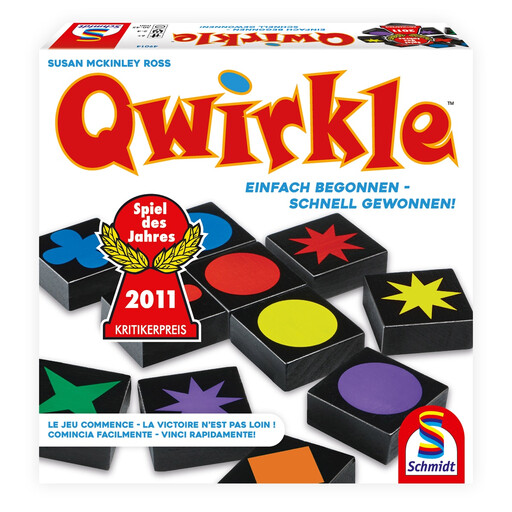
Why this product suits this profile: According to the product description, the rules are easy to follow, while 108 wooden tiles allow for tactical decisions. The game is designed for children aged 8 and over and for a classic family game night.
The age recommendation of 8 and over and the fact that no batteries are needed make the conditions of use clear.
108 wooden tiles, no batteries and packaging dimensions of 29,5 × 29,5 × 7 cm.
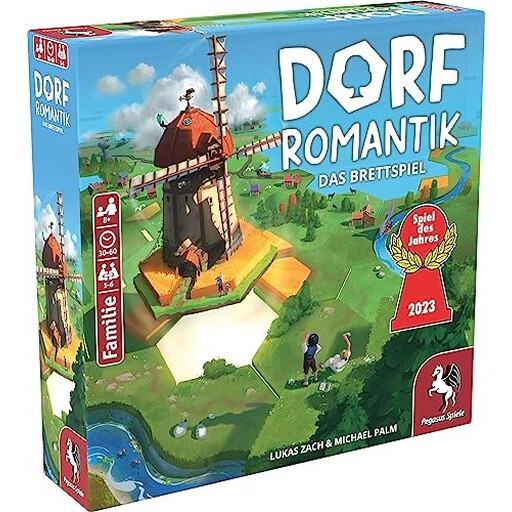
Why this product suits this profile: This co-operative tile-laying game is designed for 1 to 6 players aged 8 and over. Players work together to complete tasks and unlock additional materials according to the rules.
The player count, minimum age and co-operative game mode are specified clearly, rather than simply making a general claim about being family-friendly.
For 1–6 players, with no batteries or assembly required, and with cardboard game components.
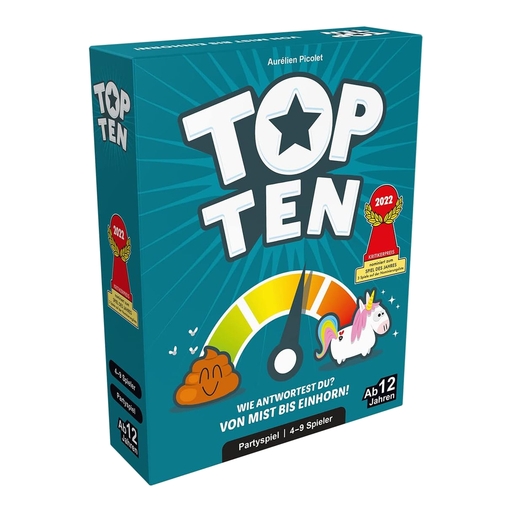
Why this product suits this profile: Top Ten is designed for 4–9 players aged 12 and over. According to the product information, a round takes around 30 minutes, making it a good choice for parties, youth groups and larger game nights.
The group size and playing time are clearly stated. This reduces the risk of buying a game that is too long or too small for the group.
Co-operative question-and-answer format, 4–9 players and compact dimensions of 15,2 × 5,1 × 19,9 cm.
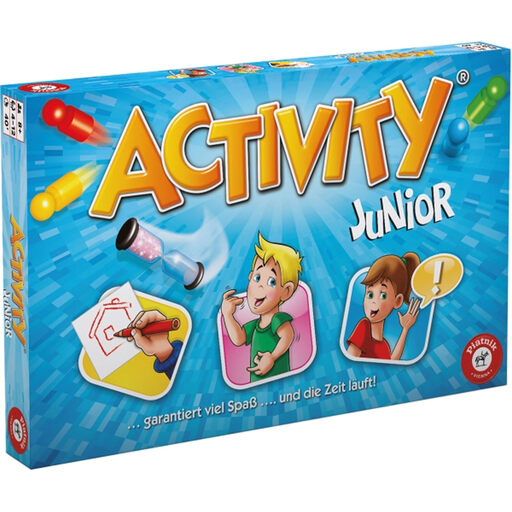
Why this product suits this profile: With 4–12 players, Activity Junior is suitable for family celebrations, groups of children and parties. Depending on the symbol, the cards ask players to draw, describe or act something out.
The maximum number of players, 12, is explicitly stated. This makes it possible to plan the game for larger groups without having to combine several games.
330 cards with 990 terms, suitable for ages 8 and over, with no batteries required.
We have put together a complete, regularly updated list of products that fully meet these strict selection criteria and the safety regulations applicable in the EU.
For a varied game night, it can be useful to combine several types of game. Co-operative board games are suitable for groups who want to plan and play together. According to the product information, a fast dice game such as Würfel-Ligretto is suitable for people aged 8 and over and uses 24 transparent dice. For two players, Kniffel Das Duell is a good option, with a stated playing time of around 15 minutes.
Themed games and puzzles can also be interesting for older teenagers and adults. The Harry Potter puzzle from Schmidt Spiele contains 1,000 pieces and is listed as suitable for ages 12 and over. However, it is a puzzle rather than a classic board game with alternating turns.
For music fans, Hitster Bingo could be an option for larger groups. Buyers should pay particular attention to the technical requirements here: the product information lists 225 music cards, Spotify connectivity and conflicting information about battery operation. Before buying, check the current product description and the details on the packaging.
Games with manageable rules, clear symbols and a limited playing time are suitable. According to the available product information, Qwirkle, Village Romantics and Activity Junior are approved for ages 8 and over. The right choice depends on whether the group prefers strategic, co-operative or communication-based games.
For a typical game night, two or three different formats are usually enough: a short game to get started, a main game and, optionally, a party or dice game. The key factors are the actual group size, the space available and the desired playing time.
Their lifespan depends on the materials, storage and how they are handled. Cards and cardboard components should be kept dry, protected from direct sunlight and, where possible, stored complete in the original packaging. Missing or damaged components can affect the course of the game. With small parts, age-appropriate use with suitable supervision is also important.