
Lieferung heute & morgen

Qualitätsgarantie

Willkommens-Angebote freischalten: KOSTENLOSE Lieferung | Bis zu 80 % RABATT | Kostenlose 30-Tage-JoyPlus-Testphase
App herunterladen
Family card games should be easy to understand, bring different age groups together and make it to the table regularly. In practice, though, many games don’t suit the group playing: the age recommendation gets overlooked, the playing time is underestimated or the number of players doesn’t match the size of the family.
A game recommended for ages 8 and up may involve too many rules, small pieces or abstract tasks for a younger child. Conversely, a very simple card game can quickly lose its appeal for older children and adults. So check the official age recommendation and consider whether the way the game is played suits your group.
A game for two to four players will only go so far in a household with six family members. For larger groups, check whether the game is actually designed for the number of people who want to play, or whether some players will be left waiting.
Quick card games are ideal for spontaneous games during the week. Strategy card games with several phases or longer decisions, on the other hand, need more time and attention. A realistic estimate of the playing time per round helps prevent the game from being left unused on the shelf after just a few tries.
Games with a flexible player count are handy for family game nights. Games for 2 to 8 players work well for smaller households as well as visits from friends or grandparents. Party games for up to ten players are better suited to celebrations and larger groups.
For card games for ages 4 and up, look for simple rules, easy-to-recognise symbols and straightforward tasks. Card games for ages 8 and up can make greater demands on strategy, numeracy or vocabulary. If a game contains small pieces, check the warnings: many products are specifically not suitable for children under 3.
Card games are often made of paper or card. Store them in a dry place and keep them away from liquids. Compact packaging is an advantage if you want to take a game on holiday or to friends’ homes. Also check whether the instructions and cards are available in German. This is particularly important for games for children and adults if younger players want to join in independently.
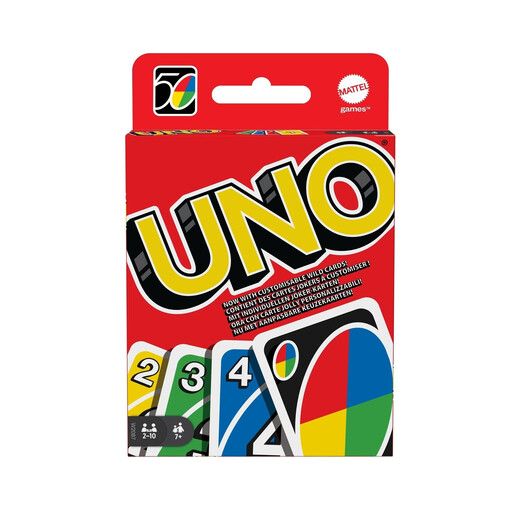
Why this product suits this group: UNO is designed for 2 to 10 players aged 7 and over, and you can start playing straight away with the 112-card set. The basic rule – match the colour or number on the card – is quick to explain.
The player count is clearly stated, and special cards add variety without the need for a game board or extra batteries.
2–10 players, recommended age 7 and up, and special cards such as Skip, Reverse and Wild.
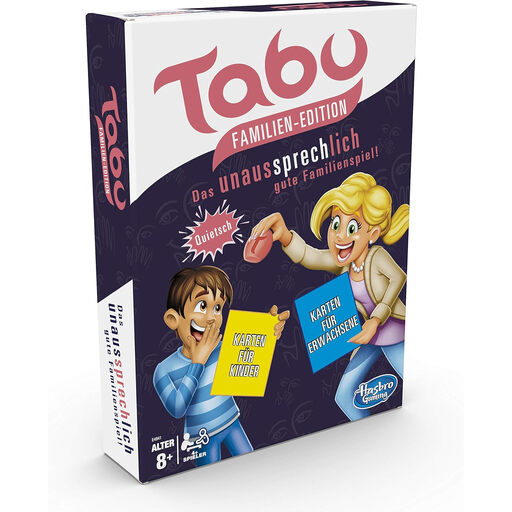
Why this product suits this group: Separate sets of cards for children and adults take different vocabularies into account. This makes the edition a great choice for players aged 8 and over across several generations.
The age differences within a family are catered for with 130 cards for children and 130 cards for adults.
260 cards, over 1,000 words, for 4 or more players, with an hourglass to keep time.
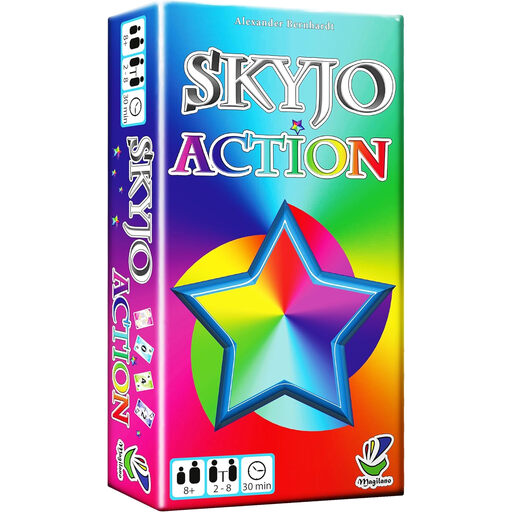
Why this product suits this group: SKYJO Action is designed for 2–8 players aged 8 and over, combining card management with observation and tactical decision-making. Its compact packaging makes it easy to take along to a game night.
The flexible player count makes it suitable for a wider range of groups, while repeatable rounds work well for different lengths of game night.
2–8 players, ages 8 and up, no batteries required, and rules that combine strategy, observation and luck.

Why this product suits this group: This music game is designed for 2–10 players aged 16 and over. Players arrange the cards in chronological order by release date, making it a good fit for parties and games for adults.
The age limit and the need for a smartphone app are clearly stated. This makes it easy to check before buying whether the technology and age group are right for your gathering.
Over 300 music cards, 2–10 players, smartphone support and a challenge to put songs in chronological order.
We’ve put together a complete, regularly updated list of products that meet these strict selection criteria and fully comply with the safety regulations in force in the EU.
For younger children aged 4 and over, Dobble Kids and Halli Galli Junior are worth considering. Both focus on quick observation and simple rules. From age 7 or 8, Phase 10, Monopoly Deal and Qwixx add combinations, numbers and tactical decisions to the mix. For longer games with adults, try Wizard or a music game with a theme.
When choosing family games as gifts, consider compact packaging, clear instructions and a flexible player count. If you’ll be taking the game with you regularly, look for sturdy cards, dry storage and a manageable number of accessories.
The key things to consider are the recommended age, the number of rules and the player count. For children aged 4 and over, games with symbols and short rounds are usually easier to get into. From age 7 or 8, number, word and strategy games are also an option. Always check the information on the product packaging against your child’s stage of development.
It depends on the game. According to the product information, UNO and Hitster Original are suitable for up to 10 players, while other games are limited to between two and six or two and eight players. Check the player count before buying to avoid unnecessary waiting during a family game night.
Store cards somewhere dry, away from direct sunlight and preferably in their original packaging. Liquids can damage paper and card components. For games with small pieces, it’s also a good idea to keep them in a sealed container out of reach of very young children.