
Lieferung heute & morgen

Qualitätsgarantie

Willkommens-Angebote freischalten: KOSTENLOSE Lieferung | Bis zu 80 % RABATT | Kostenlose 30-Tage-JoyPlus-Testphase
App herunterladen
Family card games should be quick to explain, appeal to different age groups and be easy to put away after play. In practice, though, many products don’t suit the way you plan to use them: a game may be too complex for younger children, the stated number of players may not match your family size, or the packaging may be too bulky to take with you.
The product name alone only tells you so much. What matters is the recommended age, number of players, playing time, number of cards or other components, and the space the game actually takes up. The criteria below can help you narrow down the options for families, friends, game nights and trips.
“Age 8+” doesn’t automatically mean every child will understand the game without help. Some family games involve number combinations, tactical decisions or lots of special rules. For primary-school-aged children, clear instructions and short rounds are usually easier to get to grips with than a lengthy rulebook.
For card games for ages 6+, check whether they really only involve simple matching or questions. Card games for ages 8+ may already involve more strategy, memory or creative use of language. The manufacturer’s age recommendation remains the key guide; only let younger children play if the rules and safety warnings allow it.
A game for two players won’t necessarily work for a game night with five people. Conversely, games designed for larger groups can lose some of their energy when only two people are playing. Before you buy, check the minimum and maximum number of players and think about how many people are usually around the table.
A game may be described as a travel game and still take up a lot of room in your rucksack. For train journeys, waiting times or holidays, compact dimensions, sturdy storage and few loose pieces are all important. If a game includes dice, figures or tokens, its packaging should keep these components safely together.
Check the recommended age group and any warning about small parts. Many games aren’t suitable for children under three because they contain components that could be swallowed. Younger children may also benefit from adult supervision, even when the game is approved for their age group.
Also check the language of the instructions. For families in Germany, German-language instructions make it easier to get started and help avoid misunderstandings about special cards or scoring.
Card and board games that are quick to set up are ideal for spontaneous game nights. A game that needs no batteries or elaborate set-up can be played as soon as you open the box. For longer games, check that the stated playing time fits the time you have available: a game that takes around 15 minutes per round is quite different from one with a total playing time of 60 to 90 minutes.
Paper or card should be stored somewhere dry and protected from heavy creasing. If you’ll be carrying a game around often, compact dimensions, a suitable card compartment or built-in storage are useful. The listed weight and packaging size can help you work out whether a game will fit in the space you have available when travelling.
For party games or larger groups, the number of cards also matters. A wider variety of cards can add variety, but doesn’t in itself tell you how easy the game is to understand or how entertaining it will be.
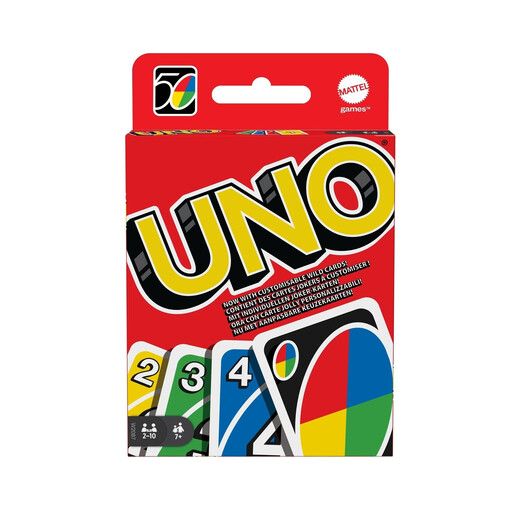
Why this product suits this type of player: The game is designed for 2 to 10 players aged 7 and over, making it a good fit for family games with changing numbers of players.
The number of players and the basic idea are clearly stated. The deck contains 112 cards, including colour, number and action cards; no batteries or set-up are needed.
For 2–10 players, recommended for ages 7+, with customisable Wild cards and minimal preparation.
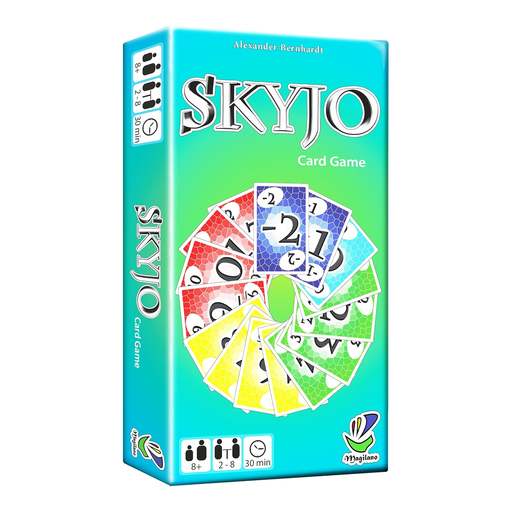
Why this product suits this type of player: SKYJO combines straightforward rules with rounds that are easy to fit into a game night.
The product details list 150 cards, a score pad and instructions. With 2–8 players, it’s easy to adapt the game to the size of your group.
Suitable for ages 8+, for 2–8 players, with stated dimensions of 19,4 × 10,1 × 3,5 cm and no batteries required.
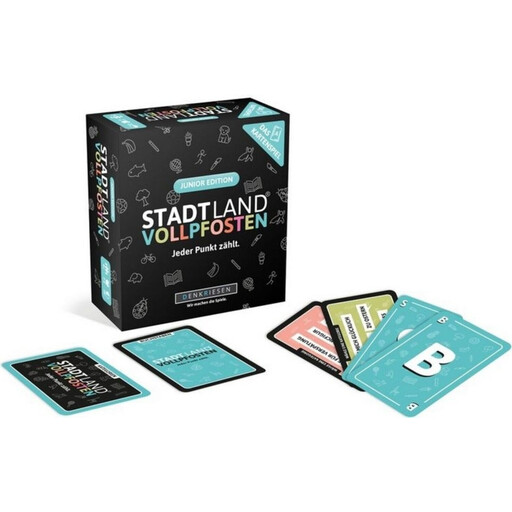
Why this product suits this type of player: The Junior Edition is designed for children aged 8 and over, and suits families looking to combine word-based challenges, travel and spontaneous games.
The product details list 120 cards and 200 categories, offering plenty of variety. No batteries or elaborate set-up are needed.
Compact dimensions of 12,5 × 4,6 × 11,7 cm, a weight of 224 g and German-language content.

Why this product suits this type of player: This music game is designed for 2–10 players aged 16 and over. It’s ideal for larger get-togethers, provided you have a smartphone and the required app.
The technical requirements are clear: an iOS or Android smartphone, the Hitster app, a Spotify account and an internet connection for streaming.
Over 300 music cards, a chronological song-sorting challenge and no batteries required.
We’ve put together a complete, regularly updated list of products that meet these strict selection criteria and the safety regulations in force in the EU.
For younger children, children’s games with simple matching and short rounds can be a good choice. Halli Galli Junior, for example, is listed for 2–4 players aged 4 and over. Compact versions such as Guess Who Grab And Go or Connect 4 Grab And Go are great games to take on the go. Both are designed for two players; Guess Who is listed for ages 6+, as is Connect 4.
Older children and adults may enjoy more strategic board games. SKYJO, Phase 10 and Wizard use numbers, sequences and combinations. Party games such as Hitster, on the other hand, are designed for larger groups and a lively atmosphere. For games aimed at adults, be sure to check the age rating and content before buying.
Look for easy-to-follow instructions, an appropriate age recommendation and a flexible number of players. UNO is suitable for 2–10 players aged 7 and over. For word-based challenges from age 8, the Junior Edition of Stadt Land VOLLPFOSTEN is a good option. For children under six, consider any small parts and the level of supervision required.
Store cards somewhere dry and clean, away from direct sunlight. Use the original packaging or a sealable card case. With travel games, it’s a good idea to check after each round that all the cards, dice and tokens have been put away.
Most classic card games need no batteries or electricity. Extra costs may arise if a game such as Hitster requires a smartphone, app, Spotify account or internet connection. Check these requirements before you buy, especially if you plan to play while travelling or somewhere with limited internet access.