Families cooking with several pans
If you want to cook curry and rice at the same time, look for enough usable cooking zones and space for a large pan.


If you regularly cook curry and rice at the same time, first check how many cooking zones you can use and whether the dimensions and connection are suitable for your kitchen. Induction requires compatible cookware; a radiant ceramic hob may be an alternative if you want to keep using suitable conventional electric-hob pans. A portable double hob requires no planned installation, but offers only two cooking zones.
If you want to cook curry and rice at the same time, look for enough usable cooking zones and space for a large pan.
A portable hob could be a good fit if you’re not planning a built-in installation or need extra cooking zones. Check the number of zones, the space available and the specified power supply.
If you want to keep using your existing pans, check whether their bases are suitable for induction or whether a radiant ceramic hob would better suit your cookware.
A good fit if: You have compatible pans and want to cook curry, rice or other sides across several zones.
Things to consider: Your cookware, worktop cut-out dimensions and electrical connection must be suitable for the specific model and your kitchen.
A good fit if: Your pans are suitable for conventional electric hobs and you need several fixed cooking zones.
Things to consider: Be aware of hot zones and residual heat, as well as the model’s installation and connection requirements.
A good fit if: You’re not planning a built-in installation or need two extra cooking zones for curry and rice.
Things to consider: Two zones limit the number of pans you can use at once; your pan sizes and power supply must be suitable for the appliance.
| Buying priority | What to check | Who it matters most to |
|---|---|---|
| Space for several pans | Check the number and diameter of the zones, and the space between pans using your own cookware. | If I want to cook curry and rice at the same time, the large pan needs to fit alongside the other pans. This is the main priority for around 33% of consumers. |
| Compatible pans | Check the material and base; for induction, also make sure the pan size suits the relevant zone. | If you want to keep using your existing pans, first check whether they’re suitable for the heating technology. For around 27% of consumers, compatibility with their existing cookware comes first. |
| Installation, available space and power | For built-in appliances, check the cut-out dimensions and connection type; for portable appliances, check the dimensions and specified power supply. | If a suitable built-in installation isn’t possible where you plan to put the appliance, or you need a portable option, make sure the appliance and power supply will work there. This is the deciding factor for around 27% of consumers. |
| Controls and safe use | Check the controls, residual heat indicator and, where relevant, control lock on the specific model. | If you value clearly visible settings and residual heat warnings while cooking, compare these features across models. Controls and safe use are the top priority for around 13% of consumers. |
A ceramic glass surface alone doesn’t tell you whether the hob uses induction or radiant heating. Induction requires compatible cookware.
Check the stated heating technology and make sure your pans are suitable before choosing based on the surface.
A built-in hob must fit the existing worktop cut-out and electrical connection. Models may be supplied without a plug and require professional connection.
Before ordering, compare the model’s drawing with the existing cut-out and connection requirements.
A double hob has two cooking zones. Pan sizes and the specified power supply limit which pans you can use at the same time.
Think about which dishes you want to cook at once, and check your pan sizes and the manufacturer’s power supply specifications.
The Verbraucherzentrale (German consumer advice centre) points out that the EU energy label applies to ovens, not hobs.
Assess the hob’s technology and specific appliance details separately from the oven’s energy label.
The models featured here include built-in induction and radiant ceramic hobs.
The EX975LXC1E is a 90 cm built-in induction hob with five cooking zones.
The TO64IA0FXB is a 60 cm built-in induction hob.
The portable CT 3410/IN double hob (induction) and CT 3400/E double hob (radiant ceramic) each have two cooking zones.
The Touch 3500 is a portable induction double hob with two cooking zones.
The built-in hobs below offer induction or radiant ceramic heating for cooking several dishes at once.
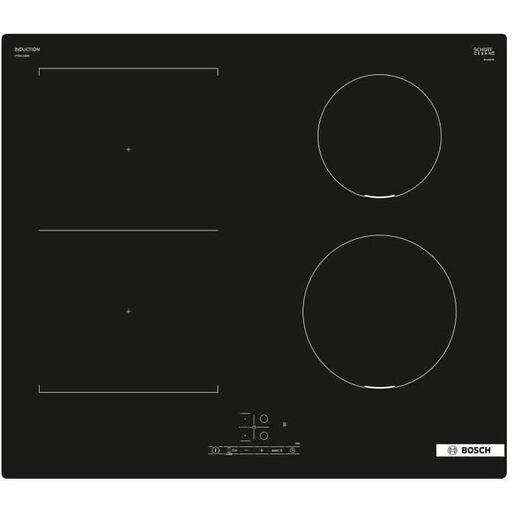 No image available
Designed for cooking with several pans at once; the product details list four cooking zones.
60 cm; 6.900 W; timer.
Requires induction-compatible cookware and professional connection.
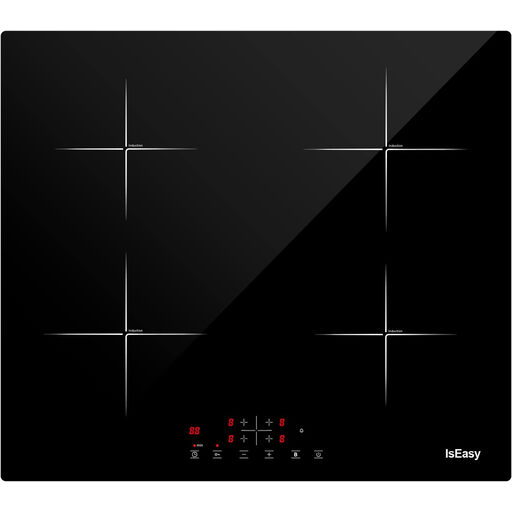 No image available
The four zones are designed for using several pans at the same time.
60 cm; 6.800 W; nine power levels; timer from 1 to 99 minutes; boost function.
Requires induction-compatible cookware with a ferromagnetic base.
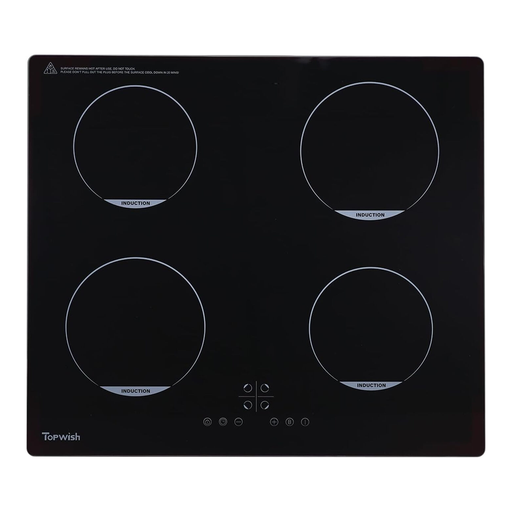 No image available
The four zones are designed for cooking several dishes at once.
60 cm; nine power levels; timer; boost function; child lock; touch controls; residual heat indicator.
Requires induction-compatible cookware with a magnetic base. The product details state that it is supplied without a plug and recommend professional installation.
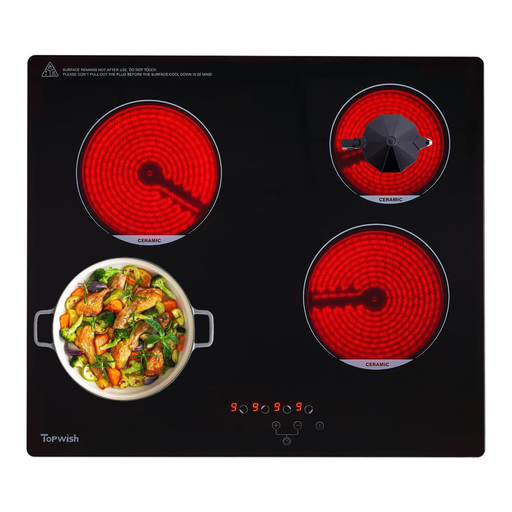 No image available
The four zones are suitable for several pans; the product details list dual-ring zones.
60 cm; 6.600 W; touch controls; child lock; overheat protection; residual heat indicator.
Described as a built-in appliance supplied without a plug; the product details specify a hard-wired connection and recommend professional installation.
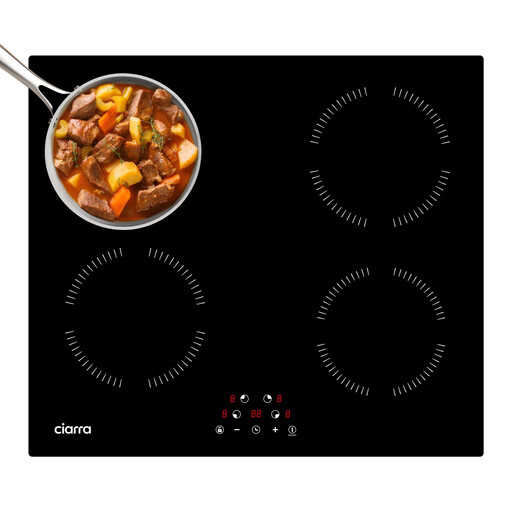 No image available
Four cooking zones and a choice of zone diameters are designed to accommodate pans of different sizes.
Nine power levels; individual timers; child lock.
Requires induction-compatible cookware. The product details recommend that installation and connection are carried out by a qualified professional.
Not necessarily. Check whether your pans have an induction-compatible base and are the right size for each cooking zone. The German Federal Office for Radiation Protection lists suitable materials and pan size as important requirements.
Don’t treat a built-in hob supplied without a plug like a portable hob. Bosch states that the built-in models featured here should be connected by a qualified electrician. Under § 13 NAV, work on electrical installations covered by this regulation may generally only be carried out by a company listed in an installers’ register, except for work carried out by the network operator. This does not apply to the normal use of an appliance with a plug. The regulation is set out in the legislation published by the German Federal Ministry of Justice and the Federal Office of Justice.
According to the Verbraucherzentrale, the energy label for a cooker with an oven rates the oven, not the hob. Don’t use it to infer an efficiency rating for the cooking zones.
Ask a medical professional about using the hob, referring to the guidance for your specific implant and hob. The Verbraucherzentrale warns people with pacemakers about induction cooking zones; the German Federal Office for Radiation Protection explains that electromagnetic fields can affect electronic implants, depending on the device. This does not provide a general assessment of any individual implant.
Your statutory consumer rights are with the seller; any voluntary guarantee is subject to its own terms and conditions. If a product is faulty, the first step may be to have it repaired or replaced. The Verbraucherzentrale makes a clear distinction between statutory consumer rights and a guarantee as separate entitlements.