
Lieferung heute & morgen

Qualitätsgarantie

Willkommens-Angebote freischalten: KOSTENLOSE Lieferung | Bis zu 80 % RABATT | Kostenlose 30-Tage-JoyPlus-Testphase
App herunterladen
A shared game night can be a valuable opportunity to spend time with family. But the joy can quickly fade if the newly purchased family game doesn't meet expectations. The selection is huge, and not every game that promises a lot delivers on it. Before you make a decision, it's helpful to know the most common pitfalls that can lead to a bad purchase.
A common problem is low replay value. Some board games are fun the first time, but the mechanics or content wear out quickly. The game ends up in the closet after just a few rounds, never to be brought out again. Another issue is an unsuitable age rating. A game declared as a "children's game for ages 8 and up" might be too strategically demanding for some children in that age group, leading to frustration, while being too simple for older siblings or adults.
To find a game that brings long-term enjoyment, you should check a few core criteria. These will help you assess a game's quality and suitability beyond the marketing hype.
The mechanics determine how a game feels and how often you'll want to play it. There are several basic types:
High replay value often comes from variable elements. A game board that is assembled differently each time, or a large number of different objective cards like in Ticket to Ride, ensures that no two rounds are the same.
The age rating on the box is a guideline. More important is your assessment of the actual complexity. Consider the following points:
Check how many players the game is designed for and whether it works well with your typical family size. Some games designed for 2–6 players only reach their full potential with three or four participants. The quality of the components is also crucial for long-lasting fun. Sturdy game boards, durable cards made of thicker cardboard, and well-crafted game pieces significantly contribute to the experience and will survive many game night ideas.
Here are some recommendations tailored to different needs and family constellations.
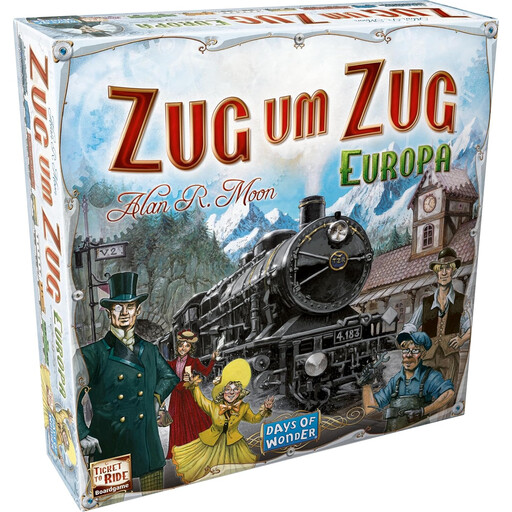
Why it's a great fit: Ticket to Ride: Europe is a modern classic board game for the whole family. It is ideal for sessions where experienced players and newcomers come together. According to the manufacturer, the rules can be learned in about 5 minutes, allowing for a quick and straightforward start.
The replay value is very high due to the variety of destination tickets, as new routes must be planned in every game. The age rating of 8+ is realistic, as the basic mechanics are simple, but the game also offers strategic depth for adults.
Good balance between strategy and luck. High-quality game components ensure durability.

Why it's a great fit: This game is based on the popular children's book series and is cooperative. Players must work together to save the magical animals. This is especially motivating for younger children who don't like to lose against each other.
The cooperative approach avoids the frustration of losing. The connection to the well-known book world provides high motivation and thematic immersion that goes beyond pure game mechanics.
Promotes teamwork and collaborative problem-solving. Unique game mechanic with a rotating game board.

Why it's a great fit: Catan is an award-winning strategy game that has been thrilling players for decades. It is suitable for families with older children (ages 10+) and adults who are looking for a challenge that goes beyond the pure luck of the dice. Trading and planning are central elements.
The modular game board ensures extremely high replay value, as each game creates a new strategic starting position. The complexity is appropriate for the target audience of ages 10 and up and also offers enough depth for adults to keep it from getting boring.
Promotes strategic thinking and negotiation skills. Numerous expansions allow the game experience to be deepened and varied.
We have compiled a comprehensive, up-to-date list of products that fully meet these strict selection criteria and German safety regulations.
In cooperative games, all players win or lose together. The goal is to overcome a challenge set by the game as a team. This type of game is particularly suitable for families with children of different ages or for groups that do not enjoy direct competition. They promote communication, teamwork, and collaborative problem-solving.
The "Spiel des Jahres" (Game of the Year) award is given by an independent jury of game critics and is considered one of the most prestigious awards in the board game world. An award-winning game typically features an original game idea, high accessibility, a clear rule structure, and an appealing design. The award is a strong indicator of quality, but it is not the only factor. There are many excellent games that have not been nominated or awarded.
To ensure the longevity of your board games, you should store them flat in a dry place, protected from direct sunlight. Storing them upright can cause large game boards to warp over time. Small parts like dice, cards, or figures are best kept in resealable bags or small containers inside the original box to prevent loss.