
Lieferung heute & morgen

Qualitätsgarantie

Willkommens-Angebote freischalten: KOSTENLOSE Lieferung | Bis zu 80 % RABATT | Kostenlose 30-Tage-JoyPlus-Testphase
App herunterladen
A family game night can be a valuable opportunity to spend quality time together and create lasting memories. But finding the right family game is often a challenge. The market is flooded with options that overpromise and underdeliver. To help you make an informed decision and avoid disappointment, we've outlined the most common pitfalls and key selection criteria.
As your Joybuy Product Recommendation Officer, my mission is to provide objective, practical guidance to help you find the perfect product for your needs.
Many well-intentioned purchases end up as dust collectors on the shelf. This is often due to design flaws or quality issues that aren't apparent at first glance. Pay close attention to these three points:
To find the perfect family board game, you should focus on objective features. The following three parameters are crucial for making a smart purchase.
The manufacturer's age rating is an important starting point. Check if it aligns with the age range of your family members. A game for ages 10 and up is unlikely to be enjoyable for a 6-year-old. Equally important is the specified player count. A game for 3-4 players is unsuitable for a family of five, unless you play in teams. Make sure the recommended number of players fits your typical game night group.
The type of game significantly shapes the experience. Are you looking for targeted skill development? Then educational games are a great choice. If you prefer tactical challenges, family strategy games might be the right fit. For a more casual session, cooperative games or those with a high luck factor work well. High replay value is crucial for long-lasting fun. Games that change with every playthrough (e.g., through a variable board or random events) stay engaging for much longer.
Sturdy construction is essential for durability. Look for thick, laminated cardboard, solid game pieces made of wood or high-quality plastic, and a durable box for storage. Within the EU, toys must carry the CE marking. This mark confirms that the product meets applicable safety requirements—an indispensable feature, especially for games intended for younger children.
To help you with your selection, we have matched some products from our range to different requirement profiles.
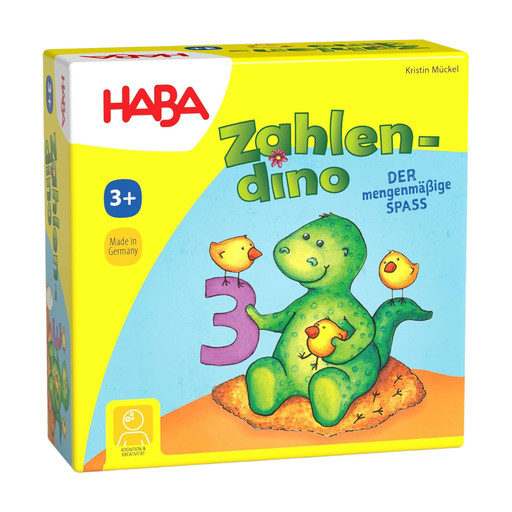
Why this game is a great fit: It is specifically designed as an educational game to playfully introduce children to counting, number recognition, and quantity comparison. The ability to play it alone or with up to four players makes it highly versatile.
The age rating (3–8 years) is precise and tailored to this learning phase, preventing players from being overwhelmed or underwhelmed. The HABA brand is known for its sturdy cardboard components, which counteracts the problem of poor-quality materials.
Combines playful learning with a proven game mechanic (memory). Its compact size also makes it an excellent travel game.

Why this game is a great fit: Catan is a classic among strategy games and is ideal for families with older children or teenagers. It promotes strategic thinking, negotiation skills, and forward planning.
The rules are clearly structured and understandable for the target audience of ages 10 and up, avoiding the pitfall of complex instructions. The Kosmos brand is synonymous with high-quality materials, ensuring a long lifespan.
The variable board setup provides extremely high replay value, as no two games are the same. It's an ideal gift for families looking for a challenge.
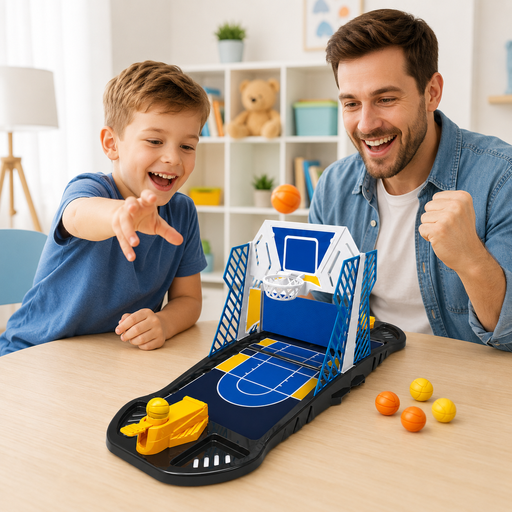
Why this game is a great fit: This dexterity game is perfect for a quick, uncomplicated round of play. It requires no lengthy setup and offers immediate, action-packed competition for all ages.
The gameplay is self-explanatory, thus avoiding the trap of complicated rules. It doesn't pretend to be a deep strategy game but perfectly serves its purpose as a lighthearted pastime for a broad age group.
Very quick to set up for an instant start. It promotes hand-eye coordination and provides friendly competition without a long time commitment.
We've compiled a complete, up-to-date list of products that fully meet these strict selection criteria and European safety regulations.
1. How can I tell if a game is suitable for different age groups in my family? Look for cooperative games where all players work together towards a common goal. In these, older players can support younger ones. Alternatively, choose games with simple core rules but strategic depth for experienced players (e.g., classic board games for kids and adults like Chess or Checkers). Games with a high element of luck also often balance out differing skill levels.
2. What does the CE marking on toys mean? The CE marking is a self-declaration by the manufacturer that the product complies with the applicable requirements of the European Union. For toys, this specifically relates to Directive 2009/48/EC on the safety of toys. It ensures that no harmful materials have been used and that there are no mechanical hazards (e.g., small parts that could be swallowed in toys for children under 3). It is a fundamental safety indicator, but not a quality seal.
3. How should I store board games properly to extend their lifespan? Store games in a dry place and avoid direct sunlight to prevent colours from fading. Stack game boxes flat to avoid warping the lids and contents, with heavier boxes at the bottom. Missing or damaged parts should be replaced promptly, and small components can be kept in resealable bags to prevent them from getting lost.