
Lieferung heute & morgen

Qualitätsgarantie

Willkommens-Angebote freischalten: KOSTENLOSE Lieferung | Bis zu 80 % RABATT | Kostenlose 30-Tage-JoyPlus-Testphase
App herunterladen
The selection of family games is vast, and making the right choice can be a challenge. Well-intentioned purchases often lead to frustration when a game is too complicated, the materials are poor quality, or the fun is short-lived. As your Joybuy Product Recommendation Officer, I'll help you spot common pitfalls and make an informed decision that ensures lasting enjoyment on game night.
Before we dive into the selection criteria, it's important to know the three most common mistakes that lead to disappointment:
To avoid a bad buy, you should check three core aspects. These will help you objectively evaluate a game's suitability.
Instead of relying solely on the printed age rating, you should analyse the required skills. Does the game require reading skills, strategic thinking, or fine motor skills? An educational game for a preschooler should focus on colour recognition and counting, while board games for kids and adults often offer more complex rules and strategic depth. Also, check the specified minimum and maximum player count. A game for "2–4 players" is unsuitable for a family of five, while a two-player-only game won't work for a larger game night.
High-quality construction is an indicator of durability. Look for the following features:
The type of game is a major determinant of the fun factor. Cooperative games, where everyone works together to beat the game, foster team spirit. Competitive games create exciting contests. Creative or communication games like Taboo or Activity thrive on interaction. High replayability is achieved when no two rounds are the same. This is often accomplished through variable game setups, a large number of event cards, or strategic variety. A good classic game is often characterised by simple rules but high strategic depth, which keeps it interesting for years.
Here are some recommendations tailored to different needs and occasions.
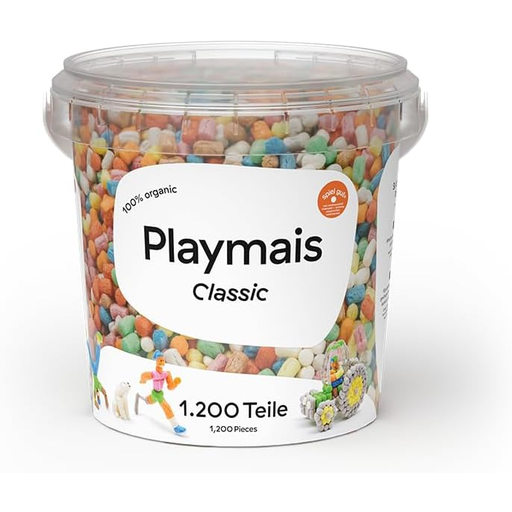
Why This Fits Their Persona: Ideal for families looking for a creative alternative to classic board games. It promotes fine motor skills and imagination in children from age 3, without complex rules or competitive pressure. A perfect shared activity for rainy afternoons.
This product sidesteps the pitfall of inappropriate complexity. There are no rules to learn; getting started is intuitive and only requires water. The age rating is clearly justified by its focus on developing fundamental motor skills.
Made from corn grits, water, and food colouring, making it biodegradable. Promotes creativity and concentration without screen time.
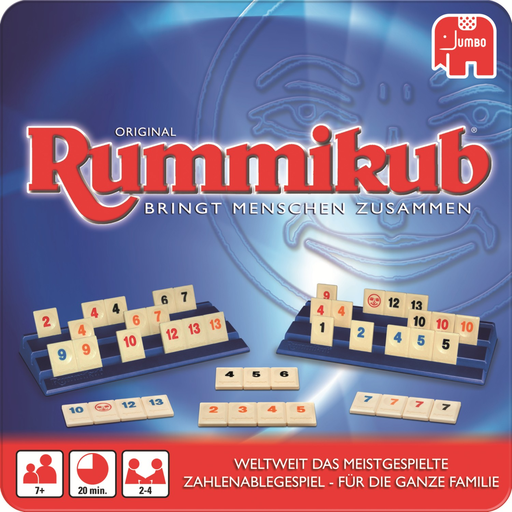
Why This Fits Their Persona: Perfect for families with older children and adults who appreciate a mix of luck and strategy. Rummikub is a time-tested classic that connects generations and promotes logical thinking.
This game avoids the trap of poor-quality materials. The high-quality plastic tiles and sturdy racks are designed for durability. Storing them in a metal box provides additional protection for the components.
Simple rules allow for a quick start, while the strategic depth ensures high replayability. The playtime of about 20 minutes per round is ideal for a flexible game night.
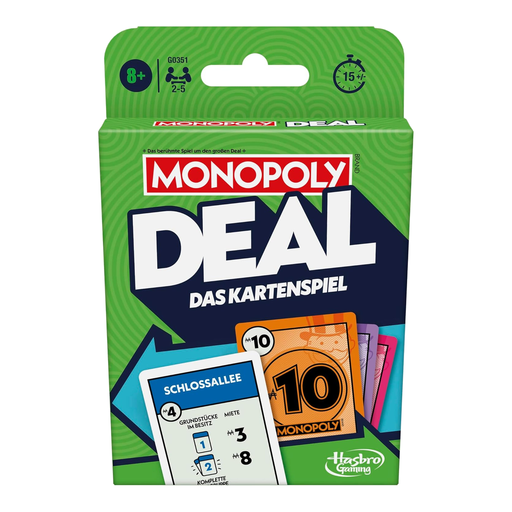
Why This Fits Their Persona: For everyone who loves the classic Monopoly but doesn't have time for hours-long games. This card game is fast, compact, and perfect as a travel game or for a spontaneous round in between. A great gift idea for game fans.
It solves the problem of excessive game length. With a stated playtime of just 15 minutes, it fits into any schedule and prevents attention from waning. Its compact size also makes it an ideal companion.
Combines the familiar elements of Monopoly with fast, interactive card mechanics. The action cards provide strategic twists and high replayability.
We have compiled a complete, up-to-date list of products that fully meet these strict selection criteria and German safety regulations.
The key is variety and communication. Consider the different interests and age groups. Cooperative games, where everyone works together, are often a good compromise. Another option is to let each family member take turns choosing a game for the evening. That way, everyone's preferences are met.
A good travel game should meet three criteria: It must be compact and easy to transport, ideally in a sturdy container like a metal tin. It should have few small parts that can easily get lost in a car or train. Finally, a short playtime and simple setup are advantageous, allowing it to be played even during short breaks.
Educational games are useful at any age, as long as they are age-appropriate and the focus remains on fun. For toddlers (from age 3), they playfully promote motor skills, colour recognition, or counting. For older children, they can train strategic thinking, vocabulary, or maths skills. The important thing is that the learning happens seamlessly and the game is not perceived as a pure "chore".