
Lieferung heute & morgen

Qualitätsgarantie

Willkommens-Angebote freischalten: KOSTENLOSE Lieferung | Bis zu 80 % RABATT | Kostenlose 30-Tage-JoyPlus-Testphase
App herunterladen
Family games should bring several age groups together around the table, without rules, playing time or components quickly becoming a burden. When choosing, it’s less about flashy packaging promises and more about concrete details: age recommendation, number of players, playing time, game mechanics and format.
Whether you’re looking for board games for the whole family, games for children and adults, card games or travel games for families, certain typical buying decisions can mean the game rarely gets used afterwards.
“Ages 6+” or “ages 8+” describes the manufacturer’s recommendation, but it doesn’t automatically mean that younger and older players will be equally engaged. A strategy game with lots of rules can still be more challenging for a child of the recommended age than a simple reaction or guessing game.
So check how many steps a single turn involves, whether reading is required, and whether adults have a knowledge advantage. Games with separate card decks for children and adults can offer a more balanced starting point.
A game for two to six people doesn’t automatically suit a family of five players. With some games, the waiting time changes; with others, the dynamic shifts. Party games often need at least three or four people, while compact two-player games are ideal for a quick round in between.
Pay attention to the minimum number of players and whether everyone is active at the same time. This reduces downtime during a family games night.
An easy-to-understand rulebook doesn’t necessarily mean a round will end after 15 minutes. Ticket to Ride: Europe, according to the product details, takes about five minutes to explain, yet has a playing time of roughly 45 minutes or more. If you’re looking for a game for a train journey, you should also check the box size and typical round length.
For children’s games from age 6, clear processes and minimal text-based rules are usually practical. A game like Kakerlakensalat is designed, according to the product details, for two to six people aged six and up. With board games from age 8, planning, language or spatial thinking often take centre stage.
The game objective should suit the group:
Compare the stated playing time with the intended occasion. For a quick round, compact card games or travel games for families are a good choice. For a longer evening, games with 30 to 60 minutes of playing time can work well.
Setup is equally important. If lots of cards need sorting, playing pieces need distributing or rules need explaining, the likelihood of a spontaneous game decreases. A storage solution, a foldable game board or a small box makes it easier to use on the go.
Many family games contain cards, chips, dice or small playing pieces. The safety instructions on the packaging must therefore be followed. Several of the products mentioned here warn about small parts and a potential choking hazard for children under three years old.
For longer-lasting use, the following points are also relevant:
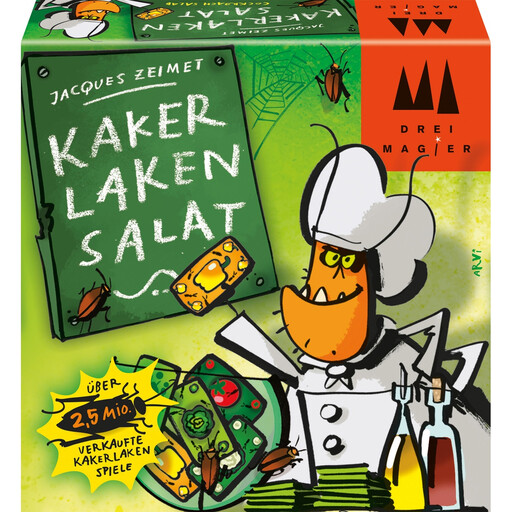
Why this product fits the profile: This card game is designed for two to six people aged six and up and requires no batteries. The rules are geared towards quick rounds.
The number of players and age rating are clearly stated. The compact format reduces setup and storage effort.
Fast reaction-based gameplay, two to six players and a format suitable for home or on the go.
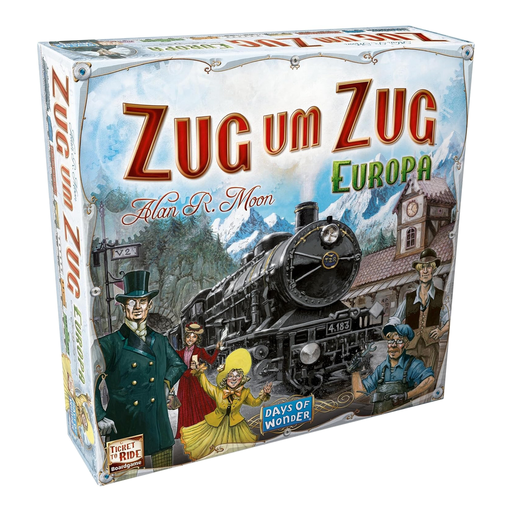
Why this product fits the profile: This strategy game for two to five people aged eight and up combines card management with building railway routes. The stated playing time is around 45 minutes or more.
The number of players, age and playing time are all clearly stated. This makes it easy to check before buying whether the table and available time are sufficient.
German edition, 250 stated pieces and a game objective involving tactical decisions.
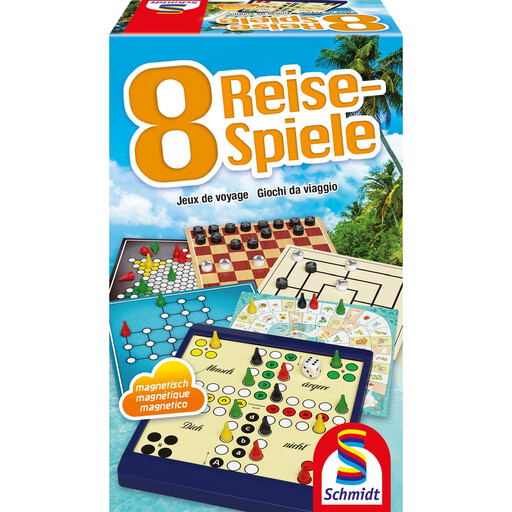
Why this product fits the profile: This collection contains eight classic games in a foldable magnetic box and is aimed at players aged six and up. The format is designed for travel, holidays and day trips.
The magnetic fastening addresses the typical problem of pieces sliding around. All accessories are stored in the box.
Eight game variants, no batteries required and stated dimensions of 18.5 × 11.5 × 7 cm.
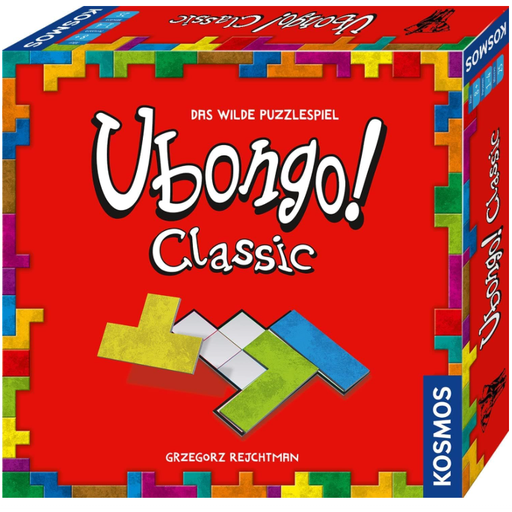
Why this product fits the profile: In Ubongo, one to four players aged eight and up work simultaneously on spatial puzzle challenges. Two difficulty levels allow adaptation to different levels of experience.
The simultaneous gameplay reduces waiting times. Two difficulty levels and 648 stated puzzles offer different entry points.
Quick setup, optional explanatory app and a timed gameplay format.
We’ve put together a complete, regularly updated list of products that fully meet these strict selection criteria and the safety regulations in force in the EU.
Games with few rules, short rounds and a manageable number of components are suitable. Kakerlakensalat, the magnetic collection from Schmidt Spiele and Connect 4 Grab And Go are all designed, according to the product details, for children aged six and up. However, you should still pay attention to the safety instructions regarding small parts.
That depends on the occasion. For parents and one child, games for two people are sufficient. For a games night with multiple generations, variants for four to six people are more suitable. Party games like Tabu Family Edition or Party & Co. Family need a larger group, while Ubongo Classic is stated as being for one to four people.
For travel, small dimensions, secure storage and short rounds are key. Magnetic travel games, Triominos Travel, Rummikub Travel Pouch or compact card games are easier to fit in luggage than large board games. Before buying, you should also check whether a flat playing surface is needed and whether all pieces can be fully packed away after the game.