
Lieferung heute & morgen

Qualitätsgarantie

Willkommens-Angebote freischalten: KOSTENLOSE Lieferung | Bis zu 80 % RABATT | Kostenlose 30-Tage-JoyPlus-Testphase
App herunterladen
Family games are designed to bring several generations together around the table. In practice, however, not every board game suits every group. A game for two people may be impractical at a birthday party with ten guests, while a complex strategy game can quickly overwhelm younger children. Even the phrase ‘for the whole family’ says little on its own about the recommended age, playing time or level of concentration required.
Before buying, it is worth looking at the actual product details. Three common mistakes are particularly easy to avoid:
Buyers should also check whether small parts are included. Several products in this selection carry a warning about a possible choking hazard for children under 3 years of age. The age recommendation on the packaging therefore takes priority over general advertising claims.
The recommended age group is a useful first filter. For families with children aged 6 and over, games with short sequences, visible moves and little text are generally suitable. From age 8, tactical decisions, several types of cards or simultaneous moves may be introduced. Games for ages 10 and over can include hidden information, logic puzzles or social deduction.
It is also important to consider whether adults will need to explain the rules first. With a cooperative game, the group can get started together; with a strategy game, everyone involved should understand the basic rules so that children do not simply end up watching.
The number of players should suit the group you usually play with:
With games for 2 to 6 players, it is also worth checking whether the overall experience changes significantly with just two people. A game involving teams or negotiation often needs more players than a classic card game.
Card, dice and board games differ in how they are handled. Large dice and an easy-to-read game board can be helpful during family game sessions. Paper and cardboard components should be stored somewhere dry. If the game is transported frequently, compact packaging or a separate storage solution can be useful.
When choosing a game, it is not just the theme that matters, but also how it plays:
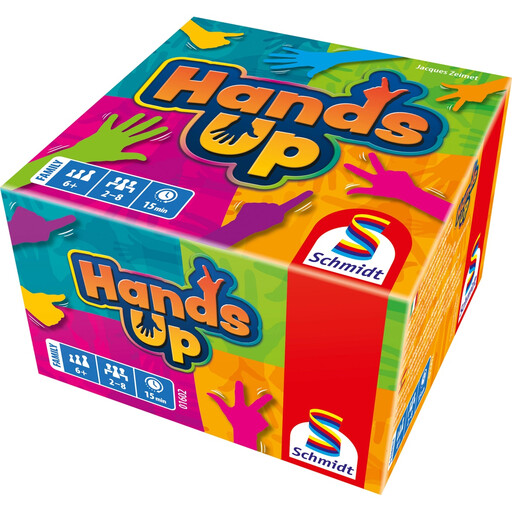
Why this product suits this profile: This compact card game is suitable for ages 6 and over and can be easily added to a game night without batteries or extensive set-up.
The age recommendation and card format make the possible uses clearer than simply labelling it as a family game.
For ages 6 and over, compact dimensions of 10 × 10 × 6.8 cm, no batteries required.
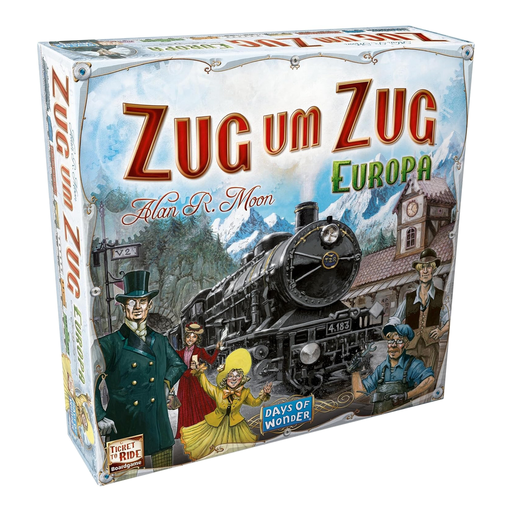
Why this product suits this profile: This German strategy game supports 2–5 players, is suitable for ages 8 and over, and combines route building with destination tickets.
The number of players, recommended age and approximate playing time of 45 minutes or more are clearly stated.
Game components made from paper, cardboard and plastic; according to the product details, the rules can be learnt in around five minutes.
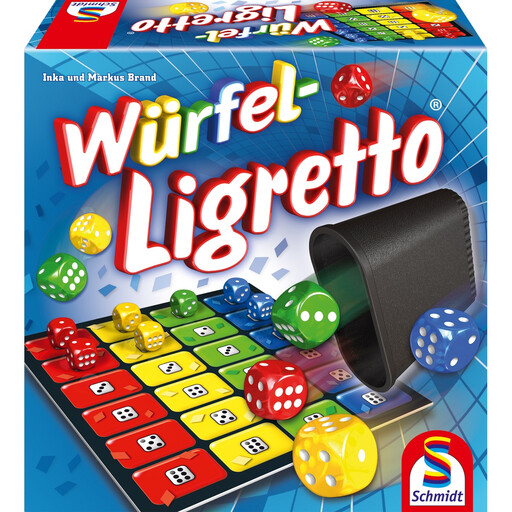
Why this product suits this profile: This dice game for ages 8 and over is designed for quick, simultaneous moves and is ideal for families who prefer short, active rounds.
The 24 transparent dice in four colours and the product dimensions of 19 × 19 × 6.7 cm make the contents and storage requirements easy to understand.
Simultaneous play without batteries; the fast-paced mechanics reduce waiting between turns.
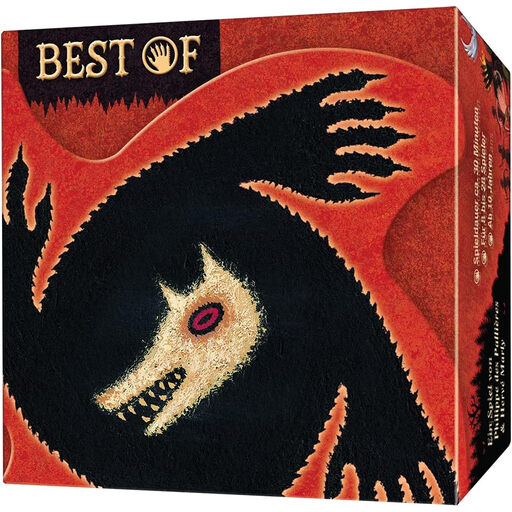
Why this product suits this profile: This party game is designed for 8–28 players aged 10 and over, making it ideal for groups involving discussion, role allocation and a game master.
The high player count is clearly stated. This makes it easier to decide before buying whether your group is large enough.
Secret roles, group discussions and a playing time of 30 minutes or more; no batteries required.
We have put together a complete, regularly updated list of products that fully meet these strict selection criteria and the safety regulations applicable in the EU.
For a cooperative game for ages 6 and over, ‘The School of Magical Animals – Incredible!’ is one option for 1–4 players. If you prefer puzzles, you could choose an EXIT game for ages 10 and over with 1–4 players. For short dice-based rounds, QWIXX XL or ‘Noch mal!’ for ages 8 and over are specific options. From age 12, word and communication games such as ‘Stadt Land Vollpfosten’ or Activity Original may be suitable.
As a gift idea for children and families, the game should suit the group you already have. A quick check of the age recommendation, number of players, playing time, language and safety information is a more reliable way to avoid a disappointing purchase than an eye-catching advertising slogan.
Games with manageable rules, quick preparation and visible moves are suitable. According to the product details, ‘Hands Up!’ is suitable for ages 6 and over. Cooperative games for ages 6 and over can also be a good choice when adults guide the first round.
Lifespan depends mainly on the materials, storage and how the game is handled. Cards and game boards should be stored somewhere dry and protected. Keeping everything organised helps prevent pieces from going missing. With small components, check after each round that everything has been put away safely and completely.
Party games involving roles, communication or teams are suitable for large groups. ‘Werewolves of Düsterwald – Best of’ is designed for 8–28 players. For smaller groups, games for 2 to 6 players are generally more practical, as waiting times are kept shorter.