
Lieferung heute & morgen

Qualitätsgarantie

Willkommens-Angebote freischalten: KOSTENLOSE Lieferung | Bis zu 80 % RABATT | Kostenlose 30-Tage-JoyPlus-Testphase
App herunterladen
Finding a game for several generations may sound simple at first. In practice, however, family games vary considerably in terms of age suitability, playing time, number of players and complexity of the rules. A title that interests adults may overwhelm children. Conversely, a seemingly straightforward card game can quickly lose its appeal if there is no variety after a few rounds.
“Suitable for the whole family” does not automatically mean that a game is suitable for every child. The manufacturer’s recommended age range is the key factor. Children’s games from age 6 differ from strategy games for ages 8 or 10 and upwards in terms of vocabulary, attention span and understanding of the rules.
The actual group of players matters too. If grandparents, parents and children are playing together, the rules should be easy for everyone to understand. Additional safety guidance applies to games containing small parts. Products with components that could be swallowed should always be kept away from children under three.
Many board games work particularly well only with a specific group size. A game for two people is not automatically suitable for a family gathering with six players. Conversely, games for four to twelve people may be too extensive for a couple.
Before buying, you should therefore check:
Awards can provide some guidance, but they reveal little about whether a title is right for your family. Specific details about age, playing time, materials, dimensions and game mechanics are more important. Terms such as “educational game” or “strategy game” should also be considered more closely. A game may involve arithmetic, memory, logical thinking or communication without being suitable for every age group.
For younger children, straightforward rules, larger pieces and shorter rounds are often more suitable. A puzzle with 15 or 24 pieces may offer an easier introduction than a complex card game. For older children and adults, puzzle and brain games, cooperative board games or more demanding strategy games may be suitable.
Pay attention to the wording “from age”: this describes the recommended minimum age and is not a guarantee that every child in that age group will be able to master the game without difficulty.
A game night does not always consist of long rounds. Card games that are quick to set up are ideal for everyday use, while more extensive board games are better suited to planned get-togethers. Also check whether the game materials need to be sorted and how much space the playing area requires.
Travel games should come in compact packaging, with sturdy pieces and well-organised storage. For electronic games, the battery type and contents of the package should also be taken into account when making your decision.
Cooperative board games have players work together to tackle a challenge. Competitive games, on the other hand, focus on points, tactical decisions or direct duels. For families with different levels of gaming experience, games with simple basic rules and variable challenges can be a sensible choice.
When choosing educational games, it is advisable to check the specific area of learning involved. Possible focuses include number skills, concentration, visual perception, memory or logical reasoning. Such information describes the approach taken by the game and does not constitute a medical or therapeutic promise.
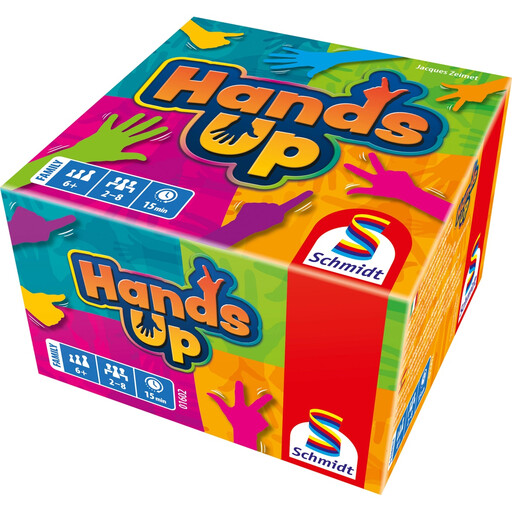
Why this product suits the profile: According to the product information, this card game is suitable for children aged 6 and over and does not require batteries. The compact box, measuring 10 × 10 × 6,8 cm, is easy to store.
The age recommendation and manageable card format help avoid an introduction that is too challenging. Not needing batteries also helps reduce ongoing additional costs.
Suitable from age 6, no batteries required, durable cards according to the product description.

Why this product suits the profile: This cooperative board game is designed for two players aged 10 and over. Its 21 airport scenarios offer different tasks and varied challenges.
The clearly defined two-player format prevents false expectations of a large family game. Scenarios with different tasks can provide plenty of variety.
Cooperative gameplay, 21 missions, suitable from age 10 and no batteries required.
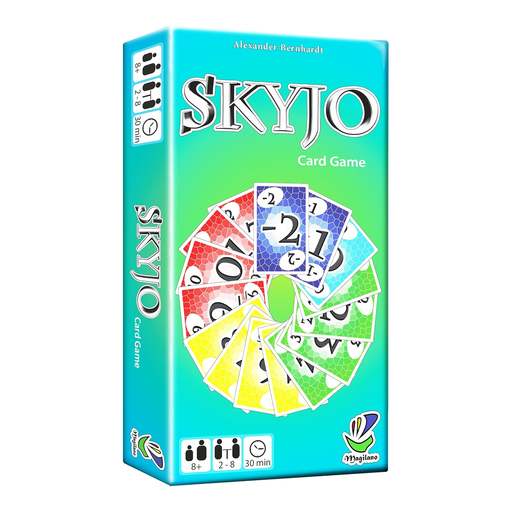
Why this product suits the profile: This card game is designed for 2 to 8 players aged 8 and over. The compact packaging, measuring 19,4 × 10,1 × 3,5 cm, is ideal for changing game-night groups and travel.
The stated range of two to eight players reduces the risk of buying a game that only works for a fixed group size. Scores are recorded on a score pad.
2–8 players, from age 8, 150 cards and multilingual instructions according to the product information.
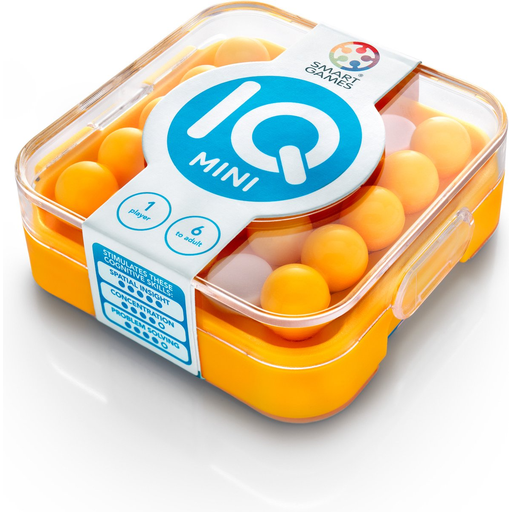
Why this product suits the profile: This compact brain game is designed for one player aged 6 and over. The playing area and blockers can be used to create your own challenges.
The solo-player design makes it clear that a group game is not required. The pocket-sized format is ideal for playing on the go and does not require batteries.
From age 6, compact format, create your own challenges, additional hints and solutions available via QR code.
We have compiled a complete, regularly updated list of products that fully meet these strict selection criteria and the safety regulations applicable in the EU.
Games with clear rules, a flexible number of players and an accessible introduction are suitable. For younger children, simple puzzles and card games are a good option. From around age 8, strategy games, logic games or cooperative board games may also be suitable, depending on the child. The manufacturer’s information and the individual abilities of the players remain the deciding factors.
For spontaneous game nights, rounds lasting around 15 to 30 minutes are generally easier to fit into your plans. Longer games may be better suited to weekends or special occasions. With children, you should consider whether they can stay focused for the entire playing time. A flexible round structure makes it possible to take a break at the right moment.
Versatile card games, travel games or puzzle and brain games are all good gift ideas. Before buying, you should know the recipient’s age, interests and preferred group size. For a family that regularly enjoys game nights, a game for 4 to 8 players could be a sensible choice. For one child, compact solo games or age-appropriate educational games are more suitable.