A Wi-Fi tablet is a good fit for family history research on the train if you save your documents in advance and mainly read or take notes while travelling. If you often research online, a mobile-data model may be a better choice, provided the plan and coverage suit your route. Where there are signal blackspots, saved files and a tested app workflow matter more than a 5G logo, as train Wi-Fi and some app features aren’t available everywhere all the time. Deutsche Bahn says Wi-Fi is available across its entire ICE fleet, but only on some Intercity trains and selected regional services.
Which tablet is right for you?
Commuters reading records
If you compare scans and family tree pages at your seat, screen size and a tablet that’s easy to handle are key considerations. Apple Germany and Xiaomi Germany list different screen sizes and weights for their respective models.
Researchers who need frequent online access
If you want to search for new records while travelling, weigh up train Wi-Fi, a smartphone hotspot and a tablet with mobile data. Deutsche Bahn explains which types of train offer Wi-Fi; whether you need a model with its own mobile connection depends on your requirements.
Researchers travelling through signal blackspots
If you want to use your documents without a connection and sync changes later, check the offline features in the specific version of your app. FamilySearch notes that some features require internet access and that its mobile app doesn’t include every feature available on the website.
What should you look for when buying?
Wi-Fi tablet with documents saved in advance
A good fit if: you save your files before travelling and mainly read or take notes on the journey.
The trade-off: A Wi-Fi model doesn’t have its own mobile connection. Deutsche Bahn also points out that Wi-Fi availability and connection speeds vary depending on the train and how busy it is.
Tablet with mobile data
A good fit if: you often want to look up new records online while travelling and are happy to use a suitable data plan.
The trade-off: Check the exact model, data plan and network coverage along your route. A data plan won’t give a Wi-Fi-only model its own mobile connection.
The main buying priorities for family history research on the train depend on whether you want to read scans, search for new sources online, keep working when the signal drops or record your finds.
| What you need |
What to check before buying |
Who is it important to? |
| Read records in a cramped seat |
Compare the screen size and weight of the exact model; try zooming in on a typical scan and check how comfortable it is to hold. |
If I need to enlarge historical scans at my seat, I look for enough screen space and a tablet that’s easy to handle. Around 33% of consumers put reading records first. |
| Find new sources online |
Check the train type and route, as well as Wi-Fi, hotspot options and the exact mobile-data model; a mobile modem doesn’t guarantee reception. |
If I want to look up new records while travelling, I want to know which type of connection is likely to work on my route. Around 27% of consumers prioritise online access. |
| Keep working when the signal drops |
Save the files you need in advance and test what the specific app version can open or edit without a connection. |
If I lose reception, I want to open saved documents and sync changes later. Around 20% of consumers put offline work first. |
| Record your finds and keep costs in check |
Check stylus compatibility and what’s included with the exact model; also find out which records your genealogy service gives you access to. |
If I want to annotate my finds and organise my files, I look for the right input options and the access I need. Around 20% of consumers prioritise workflow and cost. |
Common pitfalls
-
Assuming train Wi-Fi means constant access to online archives
Deutsche Bahn offers Wi-Fi across its entire ICE fleet, but only on some Intercity trains and selected regional services. Even on ICE trains, speeds depend in part on the connection to mobile networks and how many passengers are online at the same time.
Check the train journeys you usually take and have important documents ready before you set off.
-
Assuming an installed genealogy app will work fully offline
FamilySearch notes that some features require an internet connection and that its mobile app doesn’t include every feature available on the website.
Before travelling, test the exact tasks you’ll need to do on the journey with no connection.
-
Assuming the device includes everything you need for your research
A memory card, stylus, data plan or access to specific records may all be worth considering, depending on how you work. The microSD card for the REDMI Pad Pro 5G is sold separately; Ancestry distinguishes between creating a family tree for free and accessing additional records.
Check what’s included, which storage options you need and access to the specific records separately.
Key brands at a glance
Apple
The iPad (A16) range includes 11-inch models suited to working with documents, in Wi-Fi and Cellular versions.
- Apple Germany lists the Wi-Fi model at 477 g and the Wi-Fi + Cellular model at 481 g.
- Support for certain Apple Pencil models doesn’t mean a Pencil is included; a Wi-Fi model doesn’t have its own mobile connection.
Samsung
The Galaxy Tab S10 FE range is worth considering for research with handwritten notes; check the Wi-Fi and 5G versions separately.
- Samsung promotes an included S Pen and microSD support across the range. According to Samsung, the Galaxy Tab S10 FE has a 10.9-inch screen, while the FE+ has a 13.1-inch screen.
- These specifications don’t confirm how easy historical handwriting is to read or how suitable the tablet is for use on a train.
Lenovo
The Tab M11 is a possible choice for taking notes on the go, provided the specific LTE and Pen version suits your workflow.
- For the specified LTE version, Lenovo lists 4 GB RAM, 128 GB storage and a Pen.
- You can’t assume that the same accessories or mobile connectivity come with other Tab M11 versions.
Xiaomi
The REDMI Pad Pro 5G is worth considering if you’re travelling and looking for a larger screen and a mobile-data option.
- Xiaomi lists a 12.1-inch screen and a weight of 566 g.
- The hybrid slot takes either a second SIM or a microSD card. Xiaomi says the memory card is sold separately and isn’t intended for apps.
Joybuy tablets for researching on the train
These Joybuy tablets can be compared for train research based on their screens, note-taking features and stated connectivity.
 No image available
Blackview MEGA 12, 12.2 inches, 5G, 256 GB
A good fit for your research if you want a larger view of scans and a clearly stated mobile-data option.
The product name specifies a 12.2-inch screen, 2.4K and 256 GB of storage.
View at Joybuy
 No image available
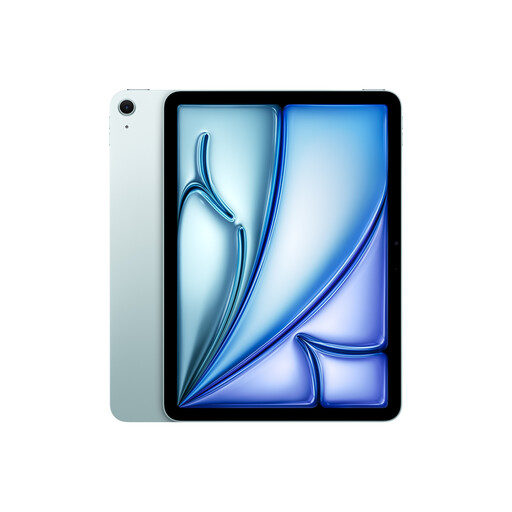
Apple 11-Inch iPad Air (M4, 2026), Wi-Fi, 128 GB
An option if you save your documents in advance and want to use a Wi-Fi model for reading and research.
The product name specifies 11 inches and 128 GB. As a Wi-Fi model, it relies on Wi-Fi or a separate hotspot.
View at Joybuy
 No image available
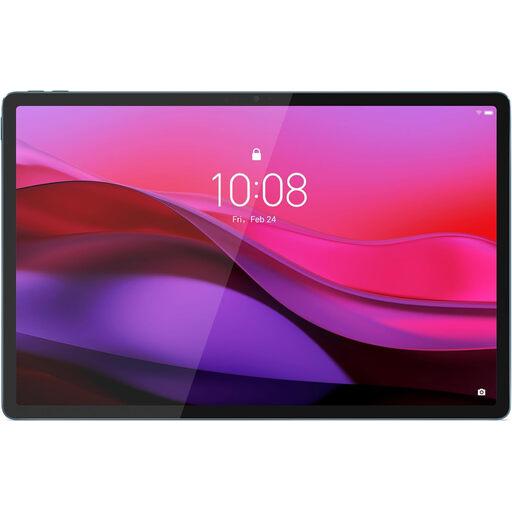
Lenovo YOGA Tab Plus TB520FU (2024)
A possible fit if you want to read documents saved in advance on a Wi-Fi tablet and have them to hand while travelling.
The model name is TB520FU (2024); this version is listed as a Wi-Fi tablet.
View at Joybuy
 No image available
iFLYTEK AINOTE 2, 10.65 inches, E-Ink
Worth considering if you want to read and take handwritten notes on the same device.
The product name specifies a 10.65-inch E-Ink screen. Transcription requires an internet connection; if you want to keep notes available offline, check the local storage details.
View at Joybuy
 No image available
TECLAST ArtPad Pro, 12.7 inches, 2K
An option if you want to read scans on a larger screen and make notes directly on the tablet.
The product name specifies a 12.7-inch screen with 2K resolution and an included stylus. It lists dual-SIM 4G LTE and 5G Wi-Fi; this doesn’t mean it has a 5G mobile connection.
View at Joybuy
Frequently asked questions
Is train Wi-Fi good enough for researching family history online?
Not on every journey. According to Deutsche Bahn, Wi-Fi is available across its entire ICE fleet, but only on some Intercity trains and selected regional services. Speeds depend in part on the train’s connection to mobile networks and how many passengers are online at the same time.
How can I prepare my tablet for signal blackspots?
Save the documents you need locally before your journey and test your genealogy app without a connection. FamilySearch notes that some features require internet access and that its mobile app doesn’t include every website feature, so check the specific tasks you need to do in your version of the app.
Do I need a paid Ancestry membership?
Not to create a family tree, according to Ancestry. Ancestry describes membership as providing access to records and public family trees. Check in advance which records you need and what type of access they require.
What are my rights when buying a tablet online in Germany?
Consumers generally have a right to cancel distance contracts under § 312g BGB; § 355 BGB sets out a 14-day cancellation period. Exceptions and the date on which the period starts for the specific contract should also be taken into account. Your statutory rights if goods are faulty are separate from any voluntary guarantee.


