Families making several glasses
If you want to prepare everyone’s breakfast portions together, the usable capacity should suit the amount in your recipe.


If you want to make several glasses in one go, compare the amount in your recipe with the stated usable capacity and fill line of a jug blender. A compact blending cup is better suited to individual portions. With either type, texture and cleaning depend on the ingredients and the care instructions for the specific model, not just its wattage. Also check the specific product listing to confirm that the parts are suitable for contact with food.
If you want to prepare everyone’s breakfast portions together, the usable capacity should suit the amount in your recipe.
If you blend regularly, check how easy the jug, lid and blades are to clean after breakfast.
A small blending cup can be handy for individual drinks, but making several glasses for breakfast may mean blending in batches.
First, compare the amount you need for your family with the container’s actual usable capacity. Then check the care instructions and whether the blender is suitable for your ingredients to help you choose between a jug and a compact blending cup.
| Consideration | What to check when buying | Who is this important for? |
|---|---|---|
| Several portions in one go | Compare the amount in your recipe with the stated usable capacity and fill line of the specific model. | If you want to make several glasses for breakfast in one go, the amount you can actually blend is what matters. Around 36% of consumers put family-sized portions first. |
| Cleaning during the breakfast rush | Check the manual to see which parts of the exact model are removable and dishwasher-safe. | If you blend regularly before or after breakfast, you’ll want the individual parts to be easy to clean. Around 29% of consumers say cleaning is their top priority. |
| Consistent results with different ingredients | Check whether the model is designed for the ingredients you plan to use; only compare texture claims for similar recipes. | If you want to blend fibrous or frozen ingredients as well as fresh kiwi, it’s important to check that the model is suitable for them. Around 21% of consumers prioritise texture for these kinds of recipes. |
| Compact size and features | Compare the container size and worktop footprint with your usual portion size. | If space is limited and you usually blend individual portions, a compact cup may suit your routine better. Around 14% of consumers prioritise a compact design. |
Tefal states that the BL91HD has a total capacity of 2.6 l and a usable capacity of 1.75 l. For your recipe, it’s the stated usable capacity that matters, not just the container’s total size.
Compare the amount you plan to make with the fill line and usable capacity of the exact model variant.
CHIP notes that blending results can vary depending on the ingredients. A high power rating alone can’t reliably predict how smooth a particular kiwi recipe will be.
Look for information about the ingredients you actually plan to use. Results with leafy greens or frozen fruit won’t necessarily apply to every recipe.
For the Tefal BL91HD, the stated dishwasher-safe parts include certain jug components without blades.
Before buying, check the parts list and care instructions for the exact model variant.
The BL91HD and BL871D differ in their containers and cleaning information.
The VitaPower Series 6 MMB6762M is a jug blender. You can compare its stated container capacity with the portions you plan to make.
The 5000 Series HR3030/00 is a jug blender for households considering blending frozen ingredients too.
The Kult X Mix & Go is a compact alternative for individual smoothies rather than a full family batch.
According to Braun, the PowerBlend 9 JB 9040 Black offers adjustable textures and several programmes.
This selection at Joybuy includes jug blenders and a kitchen blender with a smoothie attachment. Compare the container size of each model with the amount in your recipe.
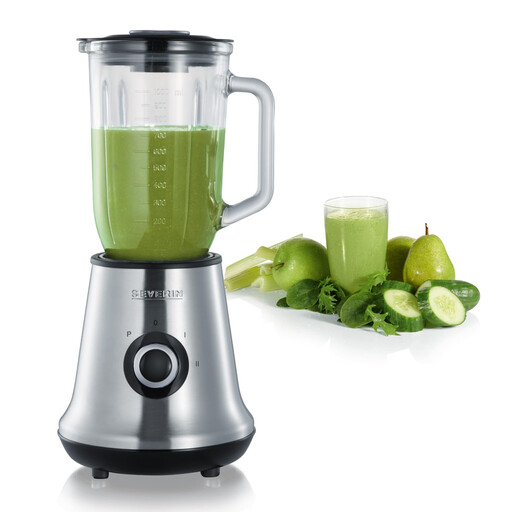 No image available
The jug is listed as suitable for smoothies, and the refill opening lets you add ingredients while blending.
1.0 l container capacity, 500 W, two speed settings and a pulse function. Do not exceed the fill line; according to the product description, the jug and lid are not dishwasher-safe.
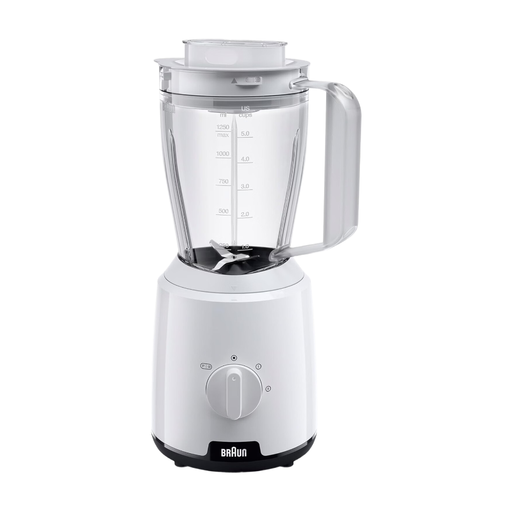 No image available
The blender is listed as suitable for smoothies; its stated container size makes it easy to compare with the amount in your recipe.
1.5 l blending jug, 600 W, two speeds and an ice-crush function. Removable parts are described as dishwasher-safe.
 No image available
The blender is listed as suitable for smoothies and has a 1.5 l container for you to compare with the quantity you need.
600 W and three speeds. The product description lists dismantling and cleaning as part of its intended use.
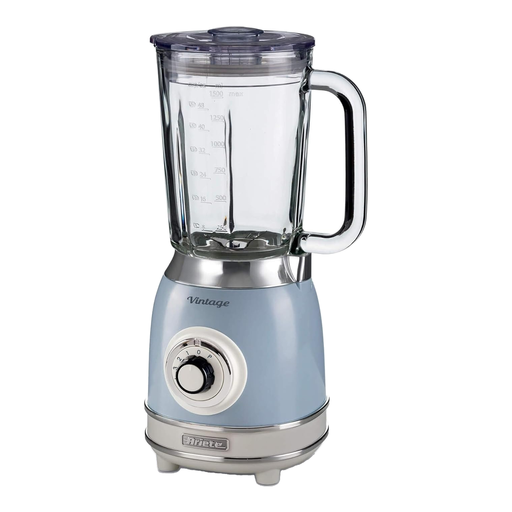 No image available
The glass container is designed for fruit and vegetable drinks; compare its size with the amount you need for breakfast.
1,000 W, four speeds, a pulse function and an ice-crushing function. The product description lists dishwasher-safe parts.
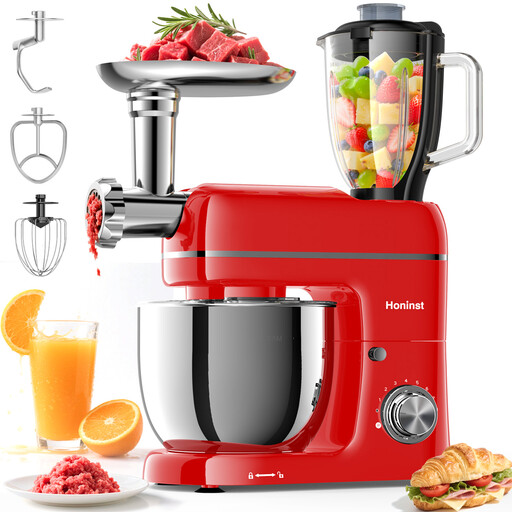 No image available
The smoothie attachment is designed for preparing drinks at home. Before buying, check the maximum fill level for this attachment to make sure it suits the amount in your recipe.
Eight speeds and a pulse function.
First, add up the amount of drink you plan to make and compare it with the usable capacity and fill line of the specific appliance. For the BL91HD, Tefal distinguishes between a total capacity of 2.6 l and a usable capacity of 1.75 l; these figures are not interchangeable.
The Federal Centre for Nutrition recommends peeling and chopping kiwi, or scooping out the flesh. It notes that organic kiwis with very smooth, hairless skin may be an exception.
It depends on the instructions for the specific model and its individual parts. For the Tefal BL91HD, Tefal explicitly lists dishwasher-safe jug parts that exclude the blades.
Parts that come into contact with the smoothie must meet the requirements of Regulation (EC) No 1935/2004. Whether an electrical model needs CE marking depends on the applicable harmonised EU rules. Check the specific product listing to confirm that the parts are suitable for contact with food; meeting general legal requirements does not automatically prove that a particular model complies.