Those checking for duplicates
If similar names, dates or multiple versions appear in your catalogue, you’ll want to compare the scans before merging entries. Microsoft warns that removing duplicate values from a table can permanently delete data.


For cataloguing family letters, a laptop with a comfortable-to-use display, a good keyboard and the right ports matters more than a particularly powerful graphics card. Check similar entries against the original scans before merging or deleting them: a laptop cannot tell for itself whether two letters are actually the same document. Also allow for storage space for your scans and a separate backup.
If similar names, dates or multiple versions appear in your catalogue, you’ll want to compare the scans before merging entries. Microsoft warns that removing duplicate values from a table can permanently delete data.
You review lots of photographed or scanned letter pages and regularly switch between images and metadata. Tropy explains how to combine several photos of a letter into a single entry.
You want to be able to find the original images and catalogue again later, and protect them from loss. The Federal Office for Information Security recommends regular backups. For handwritten documents, it may also be worth checking a transcription.
First, consider whether you’ll mainly compare scans and entries at a desk or often work in different locations. Then check the exact device configuration against your software, scanner and planned backup drive.
| Priority | What to check when buying | Who is this important to? |
|---|---|---|
| Check for duplicates | Check whether the software can flag or filter entries before deletion; keep the originals for now. | When I see similar names or dates, I want to compare the scans before anything is merged. Around 29% of consumers put checking for duplicates first. |
| Compare scans and entries | Check the display size and resolution for the exact model, as well as the keyboard and, if needed, the connection for an external monitor. | A clear, easy-to-read display helps when I’m switching frequently between image details and metadata. Around 23% of consumers prioritise comparing displays. |
| Back up archive files | Choose SSD capacity to suit the size of your scan collection and check the connection for your chosen backup drive. | I want to be able to restore my original scans and catalogue if my device fails. Around 18% of consumers prioritise keeping their data safe. |
| Consider the overall cost | Check that the operating system, required software, existing scanner and backup media all work together. | I want to know what setup and software my workflow actually requires. Around 18% of consumers pay particular attention to the overall cost. |
| Work on the move | Consider the dimensions, weight and ports you need; don’t assume advertised battery life will match how long it lasts in your own use. | If I’m cataloguing letters in different locations, I need a laptop that’s easy to carry and has the right ports. Around 12% of consumers put portability first. |
Matching names or dates don’t prove that two scans show the same letter. Microsoft warns that removing duplicates can permanently delete values from a table.
Start by flagging or filtering suspicious entries, back up the original data, then compare the letters in question using their scans.
Devices in the same range can differ in their operating system, memory and ports. A USB-C port doesn’t necessarily support every function either.
Before buying, check the full model or product number, operating system, ports and what’s included in the box.
A different operating system from the one you need may require extra setup; missing ports may mean you need an adapter.
If your laptop is damaged or lost, scans and catalogues saved only on it may also become inaccessible. The Federal Office for Information Security recommends regular backups.
Back up image files and your catalogue separately from your laptop, and check that you can restore the backup.
You’ll need a separate storage device and time to make regular backups.
Recognising a word doesn’t confirm the sender or date, nor does it prove that an entry is a duplicate. Transkribus describes recognition for different types of handwriting, but you’ll need to check the results against each scan.
Test recognition on a small selection of your letters and compare the results with the original images.
Allow time to check and, if necessary, correct the recognition results.
The IdeaPad Slim 3 15ARP10, model 83K7008VGE, is a Windows configuration for working with scans and a catalogue on the built-in display.
The Aspire Go 15 AG15-42P, product number NX.J7WEG.007, is a configuration for mostly desk-based use.
The Inspiron 15 3535 in configuration cn33028sc is a Windows option with a 15.6-inch display and German keyboard.
The HP 15-fd1751ngx D8CR3EA#ABD shows why the operating system supplied matters when comparing a specific configuration.
The 13-inch MacBook Air with M5 is a macOS alternative if you’d prefer to work with a smaller built-in display.
The following devices are suited to reviewing and storing digital documents. They include 16-inch models and 15.6-inch devices, including a 2-in-1.
 No image available
The 16-inch display and listed ports are useful for reviewing digital documents and connecting storage devices.
 No image available
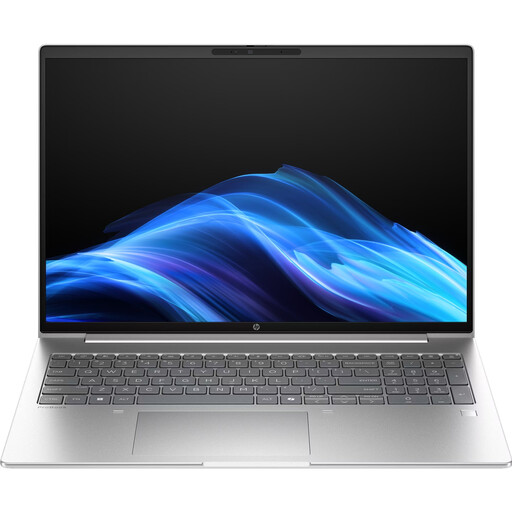
The matte 16-inch WUXGA display and German QWERTZ keyboard are well suited to longer reviewing and data-entry sessions.
 No image available
The matte 16-inch WUXGA display and German keyboard are useful for regularly reviewing and entering information on your laptop.
 No image available
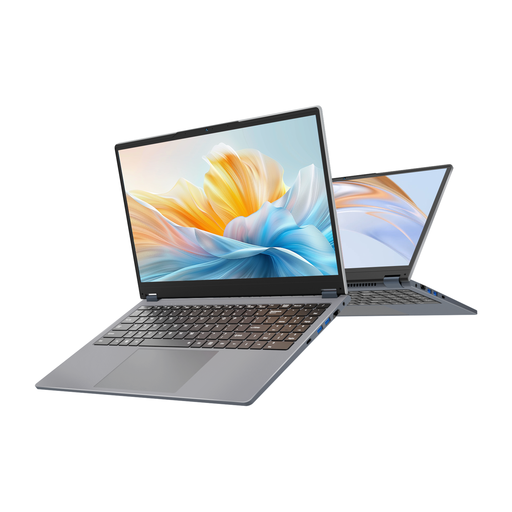
The 15.6-inch Full HD display and listed TF card reader are useful for viewing and transferring archive files.
 No image available
The 360° rotating touchscreen offers different viewing positions for reviewing digital documents.
No. A match doesn’t prove that two letters are the same archival item. Tropy can make metadata and notes searchable, while spreadsheet programmes can flag matching values for review. Compare the scan, its provenance and other details before deleting entries.
With Tropy, you can combine photos of several pages into one entry and record details such as the date and sender. Choose a consistent naming system and test it with a few letters to make sure you can find the images and entries again later.
No. Transkribus describes recognition for family documents and different types of handwriting, but that doesn’t prove how accurately it will work on your letters. Compare the recognised details with the relevant scan.
Regularly back up both your image files and catalogue separately from your laptop, and check that you can restore them. The Federal Office for Information Security lists external storage devices as one option for personal backups.