What should you look for when buying?
First, check whether one variety will suit everyone. Then consider how quickly you’ll use it and how much storage space you have when choosing between a single family-size pack and several packs of the same variety. Check delivery arrangements separately with your chosen retailer.
| Criteria | What to check before buying | Who it matters most to |
|---|
| Pack size |
Compare the net weight and number of individual packs with your regular consumption and the storage space available. |
If we eat breakfast together every day, we want enough for several people without it being open for too long. Having the right amount in the cupboard is the top priority for around 31% of consumers. |
| Ingredients and allergens |
Check the ingredients, declared allergens and possible traces for the specific variety, not just the brand or variety name. |
If an allergen is a concern in our household, I need to know exactly what’s in this particular blend before ordering. Ingredients and allergens are the main concern for around 25% of consumers. |
| Sugar and nutritional information |
Compare the ‘of which sugars’ figure and other nutritional information per 100 g alongside the ingredients list. |
For a variety we’ll eat at many breakfasts, I want to know what it contains besides flakes and fruit. Around 25% of consumers prioritise this nutritional comparison. |
| Choice of variety and storage |
Before buying a multipack, check that you know and like the variety. Check the storage instructions and the terms for delivery areas and substitute products. |
If not everyone in our household likes the same blend, I don’t want to commit to several packs of it. This flexibility comes first for around 19% of consumers. |
Notable brands to consider
The examples below refer to specific muesli varieties from each brand, not their entire range.
Kölln
The Kölln Shop sells individual muesli value packs, among other products, as well as a Bircher fruit multipack containing 4 × 1,200 g.
- If you’re reordering a variety you know, you can choose from different pack formats.
- Recipes vary: the fruit muesli with no added sugar may contain traces of nuts and milk, while the crunchy honey and nut variety contains almonds, hazelnuts and cashews.
Alnatura
Alnatura describes its Maxi muesli as a 1 kg blend of wholegrain flakes, fruit, nuts and seeds.
- The 1 kg pack can work well as a single variety for regular use.
- The Maxi muesli contains hazelnuts and sesame. Alnatura also lists possible traces of soya, almonds and cashews.
Seitenbacher
Seitenbacher offers Mühlen Müsli 1 in a 1 kg pack, made with wholegrain flakes and other ingredients.
- A single 1 kg pack is an alternative to buying several packs of the same variety.
- Mühlen Müsli 1 contains peanuts and soya. Seitenbacher says it may also contain traces of milk products and nuts.
Oats as a breakfast base at Joybuy
These products are oats for putting together your own breakfast, not ready-made muesli blends. The two bulk packs differ in the number of oat bags; the second offer also includes milk.
 No image available
Kölln Fine Rolled Tender Oat Flakes, 4 × 500 g
For households that like to add their own ingredients to breakfast; these oats aren’t ready-made muesli.
Four bags of oats, each weighing 500 g.
View at Joybuy
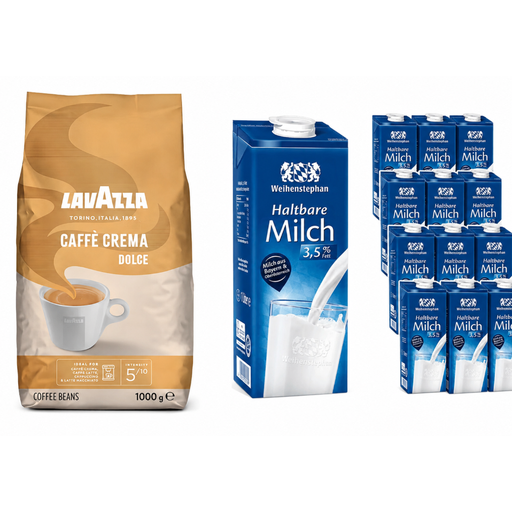 No image available
Kölln Fine Oat Flakes, 6 × 500 g + Weihenstephan UHT milk 3.5%, 6 × 1 l
For households that would like milk to go with their oats; the bundle doesn’t include ready-made muesli.
Six bags of oats, each weighing 500 g, plus six 1 l cartons of Weihenstephan UHT milk with 3.5% fat.
View at Joybuy
Questions about ordering online
What information do I need before ordering pre-packed muesli online?
In Germany, the required food information must be available before you enter into a contract. According to the German Federal Office of Consumer Protection and Food Safety, the specific best-before date is an exception. Other required information includes the product name, ingredients, allergens, net weight and nutritional labelling.
Does ‘no added sugar’ mean that muesli is low in sugar?
No, the claim doesn’t automatically tell you the total sugar content. The Verbraucherzentrale recommends checking the ‘of which sugars’ figure per 100 g and the ingredients list; dried fruit can also contribute to the stated sugar content.
Is the Nutri-Score enough to help me choose a family-size pack?
No, the Nutri-Score doesn’t replace the ingredients list or allergen and nutritional information. According to the Verbraucherzentrale, its use is voluntary. If it appears on the packs you’re considering, you can use it as an additional way to compare similar mueslis.
How should I store a large pack of muesli?
Follow the storage instructions on the specific pack. Alnatura says to store its Maxi muesli in a dry place and protect it from heat. Before buying several packs, make sure you have enough space to store them.
Can I choose a product based on its photo if I have a nut allergy?
No, visible ingredients in a photo aren’t enough to help you choose safely. Check the ingredients and allergen information, as well as any warnings about possible traces, for the exact variety. The Federal Ministry of Agriculture, Food and Regional Identity explains the requirement to declare the allergens covered by the rules.


