A larger pack of rusks can suit regular afternoon coffee with several people, provided you can store your supply somewhere dry and seal it tightly after opening. If someone has difficulty chewing or swallowing, finding a suitable texture matters more than pack size. Check the ingredients and allergen information for each specific variety.
Who should think carefully about pack size?
Hosts who regularly serve afternoon coffee
If you often host older family members or a small group, you can plan how much to buy around how frequently you get together for coffee. Once opened, rusks should be stored somewhere dry in a tightly sealed container; the consumer advice centre recommends this for dry foods.
Shoppers checking ingredients or allergens
If certain ingredients need to be avoided, check the label on the specific variety rather than relying on the pack size. Documented rusk recipes vary, including in their cereals and other ingredients.
Family members choosing rusks for someone who has difficulty chewing
If you’re choosing rusks for someone who has difficulty chewing or swallowing, check that the texture is suitable before thinking about how much to buy. The German Nutrition Society recommends adapting food and drink to the individual needs of people with these difficulties.
What matters when buying?
First, check whether dry rusks are suitable for the people you have in mind. Then you can choose a recipe and pack format to suit your coffee get-together.
| Criterion |
What to check |
Who it matters to |
| Chewing and swallowing |
Before buying, check whether dry, crunchy pieces are suitable. If there are difficulties, ask a healthcare professional for advice on the right texture. |
If chewing or swallowing is difficult, I don’t want to serve dry rusks just because a multipack is convenient. This is the main concern for around 40% of consumers. |
| Ingredients and allergens |
Read the ingredients list and allergen information on the specific pack; don’t rely on the variety name instead. |
If I need to avoid certain ingredients, finding a suitable recipe matters more to me than getting more in the pack. Around 30% of consumers prioritise this. |
| Stocking up and storage |
Check the net weight and how the pack is divided up; store opened rusks somewhere dry in a tightly sealed container. |
For regular coffee get-togethers, I want to have enough rusks without opening everything at once. Around 30% of consumers say stocking up is their main concern. |
Which assumptions should you avoid?
-
A bigger pack is always the better choice
A multipack is most useful if you eat rusks regularly. If opened rusks are left exposed for a long time, their quality may deteriorate.
Choose a quantity that suits how often you have coffee, and check how the pack is divided if you don’t want to open everything at once.
-
Crunchy rusks are suitable for every older person
If someone already has difficulty chewing or swallowing, changing the pack size won’t resolve whether the texture is suitable. The German Nutrition Society advises adapting food and drink to individual needs and seeking medical advice if there are difficulties.
Get advice about these difficulties before planning to serve dry rusks to the person concerned.
-
Wholemeal or spelt means gluten-free
Wheat and spelt contain gluten. Other ingredients and allergen information also vary between rusks.
If certain ingredients need to be avoided, always check the label on the specific pack.
-
Comparing nutritional values without using the same serving size
Figures per 100 g and per portion refer to different quantities. Comparing products using only the numbers on the pack can therefore be misleading.
First compare the same nutritional values per 100 g, then check the stated portion size.
Brands worth comparing
Brandt
With Brandt, it’s worth checking how each pack is divided up: EDEKA24 describes its branded rusks twin pack as 450 g, split into four portion packs.
- The documented individual packs can help you avoid opening the whole supply at once.
- The wholemeal rusks also listed by REWE come in a 225 g pack, so they’re a different pack option. Check the ingredients and allergens for the variety you choose.
Burger
REWE lists Burger rusks in a 400 g pack – a useful size to compare for coffee get-togethers where you don’t want to choose a 450 g pack.
- You can compare the stated net weight with how much you expect to use.
- The documented recipe includes wheat, among other ingredients. If you need to avoid certain ingredients, check the label on the pack.
Praum
REWE lists Praum rusks in a 400 g pack, as well as a separate organic spelt rusk variety in a 200 g pack.
- The two documented pack sizes give you the choice between a larger supply and the specific spelt variety.
- Spelt contains gluten, and the 200 g option is not the same as the 400 g pack.
Rusks on Joybuy
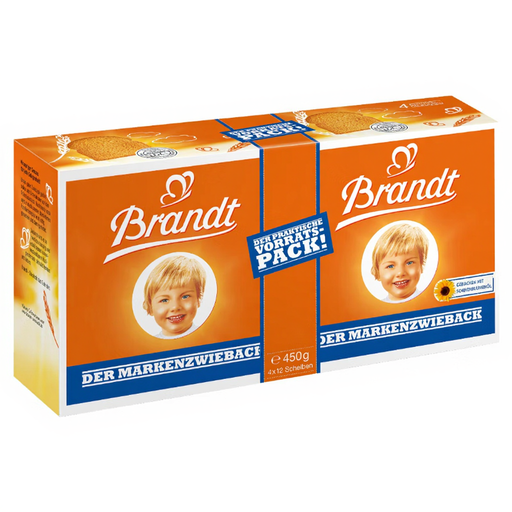
If you regularly serve afternoon coffee, this Brandt twin pack, containing 450 g in total, could be a good option. Check the ingredients and allergen information on the specific listing, as well as how the two units are packed if you’d like to open them separately.
 No image available
Brandt rusks twin pack, 2 × 225 g
The two 225 g units give you a total of 450 g for regular coffee get-togethers. If you’d like to open them one at a time, check how they’re packed. Also check the ingredients and allergens on the specific pack.
View on Joybuy
Frequently asked questions
When is a 450 g pack a good choice for afternoon coffee?
It could suit you if several people regularly join you and you can store opened rusks somewhere dry in a tightly sealed container. Check whether the specific pack format suits the amount you want to open each time.
Are dry rusks suitable for someone who has difficulty chewing or swallowing?
This needs to be assessed individually for the person concerned. The German Nutrition Society notes that food and drink should be adapted for people with chewing or swallowing difficulties, and recommends seeking medical advice if problems arise.
What should I look for if I have allergies?
Always check the ingredients and allergen information on the specific pack of rusks. Recipes can vary, and a label such as wholemeal or spelt is no substitute for checking the product information.
How should I store an opened pack of rusks?
Store opened rusks somewhere dry in a tightly sealed container. For dry foods, the consumer advice centre recommends tightly sealed containers to help protect against insect infestations and loss of quality.


