What should you look for when buying?
Washer-dryer
A good fit if: you only have room for one appliance and your towel load fits within the stated wash-and-dry capacity.
The trade-off: drying capacity may be lower than washing capacity. If you regularly use the dryer, check the figures for the complete cycle.
Washing machine and separate tumble dryer
A good fit if: you have room for two appliances and regularly dry larger family loads.
The trade-off: you’ll need space for two appliances and have to move the laundry from one to the other.
Washing machine and air-drying
A good fit if: you have a suitable place to dry your towels and don’t need to use a tumble dryer.
The trade-off: you’ll need drying space and time.
Start by comparing the amount of laundry you usually wash with the appliance’s drying capacity. Then consider the space you have, your hygiene needs and the running costs for the way you expect to use it.
| What matters |
What to check when buying |
Who should pay particular attention? |
| Towel load and drying capacity |
Compare the usual dry load with the washing and wash-and-dry capacities of the specific model. |
If I want to dry my usual towel load without stopping part-way through, the drying capacity needs to be sufficient. Around 31% of consumers put the size of a complete load first. |
| Appliance space and drying options |
Check the dimensions, installation requirements and connections. Also make sure there’s room for a separate tumble dryer or a clothes airer. |
If I only have space for one appliance, I need to check whether a washer-dryer can handle my load size. For around 25% of consumers, available space is the top priority. |
| Hygiene and fabric care |
Follow the care labels and choose suitable wash programmes. If someone is ill, take account of the hygiene advice for that situation. |
If I want to adapt how I wash towels to my household’s needs, I shouldn’t choose a temperature and detergent based on the programme name alone. Around 25% of consumers prioritise hygiene that’s appropriate to the situation. |
| Energy, water and running costs |
Compare the label figures for washing and for the complete wash-and-dry cycle separately, and factor in how often you use the appliance. |
If I regularly use a tumble dryer, I want to understand the consumption for the full cycle. Running costs are the main concern for around 19% of consumers. |
Products for washing and drying
This Joybuy selection includes washer-dryers as well as separate washing machines and tumble dryers. Check the appliance type and capacities for your towel loads on each product listing.
 No image available
LG WT1210EGF WashTower, 12 kg washing machine and 10 kg heat pump tumble dryer
For households planning to wash and dry their laundry in separate appliances; this isn’t a single wash-and-dry drum cycle.
The product name lists a 12 kg washing capacity and a 10 kg tumble dryer capacity.
View at Joybuy
 No image available
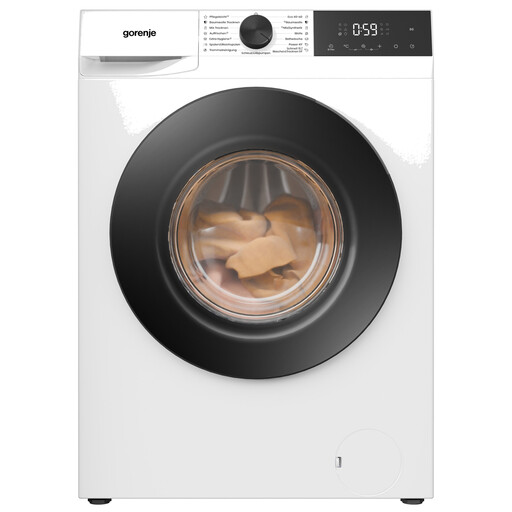
Gorenje WD5G2P1174A2DP2 washer-dryer, 11 kg/7 kg
The capacity figures help you check whether a family load can be washed and dried in one complete cycle.
The product name lists an 11 kg washing capacity and a 7 kg drying capacity. The drying capacity is lower than the washing capacity.
View at Joybuy
 No image available
LG WT1210WWF washer-dryer, 12 kg/10 kg, Dual Inverter heat pump
A washer-dryer for households looking to compare washing and drying capacities in a single appliance.
The product name lists a 12 kg washing capacity and a 10 kg drying capacity, along with a Dual Inverter heat pump and a steam function. The drying capacity is lower than the washing capacity.
View at Joybuy
 No image available
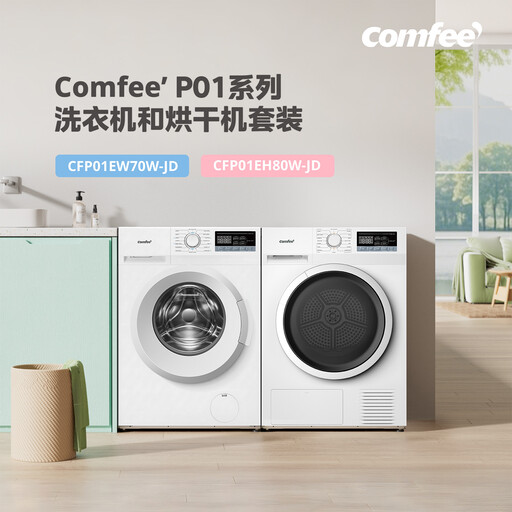
Comfee CFP01EW70W-JD washing machine and CFP01EH80W-JD heat pump tumble dryer
For households looking for a washing machine and a separate heat pump tumble dryer as a pair; this isn’t a single washer-dryer.
View at Joybuy
 No image available
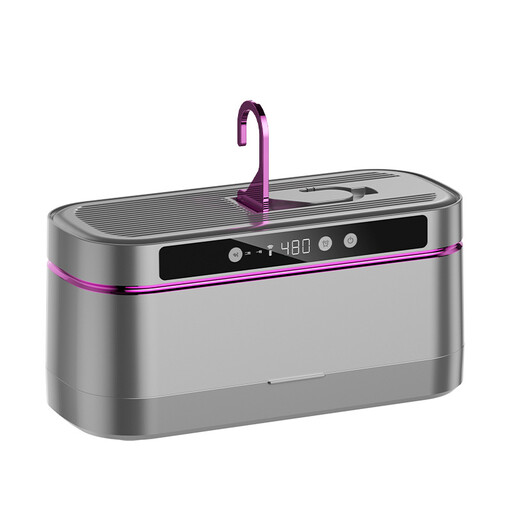
Portable tumble dryer
The product name identifies this as a portable tumble dryer. Check whether its design and capacity are right for your towel loads.
View at Joybuy
Frequently asked questions
Do family towels always need to be washed at 60 °C?
No, not as a general rule. The German consumer advice centre says that 40 °C is enough in a healthy household, and recommends washing towels occasionally at 60 °C, ideally with a detergent for whites. The Federal Environment Agency highlights the importance of additional hygiene measures when someone has a contagious illness; make sure you also follow the care labels.
What should I check before installing the appliance?
Check the dimensions, the installation requirements specified by the manufacturer, the connections and how to set up the specific model. A washer-dryer saves space by removing the need for a second appliance, but it doesn’t solve the problem of where to dry a load that exceeds its drying capacity.
How can I work out the potential running costs?
On the EU energy label, compare the figures for washing alone separately from those for a complete wash-and-dry cycle. The European Commission provides energy figures per 100 cycles; your actual costs will also depend on how often you use the appliance and your electricity tariff.
How can I keep laundry care practical without unnecessary hygiene additives?
Dose detergent according to the load size, how soiled the laundry is and your water hardness. Choose a temperature to suit the fabric and situation. The Federal Environment Agency says disinfectants are generally unnecessary in private households; in specific health situations, follow the relevant hygiene advice.
Do household washer-dryers in Germany have an EU energy label?
Yes. Household washer-dryers are covered by EU energy-labelling rules. The label includes information such as the efficiency class, energy and water consumption, capacity, programme duration and noise level. The figure for washing alone isn’t the same as the one for washing and drying.


