
Lieferung heute & morgen

Qualitätsgarantie

Willkommens-Angebote freischalten: KOSTENLOSE Lieferung | Bis zu 80 % RABATT | Kostenlose 30-Tage-JoyPlus-Testphase
App herunterladen
Choosing a toy car can be a challenge, given the countless models available—from simple push-along cars to complex electric ride-ons. Many products overpromise and underdeliver, often leading to disappointment in the playroom and wasted money. This guide will help you avoid common purchasing pitfalls and make an informed decision based on objective criteria.
Before you make a choice, it's helpful to know the most common problems that plague many toy cars on the market.
To make a durable and suitable choice, you should check three central aspects. These criteria will help you objectively evaluate a model's quality and appropriateness.
Safety is the most important criterion, especially for toys intended for toddlers. Look for the CE marking, which indicates the manufacturer's declaration that the product meets applicable EU requirements. For children under three, it is crucial that there are no small parts that can be swallowed. Robust materials like ABS plastic or solid wood are often a more durable choice than thin, cheap plastic. For painted surfaces, you should look for information on non-toxic paints.
The right toy car should match the child's motor and cognitive skills.
The type of drive system significantly determines its use and maintenance requirements.
Here are some product recommendations tailored to different age groups and interests, taking the above criteria into account.

Why it's a great fit: This toy is specially designed for toddlers. It combines soft, easy-to-grip cubes with simple vehicle illustrations and their corresponding sounds, which promotes auditory perception and motor skills.
It avoids the trap of being overwhelming with complex electronics. The robust, soft construction is safe and durable, with no small parts that could be swallowed.
Playfully promotes the association of images and sounds. The batteries are housed in a securely screwed compartment.
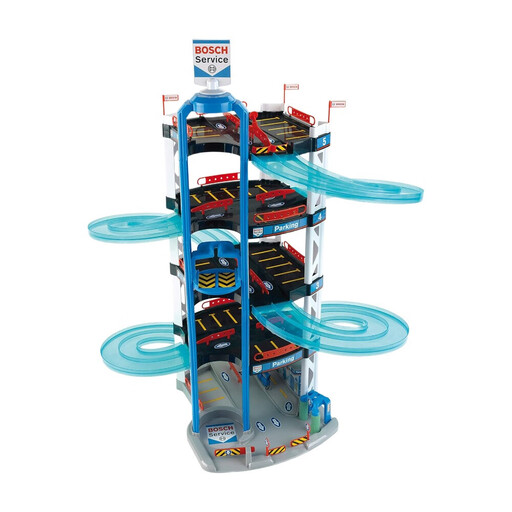
Why it's a great fit: As a classic toy parking garage, this set offers long-lasting play value. It encourages creativity and spatial reasoning by letting children create their own traffic scenarios and race the included cars.
This set is more than just a single car. It provides an entire play world that can be combined with other vehicles, extending its lifespan. The construction is designed for stability.
The double-lane ramp allows for races, and the elevator adds interactive fun. The set requires no batteries, eliminating any ongoing costs.
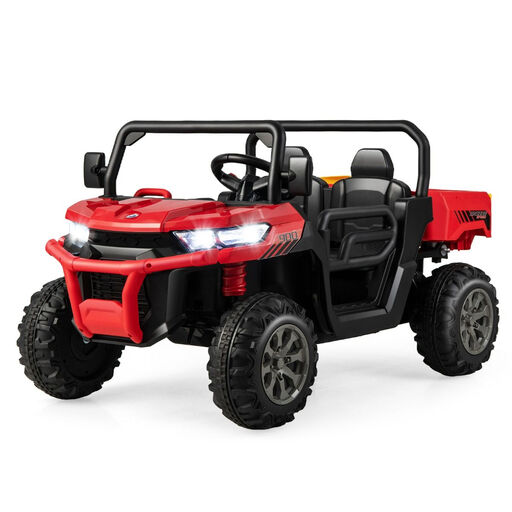
Why it's a great fit: This kids' electric car offers an authentic driving experience for children from 3 to 8 years old. With room for two children, a powerful 12V dual motor, and a weight capacity of up to 50 kg, it's designed for shared play.
It avoids the trap of insufficient power and short battery life by using a 12V dual-motor system. The 2.4 GHz remote with an emergency brake gives parents full control and enhances safety.
The combination of a two-seater design, high load capacity, and safety features like soft start and suspension makes it a robust and safe choice for several years of use.
We have compiled a complete, up-to-date list of products that fully meet these strict selection criteria and European safety regulations.
Simple models with a two-button control (forward/backward, left/right) can be suitable for children from around 4 years old. More complex RC vehicles with proportional steering, higher speeds, or stunt functions are better suited for children aged 8 and up, as they require better fine motor skills and a greater sense of responsibility.
Check the battery voltage (6V for toddlers on flat surfaces, 12V for more power and slight inclines, 24V for more demanding terrain). Also important are safety features like a 2.4 GHz remote control for parents (prevents interference), a soft-start mechanism to avoid jerky acceleration, and a seatbelt.
The CE mark is a fundamental indicator. For toddlers, look for the "BPA-free" label and check if the toy is sturdy enough to withstand falls without small parts breaking off. Avoid toys with sharp edges or a strong chemical smell.