Parents who want to choose the sweetness themselves
If your toddler regularly joins you for breakfast, it’s worth checking the sugar content of the cereal. With unsweetened varieties, you can decide separately which toppings to add.


For a regular shared breakfast with a toddler, unsweetened cornflakes are a sensible starting point if you’d like to decide how sweet they are by choosing the toppings yourself. The Federal Institute of Public Health advises avoiding sweetened breakfast cereals or offering them to toddlers only in small amounts. As well as checking the sugar content, consider the actual pack size and gluten labelling when choosing a product.
If your toddler regularly joins you for breakfast, it’s worth checking the sugar content of the cereal. With unsweetened varieties, you can decide separately which toppings to add.
If several people are eating, the net weight matters. But a larger pack won’t answer questions about sugar or ingredients.
Ingredients containing gluten, a warning about possible traces and an explicit gluten-free label are different things. The current labelling on the specific product is what matters.
First compare sugar and ingredients for your toddler’s breakfast, then check the pack size you need. If gluten must be excluded, clear product labelling is another important selection criterion.
| Criterion | What to check when buying | Who it matters most to |
|---|---|---|
| Sugar | Compare the “of which sugars” figure per 100 g and the sweetening ingredients. A wholegrain claim doesn’t replace the sugar figure. | If my toddler eats breakfast with us regularly, I’d rather choose the sweetness myself through the toppings. For around 50% of consumers, keeping sugar as low as possible is the top priority when making this choice. |
| Pack size | Compare the net weight with how much everyone usually eats, and follow the storage instructions once the pack is open. | For several people, the pack needs to suit how much we actually eat for breakfast. Around 30% of consumers prioritise choosing a suitable size for their cupboard. |
| Gluten and allergens | Read the current ingredient and allergen information. If the product needs to be gluten-free, look for an explicit label. | If I need to exclude gluten, I need clear labelling on the specific pack. For around 20% of consumers, this takes priority over the sugar content and pack size. |
The Nestlé Cini Minis Maxi Pack listed by REWE contains 625 g, but also has 24 g of sugar per 100 g. Pack size alone therefore tells you little about whether it’s a good choice for a toddler’s regular breakfast.
First decide what role sweetened cereal should play at breakfast, then compare the sugar content and net weight separately.
Among the varieties reviewed, there are cornflakes labelled as gluten-free, products that may contain traces of gluten-containing cereals, and products with gluten-containing ingredients. These statements are not interchangeable.
If gluten needs to be excluded, base your choice on the clear, current labelling on the specific pack.
The Nestlé Cini Minis described by REWE contain 33% wholegrain and also have 24 g of sugar per 100 g. These figures answer different questions.
Read the wholegrain claim and the “of which sugars” nutrition figure separately.
The unsweetened organic cornflakes reviewed come in a 375-g pack.
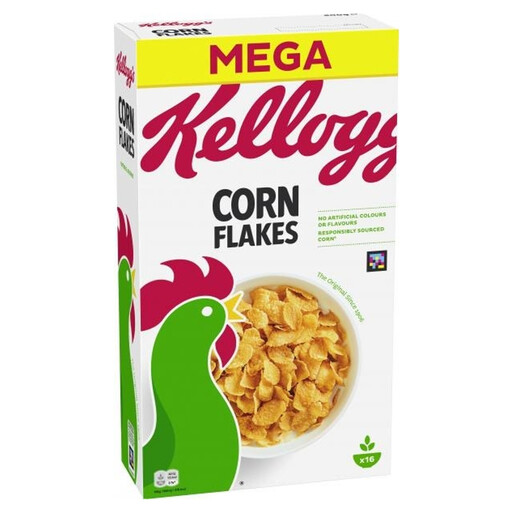
The Corn Flakes reviewed are available in a 500-g pack.
The Cini Minis Maxi Pack reviewed is a 625-g pack of sweet cinnamon-flavoured cereal, not an unsweetened cornflakes variety.
The organic cornflakes reviewed are explicitly labelled gluten-free and come in a 250-g pack.
The organic crunchy cornflakes reviewed are described as gluten-free and come in a 280-g pack.
This selection includes a 500-g pack of classic cornflakes for several people and a smaller, unsweetened 300-g variety. For both products, compare the current pack labelling with your requirements for sugar and gluten.
 No image available
The 500-g pack may suit you if several people eat cornflakes for breakfast and this quantity matches your household’s usual consumption.
For your toddler’s breakfast, check the sugar figure per 100 g and the current ingredient and allergen labelling on the pack.
 No image available
These unsweetened cornflakes may suit you if you’d like to choose the sweetness through your toppings and 300 g is enough for your household.
The word “unsweetened” does not mean the product is gluten-free. If gluten needs to be excluded, check the current labelling on the pack before buying.
Sweetened breakfast cereals are not an obvious choice for a toddler’s everyday breakfast. The Federal Institute of Public Health advises avoiding them or offering them only in small amounts. Check the “of which sugars” figure per 100 g on the specific pack.
No, the name “cornflakes” doesn’t tell you either way. The Kellogg's Corn Flakes reviewed contain barley malt, while the Alnavit cornflakes reviewed are explicitly labelled gluten-free. The REWE Bio unsweetened cornflakes state that they may contain traces of gluten-containing cereals. Always check the current labelling on the pack in question.
Store the cereal according to the instructions on the pack, usually somewhere dry and away from heat. If it has a resealable inner bag, close it after opening. When buying a large pack, also consider how quickly your household will get through it.