
Lieferung heute & morgen

Qualitätsgarantie
App herunterladen
Kategorien
A fan heater with a thermostat serves as a flexible supplemental electric heating solution, allowing for precise temperature adjustments in individual rooms. The inclusion of a thermostat is a crucial feature for both efficiency and comfort. It enables the device to automatically regulate heat output to maintain a constant, preset room temperature. This prevents unnecessary continuous operation and helps control energy consumption.
Choosing the right heater depends on objective parameters tailored to your specific needs.
Two common technologies in portable heaters are PTC ceramic heating elements and oil-filled radiators.
Power, measured in watts (W), indicates the heating capacity. An electric heater with a 2000W output is typically suitable for rooms up to approximately 20–25 m², depending on insulation and ceiling height.
An integrated thermostat is key to energy-saving operation. It measures the ambient temperature and turns off the heating element once the target is reached, reactivating it when the temperature drops. Models with an ECO mode further optimise this process by automatically adjusting power levels.
Safety is a top priority for electric heaters. Standardised protection mechanisms are essential:
Modern devices offer features that enhance user convenience. A fan heater with a remote control allows for operation from a distance. A programmable timer (e.g., 24-hour) enables automatic shut-off. An oscillation function ensures wider distribution of warm air in the room.
For use in quiet environments like bedrooms or offices, a quiet fan heater is essential. The noise level is measured in decibels (dB). Values below 45 dB are considered relatively quiet. By design, oil-filled radiators operate almost silently.
Based on the technical specifications and features mentioned, we present three recommended models.
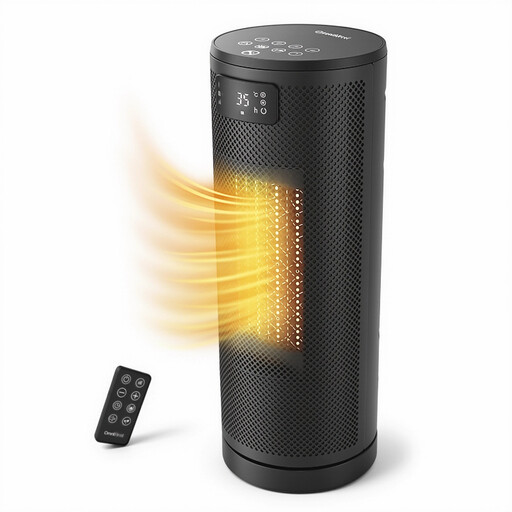
Product Specification Analysis: This model is a compact ceramic fan heater with a rated power of 1800W. Its key feature is the precisely adjustable thermostat (5–35°C), which, combined with its ECO mode, allows for efficient temperature management. The noise reduction down to 38 dB on its lowest setting makes it an attractive option for noise-sensitive areas.
Pros:
Best for: Users seeking a fast and quiet heat source for small to medium-sized rooms like bedrooms, studies, or small living areas, who value precise temperature control and energy efficiency.
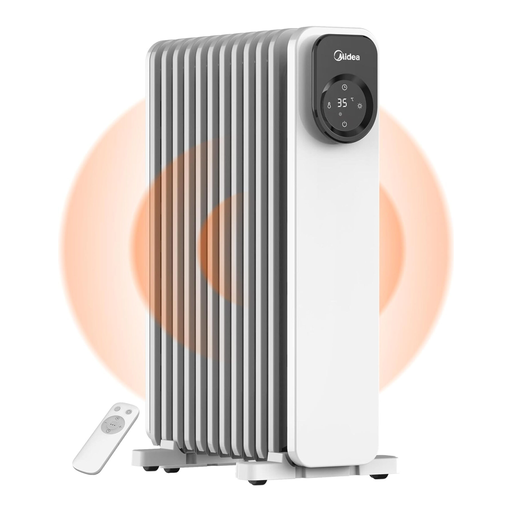
Product Specification Analysis: The Midea NY2009-24UR is a classic oil-filled radiator with a 2000W output. Its strength lies in generating even, long-lasting radiant heat. The unit operates silently and continues to emit warmth after being turned off. It can be controlled via an LED touch panel or the included remote.
Pros:
Best for: Individuals who prefer consistent, silent background heat for well-insulated rooms or for occasional use. It is especially suitable for living rooms and bedrooms where a steady temperature without operational noise is desired.
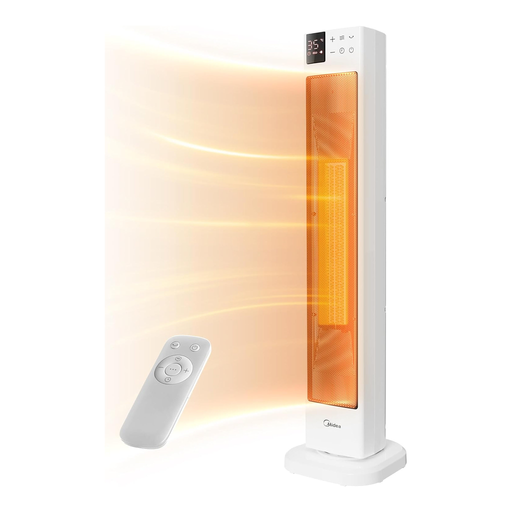
Product Specification Analysis: This tower unit combines a high 2000W output with rapid PTC ceramic heating technology. Its tower design and 75° oscillation allow for wide heat distribution, making it suitable for rooms up to 30 m² according to the manufacturer. The thermostat is also adjustable from 5–35°C and is complemented by an ECO mode.
Pros:
Best for: Users who need a powerful portable heater for medium to large living spaces and appreciate fast, widespread warmth. The tower design is also space-saving.
If the models presented don't perfectly match your requirements, or if you are looking for permanently installed heating controls, exploring a wider range of devices may be beneficial. You can find more temperature control solutions in our main category.
More Thermostats and Heating Solutions
1. How much electricity does a 2000W fan heater use? Consumption depends on the duration of use and the selected power level. A 2000W (or 2 kilowatt) device will consume 2 kilowatt-hours (kWh) if run for one hour at its highest setting. Assuming an electricity price of, for example, €0.30/kWh, this would result in a cost of €0.60 per hour. However, a fan heater with a thermostat does not run continuously, which reduces overall consumption.
2. What is the functional difference between a ceramic fan heater and an oil-filled radiator? A ceramic fan heater quickly heats the air and actively distributes it with a fan, making it ideal for rapid, targeted heating. An oil-filled radiator heats up more slowly but releases heat evenly and silently as radiant heat, retaining it for longer. It is suitable for providing constant, quiet heating for a room.
3. Are electric heaters with thermostats safe for unattended overnight operation? Devices equipped with certified safety features like overheat protection and tip-over protection offer a high level of baseline safety. However, it is crucial to strictly follow the manufacturer's safety instructions: place the unit on a stable, fire-resistant surface, maintain sufficient clearance from flammable materials, and never cover it.
Authored by: Joybuy Product Recommendation Officer