What should you look for when buying?
For a baking session together, the main things to consider are usable tray space, installation type, energy consumption and cleaning. The percentages below relate to consumers choosing an oven for this scenario.
| Purchase priority |
What to look for when buying |
Who is this important for? |
| Space for several trays |
Check how many levels the specific model is explicitly stated to support at the same time, and which compatible trays are included or available. |
If we need several trays for baking together, I want to know whether the model supports several levels at once and whether suitable trays are available. Around 36 % of consumers could have this as their main priority. |
| Installation type and size |
For built-in appliances, check the niche and connection specifications; for freestanding models, check the space needed, installation instructions and tray size. |
If you don’t have a suitable built-in space, you need a freestanding option that can be positioned safely and is large enough for the portion you’re planning. Around 29 % of consumers could consider installation type the deciding factor. |
| Energy consumption |
Compare energy use per standard cycle for the same heating type, and take the oven capacity into account. |
If I use my oven often, I want to compare the stated energy consumption of similar appliances side by side, rather than looking only at the energy rating. Around 21 % of consumers could have energy use as their main priority. |
| Cleaning |
Check the cleaning method for the specific model, as well as any removable parts and included trays. |
If you want to keep cleaning to a minimum after repeated baking sessions, check the features of the appliance you’re considering. Around 14 % of consumers could put cleaning first. |
Joybuy products for baking together
This selection includes built-in ovens, a freestanding cooker and a mini oven with two cooking zones. For each appliance, check that its type, tray space and features suit your kitchen and the amount of squash you’re planning to cook.
 No image available
Bosch HBA571BB4 Series 2 built-in oven
An option if you’re looking for a built-in appliance; the niche dimensions and installation must suit your kitchen.
71-litre capacity, 3D Hotair, pyrolytic cleaning, AutoPilot with 10 programmes, LED touch control, black.
View at Joybuy
 No image available
Bosch Series 6 HBG578ES3 built-in oven
For a baking session where a built-in appliance with a fan function could be suitable; check the niche dimensions before ordering.
60 cm wide, AirFry, 3D Hotair, stainless steel.
View at Joybuy
 No image available
23-litre dual-zone air fryer mini oven
Could be worth considering for a smaller gathering if you’re looking for a mini oven rather than a built-in model; check that the trays are suitable for the portion you’re planning.
23 litres, two cooking zones, 15 programmes, LED touchscreen.
View at Joybuy
 No image available
Haier H6 ID23T3HTB built-in oven
An option if you’re looking for a built-in appliance with a large capacity; check the stated niche dimensions against your kitchen.
78-litre capacity, nine cooking functions, hydrolytic cleaning, one baking tray.
View at Joybuy
 No image available
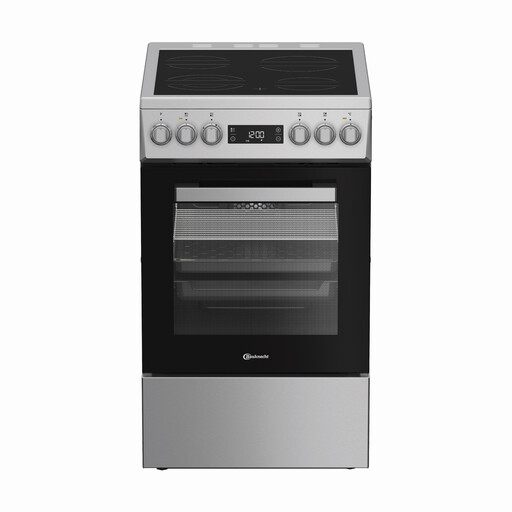
Bauknecht B5V8LMX freestanding cooker
Could be a good fit if you need a hob as well as a freestanding oven; check that you have enough space for the whole appliance.
60-litre capacity, eight functions, four cooking zones, hydrolytic cleaning, stainless steel look.
View at Joybuy
Frequently asked questions
Which oven setting and cooking time are suitable for diced squash?
The Verbraucherzentrale gives a recipe using Hokkaido squash and potatoes cut into pieces of around 3 cm, arranged on a tray and cooked for about 30 minutes at 180 °C. The recipe doesn’t specify a heating method, so this isn’t a tested fan-oven setting for every appliance or for several trays.
Are several shelf positions enough to use several trays?
No. The number of shelf positions alone doesn’t prove that you can use several trays at the same time. Check whether the manufacturer specifies simultaneous cooking on the levels you want to use for the particular model, and whether suitable trays are available.
How do I compare the energy consumption of different ovens?
For appliances labelled with this information, compare energy use in kWh per standard cycle for the same heating type, and take the oven capacity into account. The Verbraucherzentrale and the Umweltbundesamt explain these figures; they don’t show the measured energy use for cooking a specific portion of squash.
What should I check before positioning or installing an oven?
For a built-in appliance, check the niche and connection specifications for the specific model against your kitchen. For a freestanding oven, follow the installation instructions in its manual; these may vary from one appliance to another.
What are my rights if an appliance is faulty, and when returning an old appliance?
When buying from a business seller in the EU, Your Europe states that you have a legal guarantee of at least two years from the date you receive the goods; this is separate from a manufacturer’s warranty. Under certain conditions, Section 17 of the German Electrical and Electronic Equipment Act (ElektroG) requires the free take-back of a similar old appliance when you buy a new one, including for distance sales. Check how the seller handles take-back for your specific order.


