Bazaar team serving lots of portions
If you need to have several batches ready by a set serving time, usable tray area, compatible trays and a well-planned workflow all matter.


When choosing a fan oven for a mini-pizza stall at a bazaar, start with the usable tray area and the number of pizzas you plan to bake per batch—not just the oven’s capacity in litres or the number of shelf positions. A large freestanding oven may offer more cooking space, while a more compact model takes up less room. A built-in oven with specified multi-level fan cooking is an option if you have a suitable housing space. Plan for refrigeration, controlled hot holding if needed, and a protected serving area separately from your oven purchase.
If you need to have several batches ready by a set serving time, usable tray area, compatible trays and a well-planned workflow all matter.
For smaller quantities and limited room, check the actual internal and external dimensions, as well as the available heating modes.
If you’ll be storing or selling ingredients and finished pizzas, remember to plan for refrigeration, hot holding if needed, and a serving area protected from contamination.
Start with your pizza size and the usable tray area. Use these to work out how many batches you’ll need, then check the heating modes, where you’ll put the oven and how you’ll serve the pizzas.
| What matters | What to check when buying | Who should pay particular attention? |
|---|---|---|
| Number of pizzas and time per batch | Arrange your pizza size on the usable tray with enough space between each one. Check what’s included and which shelf positions are designed for simultaneous use. | If I need to have lots of portions ready by a set serving time, I’ll plan the tray area and batches carefully; around 33% of consumers focus above all on batch capacity. |
| Heating modes and control over baking | Check whether top and bottom heat and fan cooking can be selected separately or together, and whether the settings suit your recipe. | If I want to adjust the browning and base to suit my recipe, I’ll compare the available heating modes; around 27% of consumers prioritise control over the heat. |
| Placement and safe serving | Check the external dimensions, placement requirements and suitable power connection at the venue. Arrange refrigeration and serving separately from the oven. | If space is limited at my stall, or I’m also responsible for storage and serving, I’ll need a suitable placement and hygiene plan; around 27% of consumers focus first on placement and safe serving. |
| Purchase, accessories and electricity | Compare the trays included with the oven and any compatible extras. Only compare energy figures when they use the same basis. | If I need to consider the cost of the oven, accessories and running it together, I’ll check what’s included and compare like-for-like energy figures; around 13% of consumers focus on total costs. |
Manufacturers’ figures for capacity, shelf positions and included accessories don’t tell you how many mini pizzas will fit in one batch. Try arranging your own pizzas on the intended tray, then test a small batch before the bazaar.
Serving food comes with its own food-handling requirements. The Federal Institute for Risk Assessment recommends keeping heated food at a minimum of 60 °C throughout while it’s being kept hot and until it’s eaten. An oven setting alone doesn’t prove that the pizza has reached this temperature.
Read manufacturers’ details about shelf positions and included accessories separately. The number of shelf positions doesn’t tell you how many trays are supplied or which positions can be used at the same time.
Check the accessories included with the specific model, the tray dimensions and whether several levels are designed for simultaneous use. Product details from Severin, Rommelsbacher and Bosch distinguish between these features.
Depending on your plans, you may need to buy compatible extra trays or bake additional batches.
An oven is no substitute for properly refrigerating perishable ingredients or checking food temperatures while keeping food hot. The Federal Institute for Risk Assessment recommends keeping food at a minimum of 60 °C throughout while it’s being kept hot.
Plan storage and serving as separate steps. If you’re keeping baked pizzas hot, check their temperature rather than relying on the oven setting alone.
You may need additional suitable equipment for refrigeration or controlled hot holding.
The stated power rating isn’t the same as the energy used for a particular batch. Preheating, running time and how full the oven is all affect actual consumption. The Consumer Advice Centre lists energy consumption per standard baking cycle for ovens.
Only compare energy figures that use the same basis, and take your recipe and number of batches into account when planning. A wattage figure alone doesn’t tell you the electricity cost per mini pizza.
The TO 2073 is a large freestanding oven for baking and toasting, and may be suitable for larger batches.
The BG 1550 is a freestanding compact oven with selectable heating modes and specified tray dimensions.
The TO 26 SilverStyle is a compact freestanding oven with fan cooking and other heating modes.
The KB 27 U.2 is a small 20-litre oven for limited space and smaller batches.
The HBA571BB4 built-in oven is an option if you have a suitable housing space and regularly want to bake on several levels.
This selection includes compact freestanding ovens and built-in ovens with fan cooking or a pizza function. Before buying, check that the appliance dimensions, tray area and intended use are right for your bazaar.
 No image available
This built-in oven with specified multi-level fan cooking is an option if you have a suitable housing space.
The product description lists a 71 l capacity, ten heating modes, 3D Hotair for up to three levels and a pizza function. According to the description, the oven must be professionally installed.
 No image available
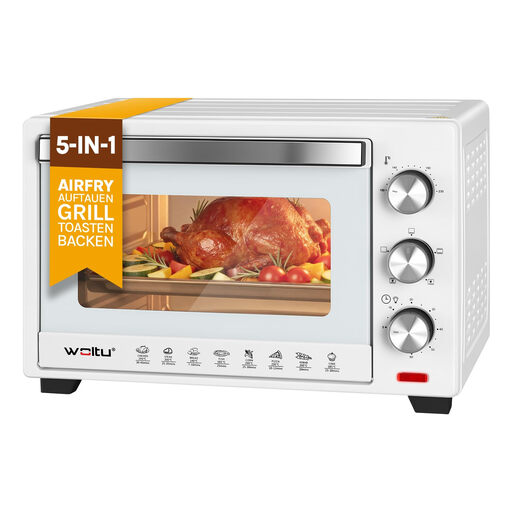
This compact countertop oven may suit smaller batches of mini pizzas, provided the stated pizza size and available tray space are right for you.
The product description says it can fit one 26 cm-diameter pizza and has three adjustable shelf positions and several baking trays that can be used at the same time. It also lists three heating modes, 100–230 °C and a 60-minute timer. Check the actual tray dimensions and what’s included.
 No image available
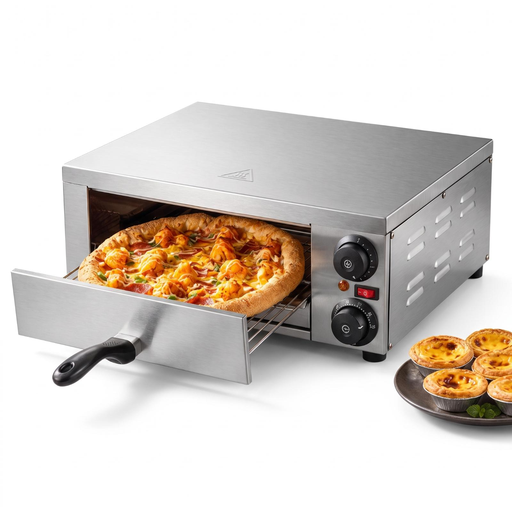
This compact oven, described as a pizza oven, may be worth considering for cooking individual pizzas. Check that its size and baking process suit your mini pizzas.
The description lists top and bottom heat, a temperature setting of up to 350 °C, a 0–15-minute timer and a removable crumb tray. The 2000 W power rating isn’t a measured energy figure per batch.
 No image available
This built-in oven may suit you if you have a suitable housing space and want to use several levels.
The product description lists a 71 l capacity, 4D Hotair for up to four levels and a pizza function. As a built-in appliance, it requires a suitable housing space and, according to the description, professional installation.
 No image available
This built-in model is worth considering if you have a suitable housing space and need several baking levels for your setup.
The product description lists a 71 l capacity, simultaneous baking on up to four levels with perfectCooking 4D, and one included baking tray. According to the description, the appliance must be professionally installed.
No. The capacity in litres alone doesn’t tell you how many pizzas you can bake per batch. Compare your pizza size and the space needed between pizzas with the usable tray area, check what’s included and whether several levels are designed for simultaneous use, then test a batch with your own mini pizzas.
Keep ingredients and food that need refrigeration properly chilled during transport and while serving. If you’re keeping baked pizza hot, the Federal Institute for Risk Assessment recommends a minimum temperature of 60 °C throughout the food. Also protect food on display from contact and contamination. This recommendation is about handling food; it doesn’t guarantee a particular oven function.
This depends, among other things, on whether the sale is occasional and run by volunteers or is a commercial activity. The Consumer Advice Centres’ Food Forum describes food hygiene training for occasional volunteer sellers as advisable rather than a legal requirement; different rules apply to commercial operators. It also distinguishes between food businesses and occasional volunteer sales when discussing labelling requirements, and recommends being able to provide information about ingredients and allergens. Check any additional requirements with the event organiser and the relevant local authority before the event.
Check how many trays are included and whether you’ll need extra compatible trays for your setup. The power rating in watts isn’t an energy figure for your batch, and a figure per standard baking cycle won’t measure the energy used for your mini-pizza recipe either. Only compare energy figures when they use the same basis.