What should you look for when buying?
First check that the dish will fit and that you have a suitable place for the oven. Then look at the heating functions that suit your recipe. Cleaning options and energy information are additional factors to consider for day-to-day use.
| What to consider |
What to check before buying |
Who is it important to? |
| A suitable oven dish |
Compare your dish, including its handles, with the shelf, usable interior and shelf height of the specific oven. |
If I’m cooking for several guests in one dish, I want to be sure it will actually fit. That’s why around 36% of consumers prioritise the dish size and the number of portions they plan to make. |
| Built-in or countertop |
For built-in ovens, check the niche and connection requirements. For countertop ovens, check the appliance dimensions and required clearances. |
If there’s no suitable built-in space, a countertop oven needs to fit safely on the worktop. Around 29% of consumers focus first on the space available. |
| Heating functions for your recipe |
Check whether the specific model offers fan cooking and conventional top and bottom heat, and follow the settings in the recipe you’re using. |
If I want to follow the recipe closely and keep an eye on browning, having a choice of heating functions matters. Around 21% of consumers put this first. |
| Cleaning and energy use |
Compare the model’s cleaning method and, for appliances that display them, the kWh figures for fan and conventional cooking. |
If I bake often, I want to factor cleaning effort and energy information into my decision. Around 14% of consumers prioritise these aspects for regular use. |
For this dish, the Dr. Oetker recipe gives approximately 180 °C for conventional top and bottom heat, or around 160 °C for fan cooking. These settings apply to that recipe and aren’t a general guide for every lasagne. The German Environment Agency and the Verbraucherzentrale explain that the consumption figures on the energy label relate to standard cycles and specific heating functions; they don’t directly predict the electricity used for an individual cooking session.
Joybuy ovens to consider
This selection includes built-in ovens and freestanding appliances for different space and dish-size requirements. Before buying, check that the type of appliance suits your kitchen and that your oven dish fits the usable dimensions.
 No image available
Bosch HBA571BB4 Serie 2 built-in oven, 71 l
An option if you have a suitable built-in space and want to use fan cooking.
71 l capacity, 3D hot air and conventional top and bottom heat; Bosch Hausgeräte DE lists pyrolytic and hydrolytic cleaning for this model.
Joybuy
 No image available
Bosch HBG578ES3 Serie 6 multifunction oven
Before choosing, check that the appliance type suits your intended installation and available space.
The product name lists a 60 cm width, AirFry and 3D hot air.
Joybuy
 No image available
WOLTU BF12sz mini oven, 32 l
A freestanding mini oven option if a smaller appliance suits the space you have available.
32 l capacity, 1,600 W, timer and temperature range of 100 to 250 °C, according to the product name. Check separately that your dish will fit.
Joybuy
 No image available
Haier H6 ID23T3HTB built-in oven, 78 l
Consider this built-in appliance if its niche and connection requirements suit your kitchen.
The product name lists a 78 l capacity and an A+ energy efficiency rating.
Joybuy
 No image available
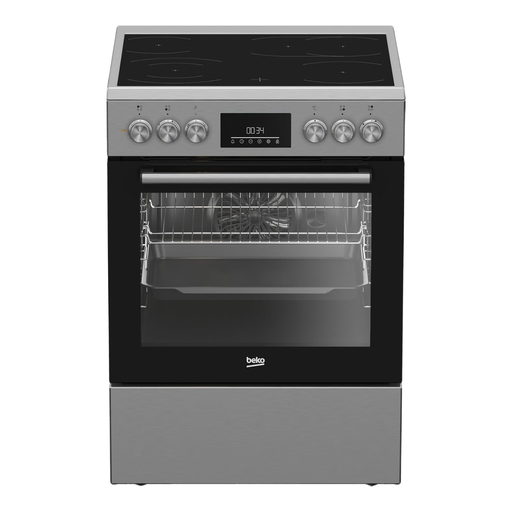
Beko FBM67320XS freestanding cooker, 72 l
A freestanding cooker option if a suitable appliance with a hob fits the space you have planned.
The product name lists a 60 cm width, 72 l capacity, SteamShine cleaning and eight heating functions.
Joybuy
Frequently asked questions about fan ovens for lasagne
Can I use the same temperature for a vegetable lasagne with fan cooking as with conventional top and bottom heat?
Not as a general rule. The Dr. Oetker recipe gives approximately 180 °C for conventional top and bottom heat and around 160 °C for fan cooking. Follow the recipe you’re using and keep an eye on the browning.
Is a 20 l oven big enough for a lasagne for several people?
Capacity alone won’t tell you. A Dr. Oetker recipe for around six portions uses a dish measuring approximately 30 × 22 cm with a 3 l capacity. Compare your dish, including its handles, with the shelf, usable interior and shelf height of the specific appliance.
What should I bear in mind when positioning a countertop oven?
Set it up only as described in the instructions for the specific model, and leave the required clearances. A freestanding countertop oven isn’t the same as a built-in oven designed to fit into a niche.
Does the EU energy label apply to every small freestanding fan oven?
No. The European Commission excludes small and portable ovens from the scope of oven energy labelling. For covered domestic ovens, the label shows details including oven capacity and kWh per cycle for conventional and fan cooking.
Are a manufacturer’s warranty and your statutory rights the same thing?
No. Your statutory rights cover faults and are exercised against the seller; a manufacturer’s warranty is an additional voluntary service with its own terms. The Verbraucherzentrale recommends checking warranty and service terms before buying.
How should I dispose of a replaced electric oven?
Waste electrical equipment must be collected separately. The Electrical and Electronic Equipment Act (ElektroG) sets out take-back and disposal requirements. Check whether the retailer will take back your old appliance when you buy a new one, or use a suitable local collection point.


