
Lieferung heute & morgen

Qualitätsgarantie

Willkommens-Angebote freischalten: KOSTENLOSE Lieferung | Bis zu 80 % RABATT | Kostenlose 30-Tage-JoyPlus-Testphase
App herunterladen
A fan heater can warm rooms quickly, but it is not equally suitable for every application. Before buying, households in Germany should therefore look beyond wattage, design and advertising claims. Important factors include the thermostat, safety features, noise level, where the heater will be placed and the likely electricity costs.
Three common purchasing misconceptions in particular can lead to unnecessary expense:
An electric fan heater converts electrical energy directly into heat. The stated power describes the maximum heating output, not the actual room temperature. A 1500-watt appliance may be sufficient for a small office or limited area. Larger or poorly insulated rooms may require more power, although room size alone is not a reliable basis for making a purchase decision.
A ceramic fan heater uses a PTC heating element. In the products considered here, this design is combined with features such as ECO mode, a thermostat and multiple heat settings. However, the term ‘energy-saving’ should not be taken at face value: even ECO mode cannot completely eliminate the physical electricity consumption of an electric heating element. It can only adjust the way the appliance operates to the measured ambient temperature, provided this function is available on the particular model.
A fan heater with a thermostat is appealing to users who want to set a target temperature rather than switch the appliance on and off manually all the time. A timer can also limit operation to a specific period. A remote control makes it easier to operate the appliance from a distance, but it does not replace checking the position of the heater and the mains cable.
Pay attention to the exact temperature range and the operating modes available. According to the product information, the Adler AD 7727 has an adjustable range of 10 to 35 °C; a frost protection function at 7 °C is also specified. These details should always be checked against the information provided in the relevant listing.
A quiet fan heater can be important for bedrooms or home offices. The Adler AD 7727 is described as having a noise level of less than 51 dB. This figure is based on the product specification and may be perceived differently depending on the distance, heat setting and room acoustics.
A fan heater with overheat protection should switch off automatically. Tip-over protection, a cooler housing or temperature monitoring are also useful features. The PELONIS model is specified as having overheat and tip-over protection, as well as an adjustable thermostat. Nevertheless, the appliance must not be covered, operated unattended or used close to a bath, shower or swimming pool. Check the product’s specific suitability for use in damp areas.
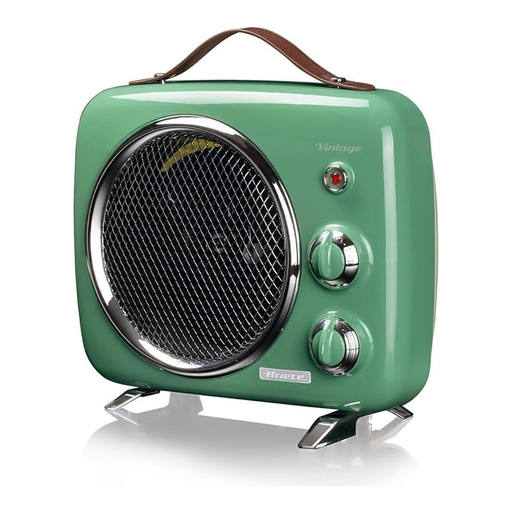
Why this product suits this profile: This compact vintage fan heater offers heating and cool-air functions, two speed settings and an integrated carry handle, making it easy to move between small indoor spaces.
The heating and cool-air functions make this appliance more versatile than a heating-only model. The carry handle supports mobile use.
2000 watts of heating power, adjustable thermostat, two speeds and a vintage housing.
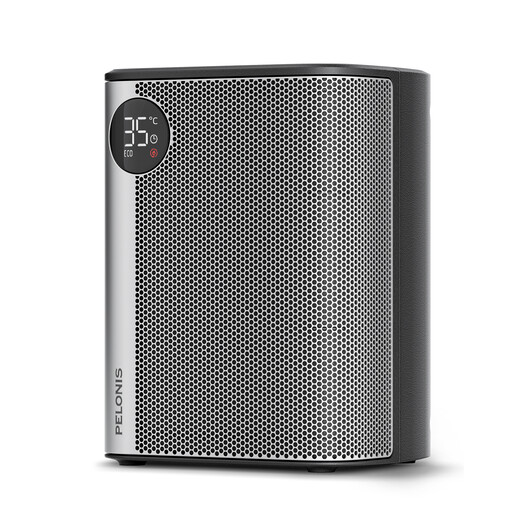
Why this product suits this profile: This ceramic model combines five operating modes, ECO mode, a thermostat, a 24-hour timer and a digital control panel for predictable use.
ECO mode and the timer can reduce unnecessary running time. Overheat and tip-over protection address key safety risks.
PTC ceramic heating with up to 2000 watts, five modes, a 24-hour timer and an adjustable thermostat.
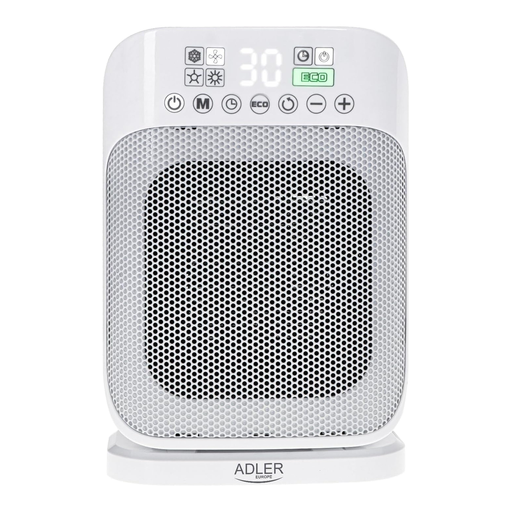
Why this product suits this profile: This model is aimed at users who want to combine temperature control, remote control, oscillation and frost protection in one appliance.
The specified temperature range, automatic 45-degree oscillation and remote control make the features easy to check in detail.
1500 watts, temperature selection from 10 to 35 °C, frost protection at 7 °C, remote control and LED display.
If you want to improve air circulation rather than add supplementary heating, you could also consider a ceiling fan with LED. For technical applications, a phone cooler or camera cooling fan may also be suitable. These appliances are not heating solutions; they are designed to dissipate heat from smartphones and cameras respectively.
We have put together a complete, regularly updated list of products that fully meet these strict selection criteria and the safety regulations applicable in the EU.
The cost depends on the power rating, operating time and your electricity tariff. A 2000-watt fan heater uses 2 kWh per hour at full power. With a tariff of, for example, 0.35 euros per kWh, that would be around 0.70 euros per hour of operation. A thermostat can reduce the actual running time once the desired room temperature has been reached.
Overnight operation is only reasonable if the instructions expressly permit it and the appliance is positioned correctly. A timer, thermostat, overheat protection and tip-over protection are all relevant features. The appliance must not be covered and should not be placed near bed linen or curtains.
There is no reliable standard lifespan that applies in every case. It depends on how long the appliance is used, exposure to dust, storage conditions and the condition of the mains cable. Clean the housing as specified by the manufacturer, do not block any ventilation openings and store the portable fan heater in a dry place when it is not in use.