
Lieferung heute & morgen

Qualitätsgarantie

Willkommens-Angebote freischalten: KOSTENLOSE Lieferung | Bis zu 80 % RABATT | Kostenlose 30-Tage-JoyPlus-Testphase
App herunterladen
A fan heater can warm rooms quickly, whether you are at your desk, in the bedroom or working in a poorly heated office. At the same time, unclear power ratings, missing safety features and unrealistic promises often lead to disappointing purchases. Focusing solely on “fast heat” or a high wattage means overlooking important details.
A 2000-watt fan heater delivers plenty of heat, but at full power it can also use up to 2 kWh per hour of operation. The actual electricity cost is easy to calculate:
Power in kW × operating time in hours × electricity price per kWh
At 2 kW and three hours of operation, that is 6 kWh. An energy-saving fan heater does not automatically use less electricity simply because it is marketed as “ECO” or “Energy Saving”. The key factors are the thermostat, power settings, operating time and the room’s insulation.
Claims such as “suitable for 25 m²” are only a rough guide. Ceiling height, window area, insulation, outdoor temperature and the desired room temperature all have a significant impact on your choice. A small appliance may struggle in a draughty period property, while a 1500-watt model may be sufficient in a well-insulated study.
Tip-over protection and overheat protection are important features. However, they do not replace a safe location. The air outlet and air intake must remain clear. Textiles, curtains and furniture should be positioned at least 1 m away from the air outlet. A fan heater should not be placed beneath a socket and should not be used close to a bath, shower or washbasin unless the model is expressly approved for this purpose.
An electric fan heater with a PTC ceramic element operates without an open flame. In a ceramic fan heater, heat is transferred into the room through a ceramic heating element and a fan. Common power settings include 750, 1,000, 1,500 or 2,000 watts.
An electric heater with a fan is primarily suited to heating for limited periods. For continuous heating of an entire living space, compare its energy consumption with that of your existing central heating system.
A fan heater with thermostat switches the heating function on or off once the target temperature has been reached. This can help prevent unnecessary continuous heating. Several power settings are useful, for example 900/1,300/1,500 watts or 750/1,500/2,000 watts.
A timer is helpful in the bedroom, home office and workplace. Depending on the model, the available appliances offer timers of up to 12 or 24 hours. Automatic shut-off reduces the risk of the appliance running for longer than intended. However, it does not replace switching the appliance off and unplugging it after use.
A quiet fan heater is better suited to bedrooms and workspaces. Manufacturer noise ratings of 25 to 51 dB may seem different depending on the measurement method and operating setting. A fan will still be audible, even when the stated noise level is low.
Fan heaters with oscillation distribute warm air across a wider angle. Depending on the model, this may be specified as 45°, 70°, 90°, 120° or 180°. This function is particularly useful when several people are in the room or when you want to heat more than one specific area.
A fan heater with remote control or a display offers additional convenience, such as changing the power setting from your desk or bed. A carry handle makes it easier to move the appliance between your home, office and bedroom. The appliance should be placed on a level, dry and stable surface. Extension leads and multi-socket adapters should be avoided in line with the manufacturer’s instructions, particularly at high power settings.
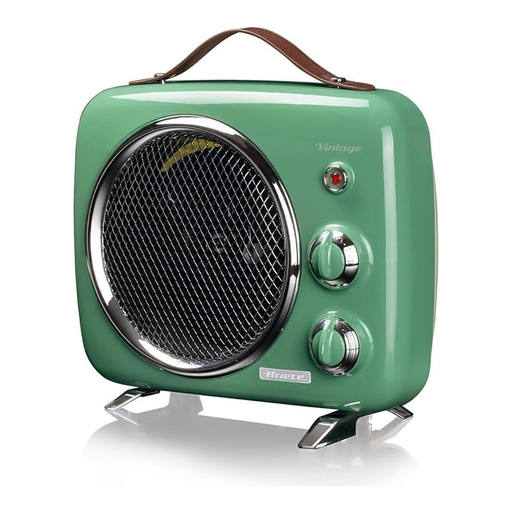
Why this product suits this profile: This compact model offers two speeds, an adjustable thermostat, and both warm and cool air. The carry handle makes it easy to move between rooms.
The adjustable thermostat prevents the appliance from heating exclusively at full power. The product details also specify automatic shut-off in the event of overheating.
2000 watts, compact dimensions, carry handle and two air functions.
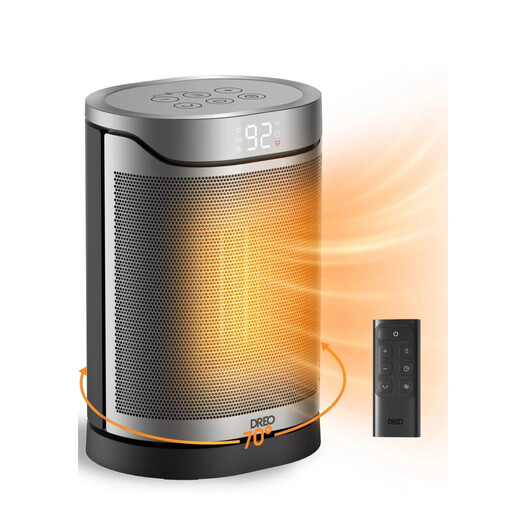
Why this product suits this profile: The stated power settings of 900, 1,300 and 1,500 watts, the temperature range of 5 to 35 °C and the timer of up to 12 hours make it suitable for offices, bedrooms and home offices.
The adjustable power output allows for a more suitable setting than simple on/off operation. According to the product details, the noise level ranges from 25 to 42 dB depending on the setting.
PTC ceramic technology, remote control, timer, thermostat and stated 8-layer protection architecture.
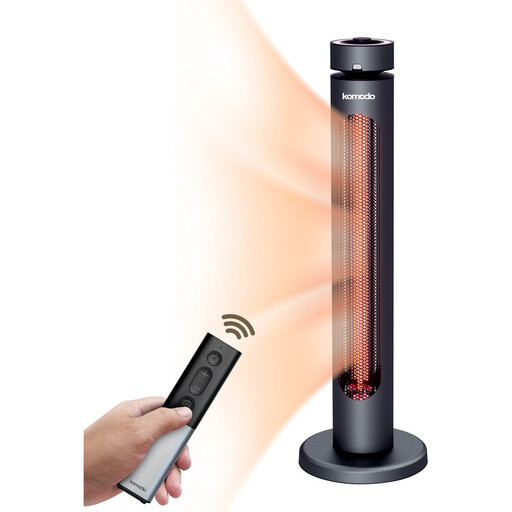
Why this product suits this profile: As an infrared patio heater for outdoor and indoor use, this model is aimed at users who want to heat a terrace, balcony or specific seating area.
The heat is not simply distributed by a fan; it is directed as infrared heat. For outdoor use, water resistance and a sheltered location must still be taken into account.
8 heat settings, remote control, app control, 24-hour timer and 180° positioning according to the product description.
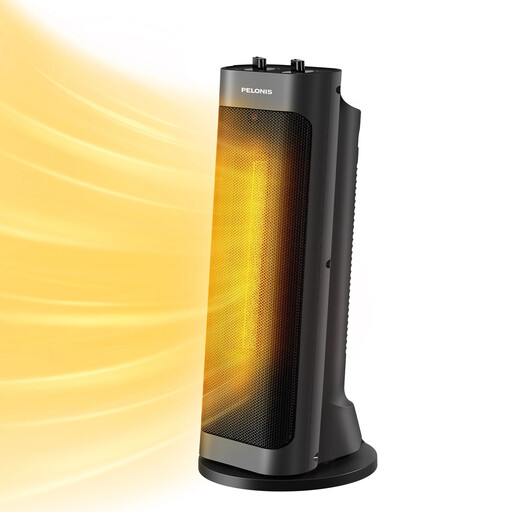
Why this product suits this profile: The 70° side-to-side oscillation and four heating modes are suitable for living rooms, offices or studies when you want the heat to spread beyond a single point.
The product details specify tip-over protection, overheat protection and a flame-retardant housing. The adjustable thermostat helps limit unnecessary operating time.
2000 watts, 70° oscillation, four heating modes, thermostat and carry handle.
We have put together a complete, regularly updated list of products that fully meet these strict selection criteria and the safety regulations applicable in the EU.
A model with an IP rating is not automatically suitable for every bathroom situation. The specific instructions, protection zone and position relative to the water source remain decisive.
A fan heater with a power rating of 2,000 watts uses a maximum of 2 kWh per hour at full power. Consumption is correspondingly lower at a reduced setting. A thermostat can reduce the actual operating time once the target temperature has been reached. To calculate the cost, multiply the consumption by your personal electricity tariff.
Its service life depends on operating time, exposure to dust, the quality of its components and correct use. Regularly removing dust from the air openings, leaving sufficient clearance and avoiding moisture can help support safe operation. It is not possible to give a general service-life estimate without a binding statement from the manufacturer.
In principle, yes, provided the model is intended for indoor use and is positioned safely. For bedrooms and offices, a quiet fan heater, a precise thermostat, several power settings and a timer are practical selection criteria. The appliance should not be covered or operated close to duvets, curtains or paper.