
Lieferung heute & morgen

Qualitätsgarantie

Willkommens-Angebote freischalten: KOSTENLOSE Lieferung | Bis zu 80 % RABATT | Kostenlose 30-Tage-JoyPlus-Testphase
App herunterladen
A fan heater warms the air quickly and can be used flexibly. For bedrooms, offices, living rooms, cellars or smaller indoor spaces, a portable fan heater can provide practical supplementary heating. The choice ranges from compact ceramic fan heaters to freestanding indoor heaters with remote controls, timers and oscillation.
However, not every advertised feature offers a genuine everyday benefit. The key considerations are suitable power, a reliable thermostat, clearly explained safety features and appropriate positioning.
A 2000 W electric fan heater can warm a room quickly, but at full power it uses 2 kWh per hour of operation. The actual cost depends on your electricity tariff and how long the heater runs. An ECO mode does not automatically reduce the heater’s physical energy consumption. Instead, it may limit the operating time or power setting through temperature-dependent control.
Noise levels mainly depend on the fan and airflow design. Terms such as “whisper-quiet” or “Silent” should therefore be compared with a specific figure in dB. A quiet fan heater producing around 25 to 42 dB may be suitable for bedrooms and workspaces. However, the perceived noise also depends on the room and the selected operating level.
Overheating protection and tip-over protection are important features. However, they do not prevent every risk. A fan heater must not be covered and needs to be kept away from curtains, furniture, paper and other flammable materials. A stable, dry and level surface is essential. Extension leads and multi-socket adapters should be avoided with high-powered appliances unless the instruction manual specifically permits them.
For smaller, well-insulated rooms, 1,000 to 1,500 W is often sufficient. A model with 1,800 or 2,000 W offers more power headroom, but uses proportionally more electricity at full power. The stated room size is only a guide. Ceiling height, insulation, window area and outdoor temperature all have a significant effect on the result.
Look for several power settings. For example, an appliance may operate at 900, 1.300 and 1.500 W instead of constantly using maximum power. In practical use, this is more relevant to an energy-efficient fan heater than a general advertising claim.
A ceramic fan heater with a PTC heating element adjusts its electrical conductivity according to temperature. This can support controlled heating, but does not replace precise temperature regulation. Convector heaters warm the air mainly through natural air circulation and generally operate without a fan. They can therefore be an appealing choice when particularly quiet operation is desired.
A fan heater with oscillation distributes the warm airflow across a wider angle. Check whether the stated angle suits the room layout. 45, 70, 90 or 120 degrees are not directly comparable if the design and direction of the air outlet differ.
A fan heater with a thermostat switches the heating function on and off according to the selected target temperature. A timer limits the operating time or enables programmed shut-off. A remote control is particularly convenient when the appliance is positioned near a chair or bed. It is still important to check whether all functions can also be operated directly on the appliance.
You should also look for tip-over protection, overheating protection, a suitable mains plug, clear operating instructions and the CE marking. The CE marking is not an independent quality seal. Instead, it indicates the manufacturer’s declaration that the product complies with the relevant EU requirements.
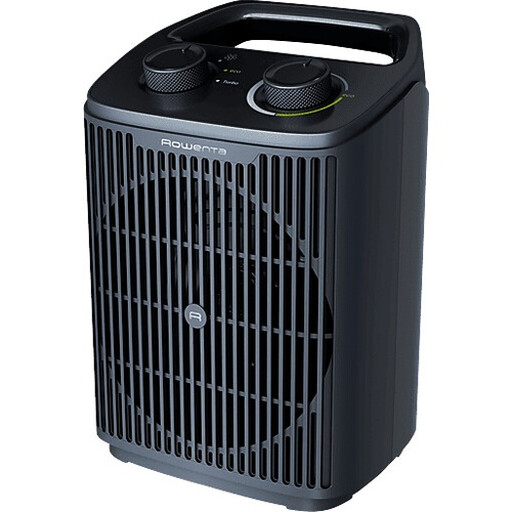
Why this product suits this profile: According to the product description, this compact appliance offers straightforward operation and is designed for portable use in living rooms, bedrooms or offices.
The power rating is clearly stated. Guidance on keeping the air supply unobstructed and maintaining distance from flammable objects addresses common positioning mistakes.
2000 W power; compact design with manual controls.

Why this product suits this profile: According to the product description, this model combines 2000 W of power with a 12-hour timer, remote control, 70° oscillation and a stated noise level of 25 to 42 dB.
The noise level is given as a decibel range rather than just a marketing term. Several protective features and the temperature control are described specifically.
PTC ceramic technology; timer, remote control and oscillation according to the product description.
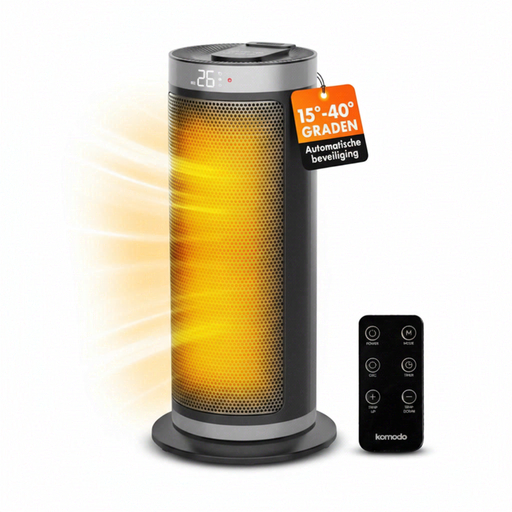
Why this product suits this profile: According to the product description, it offers three power settings, a thermostat from 15 to 40 °C, ECO mode, remote control and 90° oscillation.
The variable power settings make it possible to avoid running every application at 2000 W. Before using it in damp rooms, check the protection rating, operating instructions and local conditions.
Three power settings; thermostat, ECO mode and remote control according to the product description.
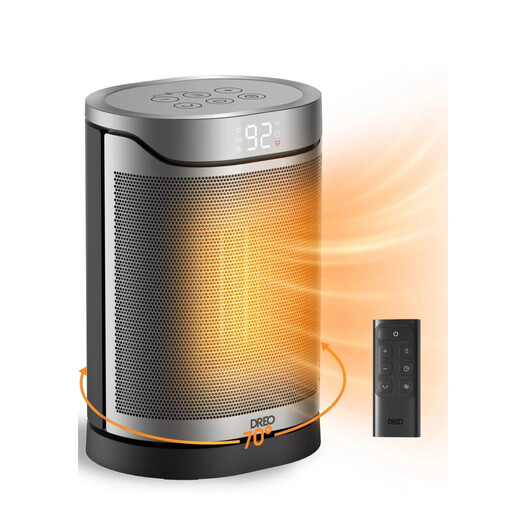
Why this product suits this profile: According to the product description, this compact model is designed for rooms of up to 20 m² and features a 12-hour timer, remote control, 70° oscillation and a stated noise range of 25 to 42 dB.
The lower maximum power may be more appropriate for smaller rooms. The specific dB rating makes it easier to assess the appliance compared with unsubstantiated descriptions of noise levels.
1500 W with several power settings; temperature range from 5 to 35 °C according to the product description.
We have put together a complete, regularly updated list of products that fully meet these strict selection criteria and the safety regulations applicable in the EU.
At full power, a 2000 W appliance uses 2 kWh per hour. Calculate the cost using: consumption in kWh × electricity price per kWh. A thermostat, ECO mode and a lower power setting can reduce the average operating time or power consumption.
That depends on the noise level, thermostat, timer and safety features. A quiet fan heater with a documented dB rating and shut-off timer may be suitable for warming the room for limited periods. Nevertheless, do not leave the appliance running unattended and follow the manufacturer’s instructions.
It is not possible to give a reliable fixed lifespan without information about usage, maintenance and components. Keeping the air vents free from dust, storing the appliance in a dry place and operating it within its specified power limits can help maintain functionality. If you notice an unusual smell, smoke, a damaged cable or repeated shut-offs, stop using the appliance.