
Lieferung heute & morgen

Qualitätsgarantie

Willkommens-Angebote freischalten: KOSTENLOSE Lieferung | Bis zu 80 % RABATT | Kostenlose 30-Tage-JoyPlus-Testphase
App herunterladen
Published on: 2026-07-14 By: Joybuy Product Recommendation Officer
The number of chargers in our homes is constantly growing, yet charging times often can't seem to keep up. A smartphone, a laptop, a tablet, and maybe a smartwatch—every device needs power, and as quickly as possible. Instead of dealing with a tangle of cables and slow power adapters, a single, high-performance fast charger can be the solution.
This article serves as a practical guide. We'll explain the most important criteria to look for when buying and present a selection of models for different use cases. Our goal is to provide you with a solid foundation for making an informed decision so you can find the right charger for your needs.
Choosing the right charger depends on your devices and usage habits. Three key aspects will help you decide.
A charger's power output is measured in watts (W) and is crucial for charging speed. A modern smartphone already benefits from a 20 to 30-watt charger, while a laptop charger often requires 65 watts or more.
Look for support for charging protocols like Power Delivery (PD). This standard, which works primarily via USB-C, enables intelligent communication between the charger and the device. The Power Delivery charger provides precisely the amount of power the device can safely and quickly accept. This ensures a phone charger isn't overloaded and a laptop receives sufficient energy.
If you own multiple devices, you'll benefit from a multi-port USB charger. Models with several ports allow you to charge a smartphone, tablet, and headphones simultaneously. This not only reduces the number of wall outlets you need but also cuts down on cable clutter on your desk or in your luggage.
The USB-C charger port has established itself as the modern standard. It's not only reversible but also supports higher power outputs via Power Delivery. Many chargers offer a combination of USB-C and classic USB-A ports to ensure compatibility with both older and newer devices.
A GaN charger uses gallium nitride instead of traditional silicon in its internal components. This semiconductor material allows for significantly higher efficiency. The advantages are tangible:
Based on the criteria mentioned, we have curated a selection of chargers for various scenarios.
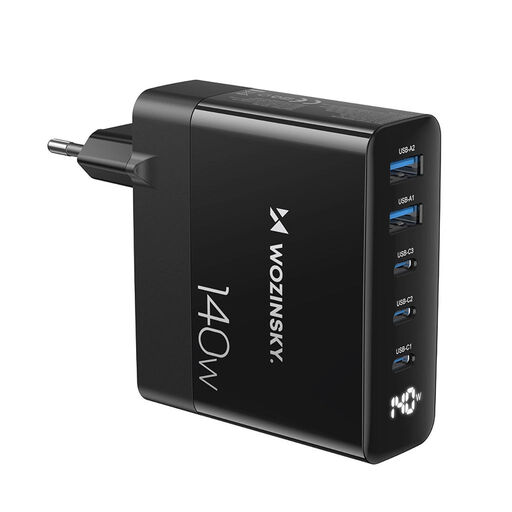
Why It Stands Out This charger is a central charging hub for demanding users. With a total output of 140 watts and five ports, it can power an entire collection of devices simultaneously—from a high-performance laptop to wireless headphones.
Pros
Who Is It For? Ideal for home offices, families, or small businesses where many different devices need to be charged centrally. Also perfect for tech enthusiasts looking for a single solution for all their gadgets.
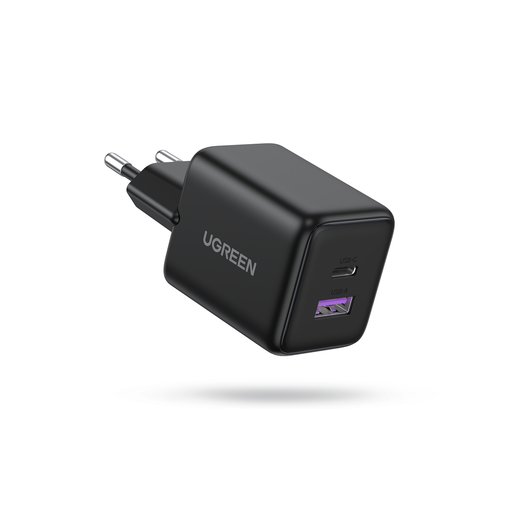
Why It Stands Out This model from UGREEN is a prime example of a compact yet powerful everyday charger. It combines the efficiency of GaN technology with a minimalist design and is barely larger than the standard chargers included with many smartphones, yet it offers more power and flexibility.
Pros
Who Is It For? Perfect for commuters, students, and anyone looking for a lightweight and reliable charger for their smartphone and a second device (e.g., headphones) for daily use.
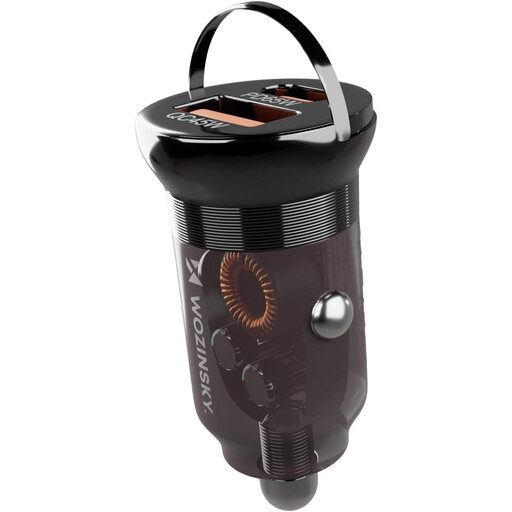
Why It Stands Out A car charger doesn't have to be slow. This model from Wozinsky brings the power of a wall charger into your vehicle. With 65 watts via the USB-C port, it can even charge laptops on the go, making it a useful tool for mobile professionals.
Pros
Who Is It For? For field professionals, daily commuters, and anyone who spends a lot of time in the car and wants to productively use and charge their devices, including laptops, on the road.
The models presented here cover common use cases. If you haven't found the right product for your specific needs or prefer a different colour, it's worth taking a look at our wider selection.
Explore our full range of USB C black chargers and find the perfect solution for your requirements.
GaN is the abbreviation for gallium nitride, a semiconductor material that is increasingly replacing silicon in modern chargers. It conducts electricity more efficiently, resulting in less energy loss as heat. This allows GaN chargers to be smaller, lighter, and cooler during operation than traditional chargers with the same power output.
The required wattage depends on the device being charged. Here's a rough guide:
Although the connector fits, not every USB-C cable is designed for high power delivery. To take full advantage of a powerful fast charger, you need a cable that supports the corresponding wattage (e.g., 60W or 100W). Using a non-specified cable can limit the charging speed or, in the worst-case scenario, cause the cable to overheat. Therefore, always pay attention to the charging cable's specifications.