
Lieferung heute & morgen

Qualitätsgarantie

Willkommens-Angebote freischalten: KOSTENLOSE Lieferung | Bis zu 80 % RABATT | Kostenlose 30-Tage-JoyPlus-Testphase
App herunterladen
Modern life without a smartphone is hard to imagine. But even the most powerful devices are only as useful as their battery life. When your battery runs low, a reliable and fast fast charger is crucial. However, many manufacturers no longer include a phone charger with new devices, or the one provided doesn't leverage the device's full potential.
This article serves as your guide. We'll explain the most important criteria for choosing a new charging adapter and present a selection of models for various needs. Our goal is to provide you with an informed basis for your decision, helping you find a suitable and safe charging solution for your devices.
The market for charging accessories can be confusing. Terms like Power Delivery, GaN, or wattage ratings can complicate the selection process. The following points will help you identify the key features to consider.
Charging power, measured in watts (W), is a key factor in charging speed. A 25W charger or a 45W charger can power up a compatible smartphone significantly faster than an old 5W adapter. Check your smartphone's specifications to see the maximum charging power it supports.
A Power Delivery (PD) adapter is a widespread standard in this area. It enables intelligent communication between the charger and the device to dynamically adjust the charging power. You can safely use a charger with a higher wattage; your device will only draw as much power as it can safely handle.
The USB-C port has established itself as the standard for modern smartphones, tablets, and even laptops. A USB-C charger is therefore a future-proof choice.
Also, look for the term GaN charger. GaN stands for Gallium Nitride, a semiconductor material that replaces traditional silicon. For the same power output, GaN chargers are often more compact, lighter, and generate less heat, making them more efficient and ideal for travel.
A high-quality charging adapter for your smartphone should have comprehensive safety features. These include protection against overcurrent, overvoltage, overheating, and short circuits. In the EU, the CE mark is mandatory; it signals that the product meets applicable safety and health requirements. Using certified chargers protects your device's battery and ensures safe operation.
Based on the criteria mentioned, we have compiled a selection of chargers that cover a range of different needs.
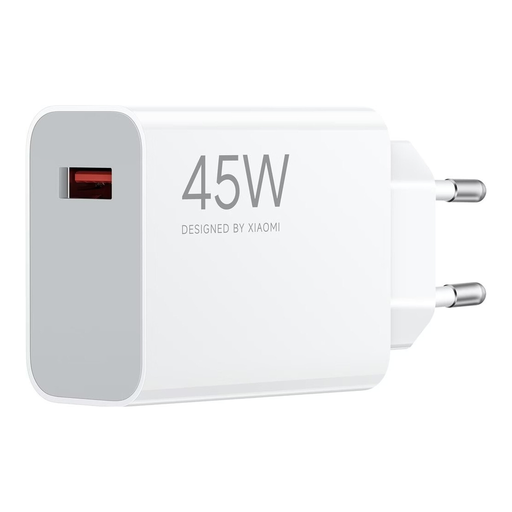
What sets it apart: This Xiaomi power adapter is designed for users who need high charging power. With up to 45 watts and FastCharge technology, it can power up compatible devices very quickly. An integrated chip automatically adjusts the charging output to the connected device. According to the manufacturer, the housing is made of fire-resistant material (UL94-V0 standard) and features more than ten built-in safety functions.
Advantages:
Who it's for: This model is a great choice for owners of Xiaomi smartphones and other USB-C devices that support up to 45W charging. Note that this charger has a USB-A output, and a compatible charging cable must be purchased separately.

What sets it apart: The Samsung charger EP-T1510XWEGEU is a compact and straightforward solution for fast charging on the go. With 15 watts of power, it offers solid fast-charging capabilities for compatible Samsung Galaxy models (S20 and newer) and other USB-C devices. A major advantage is the included USB-C to USB-C cable, making the set ready to use right out of the box.
Advantages:
Who it's for: Ideal for users looking for a reliable, lightweight, and portable secondary or replacement charger for their Samsung smartphone. It's a practical all-in-one solution for daily use and travel.
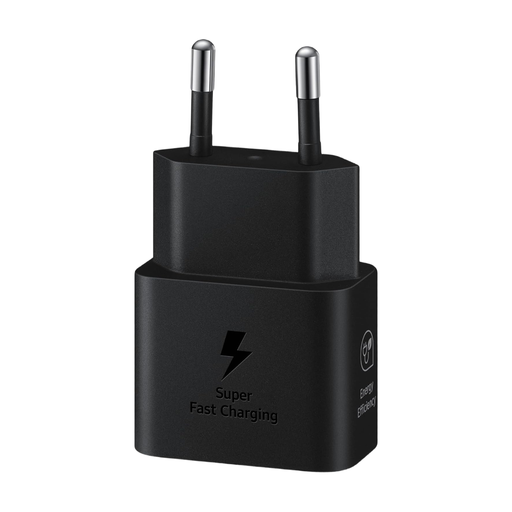
What sets it apart: This modern 25W charger from Samsung uses GaN technology, making it slimmer and more energy-efficient than older models. According to Samsung, the standby power consumption has been reduced from 20 mW to 5 mW. It supports the Power Delivery 3.0 charging standard and, with 25 watts, offers high-speed charging for a wide range of USB-C devices, including the Samsung Galaxy family.
Advantages:
Who it's for: This charger is an excellent choice for tech-savvy users who value efficiency, portability, and a modern charging solution. It's a powerful all-rounder for many current smartphones and tablets that support 25W fast charging.
The models presented here cover common use cases. However, if you need a charger with multiple ports, a different power level, or for specific devices, you can find a wider selection in our main category.
Discover Our Full Range of USB Charging Adapters
1. Can I use a fast charger with a higher wattage for my smartphone? Yes, that's perfectly safe. Modern chargers and smartphones communicate with each other (e.g., via the Power Delivery standard) to regulate the charging power safely. The charger only supplies as much current as the device requests and can safely handle. This will not damage the battery.
2. What is the difference between a USB-C charger and a GaN charger? USB-C describes the physical connector type, which is symmetrical and versatile. GaN (Gallium Nitride), on the other hand, refers to the semiconductor material inside the charger. A GaN charger is technologically more advanced, resulting in a smaller form factor, less heat generation, and higher efficiency. Many modern GaN chargers use a USB-C port.
3. Do I need a special cable for a fast charger? Yes, an appropriate cable is required for optimal charging speed. To take full advantage of a fast charger's power, especially for outputs above 15W, you need a cable rated for that high current. For a USB-C charger, this is typically a correspondingly certified USB-C to USB-C cable.