
Lieferung heute & morgen

Qualitätsgarantie

Willkommens-Angebote freischalten: KOSTENLOSE Lieferung | Bis zu 80 % RABATT | Kostenlose 30-Tage-JoyPlus-Testphase
App herunterladen
The number of electronic devices we use daily is constantly growing—from smartphones and tablets to laptops. One of the main challenges is keeping all these devices efficiently and quickly powered up without creating a tangle of different cables and power adapters. This guide will help you understand how modern charging technologies work and make an informed decision to find the perfect fast charger that meets your needs.
Selecting the right charger depends on several technical factors. The following points will help you understand the relevant criteria and correctly interpret charger specifications.
Charging power, measured in watts (W), is a crucial factor for charging speed. In principle, a charger with a higher wattage can charge a compatible device faster. However, it's essential that both the charger and the device (e.g., your smartphone) support the same fast-charging standard. Common standards include:
Before buying, check your device's technical specifications to ensure the chosen charger supports the correct standard and can deliver the maximum charging power.
The choice between a wall adapter and a portable battery depends on your use case.
A GaN charger uses gallium nitride instead of traditional silicon as its semiconductor material. This allows for higher efficiency in energy transfer. The practical advantages are:
This technology is particularly beneficial for high-performance, multi-port power adapters, as it allows them to remain portable despite their high output.
Based on the criteria mentioned, we have curated a selection of products that cover different use cases.
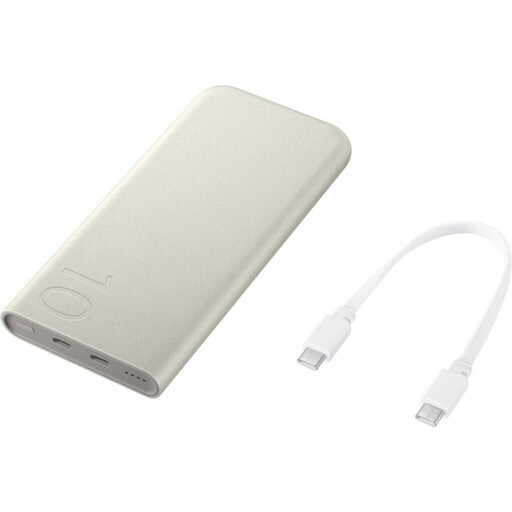
What sets it apart: This power bank combines a 10,000 mAh capacity with a charging output of up to 25W. It supports Samsung Super Fast Charging and is designed for durability and portability with its robust hard plastic casing and compact dimensions.
Advantages:
Who is it for? Ideal for users of Samsung devices and other USB-C smartphones who need a reliable and easily portable power reserve for daily life, commuting, or short trips.
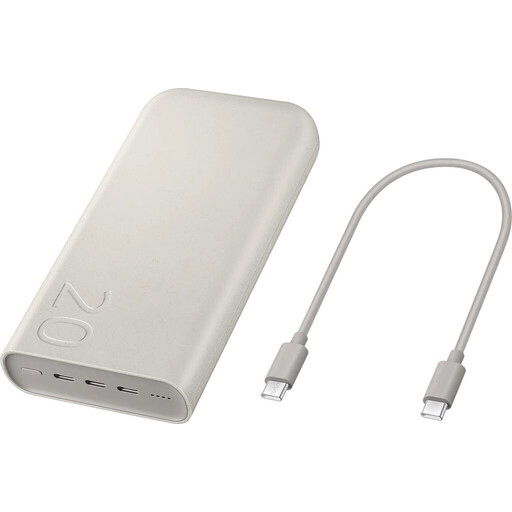
What sets it apart: With a high capacity of 20,000 mAh and an output of up to 45W, this power bank is a powerful mobile charging station. It supports both Power Delivery 3.0 and Samsung Super Fast Charging 2.0, and its three ports can charge up to three devices simultaneously.
Advantages:
Who is it for? Perfect for frequent travelers, professionals, and students who need to power multiple devices like a smartphone, tablet, and laptop on the go and who value high capacity and charging performance.
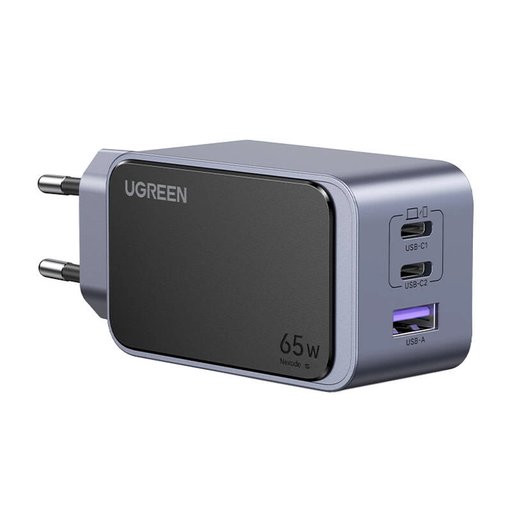
What sets it apart: This GaN charger from Ugreen delivers a total output of 65W in a very compact body. It features three ports and supports a wide range of fast-charging protocols, including PD 3.0 and PPS. According to the manufacturer, it can charge a MacBook Air M2 from 0% to 51% in 30 minutes.
Advantages:
Who is it for? A great choice for users looking for a single, universal power adapter for home and travel to charge their smartphone, tablet, and laptop quickly and simultaneously.
If our selection doesn't include the perfect model for your specific needs, you can find a wide variety of other charging solutions in our broader category. Discover more options in our Accessories range.
1. What does GaN mean in a charger? GaN stands for Gallium Nitride, a semiconductor material that operates more efficiently than traditional silicon. A GaN charger can be built smaller and lighter for the same power output and generates less waste heat, making it a modern and compact charging solution.
2. Can I use any fast charger for my smartphone? Not necessarily. For optimal charging speed, both the charger and the smartphone must support the same fast-charging standard (e.g., Power Delivery or Quick Charge). A charger without a matching standard will typically charge the device at a slower, standard speed. It is advisable to check the specifications of both devices.
3. How much capacity (mAh) should a power bank have? The required capacity depends on your intended use. For daily needs, to charge a smartphone once or twice, 10,000 mAh is often sufficient. For longer trips, charging multiple devices, or for use as a laptop power bank, a model with 20,000 mAh or more is a more sensible choice.