
Lieferung heute & morgen

Qualitätsgarantie

Willkommens-Angebote freischalten: KOSTENLOSE Lieferung | Bis zu 80 % RABATT | Kostenlose 30-Tage-JoyPlus-Testphase
App herunterladen
A single cable for your laptop, smartphone, and tablet—USB-C technology promises a streamlined and efficient charging solution. Yet, the market is flooded with cables whose marketing claims often create more confusion than clarity. Many users invest in a supposedly high-performance USB-C fast charging cable, only to find their devices barely charge any faster. Before making a purchase, it's crucial to understand the most common pitfalls that lead to unnecessary expenses.
The 3 Most Common Pitfalls When Buying a Cable:
To ensure your new cable delivers its promised performance safely and reliably, you should check three core aspects. These technical details are more important than any marketing message.
A cable's maximum charging power is specified in watts (W). Modern standards like Power Delivery (PD) 3.1 enable up to 240W of power, which is enough to replace the charger for even demanding laptops, serving as a MacBook charging cable replacement.
Practical Applications:
It's important that the entire charging chain—the charger, cable, and device—supports the same PD standard. A 240W charging cable only unleashes its full potential when paired with a corresponding GaN charger and a compatible device.
A cable's durability depends directly on the materials used.
Every USB-C to USB-C cable designed for more than 3 amps of current or 60 watts of power must have an E-Marker (Electronic Marker) chip, according to USB-IF specifications. This chip stores the cable's capabilities (e.g., maximum current, data rate) and communicates this information to the charger and the device. This ensures safe and efficient power transfer. A cable without this chip will be limited to a lower power output (usually 60W) by a smart charger for safety reasons.
Based on the objective criteria mentioned above, we have identified several products that offer a suitable solution for specific user groups.
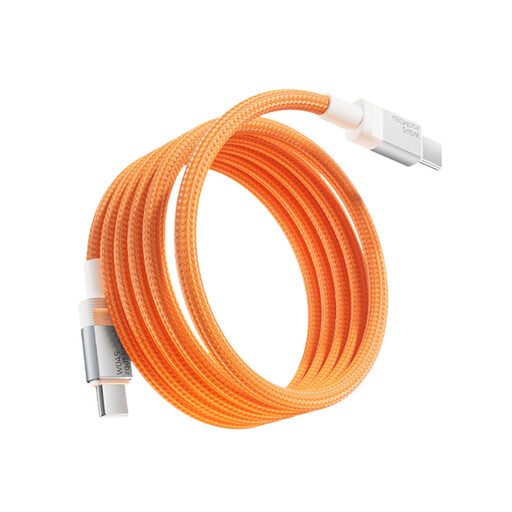
Why This Fits Their Persona: Ideal for users who need to charge laptops, tablets, and smartphones at maximum speed. The 240W support makes it a future-proof investment for upcoming device generations.
This cable combines a high 240W power rating with an integrated E-Marker Pro Chip to bypass the wattage and chip pitfalls. The 48-strand nylon braid and aluminium alloy housing address the material pitfall.
Supports the PD 3.1 standard for maximum charging performance. Its robust construction is designed for long-term durability.
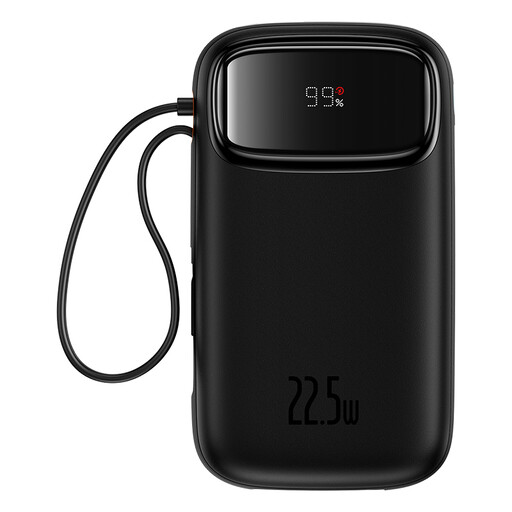
Why This Fits Their Persona: Perfect for commuters and travellers who need a compact, on-the-go charging solution without carrying separate cables. Reliably charges smartphones and accessories.
This power bank with a built-in cable solves the problem of cable management. It offers dedicated connectors (Type-C and Lightning) and a clear digital display for charging status, eliminating guesswork.
Two built-in cables (USB-C and Lightning) plus additional ports allow for charging up to four devices simultaneously. The compact design with a lanyard is optimised for mobile use.
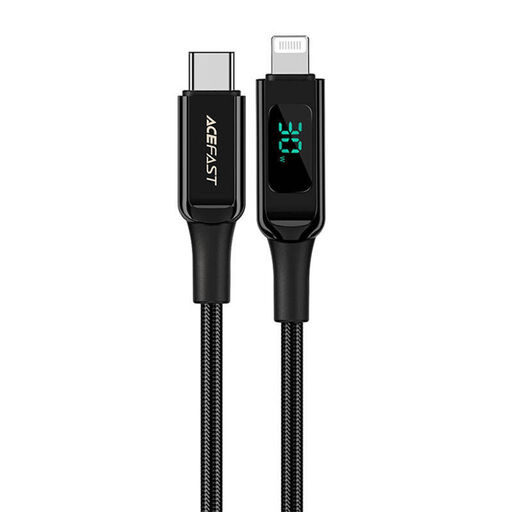
Why This Fits Their Persona: Specifically for users of iPhones and iPads with a Lightning port who are looking for a reliable and fast charging option. MFi certification ensures full compatibility.
The official MFi (Made for iPhone) certification guarantees that the cable meets Apple's strict quality and safety standards. This prevents compatibility issues and protects the device's battery.
An integrated digital display shows the charging power in real-time. The robust construction of braided nylon and zinc alloy ensures high durability.
We've compiled a complete, up-to-date list of products that fully meet these strict selection criteria and safety regulations.
Charging speed is determined by the weakest link in the chain. To use the maximum power (e.g., 100W or 240W), all three components—the charger, the USB-C fast charging cable, and your device (smartphone, laptop)—must support the same charging standard (e.g., PD 3.0 or PD 3.1). A 240W cable connected to a 20W charger will only deliver 20W.
A braided charging cable made of nylon is generally more resistant to abrasion and sharp bends than a standard cable with a PVC jacket. However, durability also heavily depends on the quality of the connectors and the strain relief. A high-quality overall construction is crucial, not just the sheath.