
Lieferung heute & morgen

Qualitätsgarantie

Willkommens-Angebote freischalten: KOSTENLOSE Lieferung | Bis zu 80 % RABATT | Kostenlose 30-Tage-JoyPlus-Testphase
App herunterladen
A dead smartphone right before an important meeting, or a laptop that needs to be plugged in for hours—a mismatched or slow charging cable is more than just an annoyance. However, the market for USB-C fast charging cables is overwhelming. Marketing claims are often vague, and technical details are confusing. Many users invest in expensive cables that don't deliver on their promised performance or opt for cheap alternatives that fail after just a few months.
As your Joybuy Product Recommendation Officer, I'm here to help you separate fact from fiction. In this guide, I'll show you the most common pitfalls of buying a cable and which crucial features you need to look for to find a durable and efficient charging solution.
Before you spend any money, you should be aware of these typical issues that lead to frustration and unnecessary expenses:
To avoid these pitfalls, focus on three verifiable criteria. These will determine the speed, durability, and universal utility of your new cable.
Charging power is measured in watts (W) and is the most important indicator of speed. Modern devices use standards like Power Delivery (PD) to safely negotiate the maximum charging speed.
The days of a single standard connector are over. The correct combination is critical for functionality.
The lifespan of a cable depends directly on its construction.
Based on these objective criteria, we have selected some products that are suitable for specific use cases.
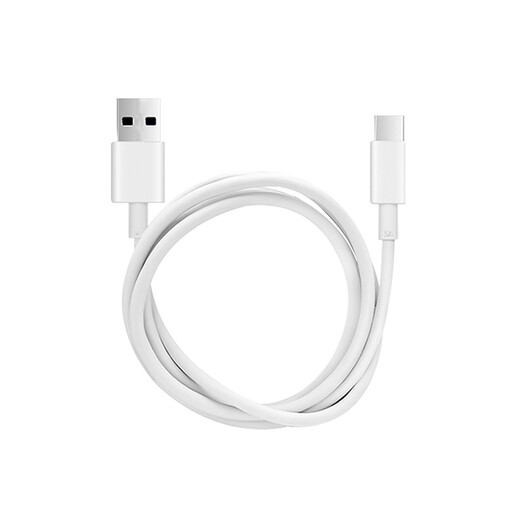
Why This Fits Their Persona: Ideal for users who need a reliable cable for daily charging of their smartphone with an existing USB-A power adapter. It offers solid core functionality without costly extras.
This cable avoids the pitfall of overpaying for high-performance features you don't need. It is clearly specified for 2A (10W) and doesn't make exaggerated fast-charging claims.
Focuses on durability with reinforced connectors and a robust PVC/TPE jacket. Reliably supports charging and data transfer for standard applications.
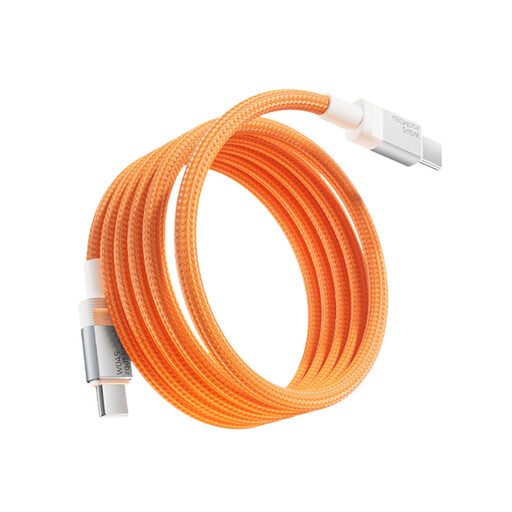
Why This Fits Their Persona: Perfect for power users who need to charge laptops, tablets, and smartphones at maximum speed. The high power output makes it future-proof for upcoming device generations.
It bypasses the performance trap by supporting the PD 3.1 standard with up to 240W and an integrated E-Marker Pro chip, which safely regulates power and prevents overheating.
Extremely durable thanks to a 48-strand nylon braided jacket and aluminum alloy connector housings. Delivers maximum charging power for demanding devices like the MacBook Pro.
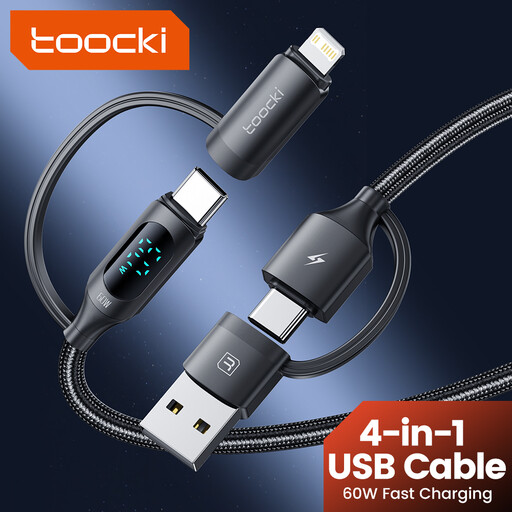
Why This Fits Their Persona: The solution for families or individuals with a mix of Apple and Android devices. It reduces cable clutter by combining USB-A/C inputs with USB-C and Lightning outputs.
It directly solves the compatibility problem by bundling four common connector combinations into a single braided cable. No more searching for the right cable.
Maximum flexibility for travel, the car, or the desk. The durable, braided construction ensures this versatile cable can withstand daily use.
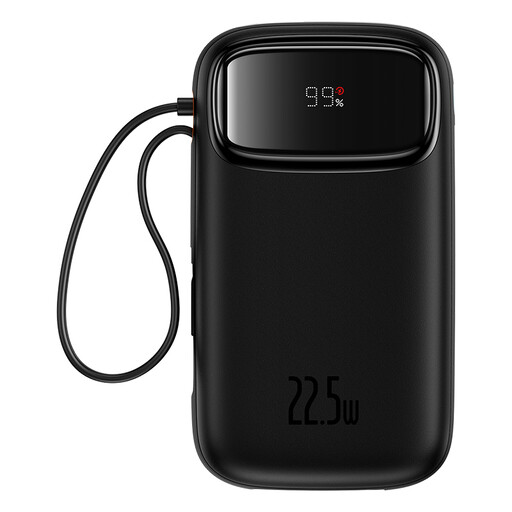
Why This Fits Their Persona: For anyone who relies on a dependable power source on the go. This power bank with an integrated cable (Type-C and Lightning) eliminates the need to carry separate cables.
It solves the problem of a forgotten cable. The integrated cables are always there, and the digital display precisely shows the remaining capacity, so you're never unexpectedly left without power.
Compact design with 22.5W fast charging and the ability to charge up to four devices simultaneously. Airline-approved, making it a practical travel companion.
We have compiled a complete, up-to-date list of products that fully meet these strict selection criteria and safety regulations.
Look for the maximum power rating in watts (W) and support for the Power Delivery (PD) protocol in the product description. For high power delivery (over 60W), an E-Marker chip is also required in the cable, which should be mentioned in the technical specifications. The cable, power adapter, and end device must all support the same standard.
No. An intelligent charging system, consisting of the cable, power adapter, and device, communicates with each other. The device only requests as much power as it can safely handle. Therefore, using a 100W charging cable with a 25W smartphone is completely safe; the phone will still only charge at 25W.
The lifespan heavily depends on usage. However, a braided charging cable with reinforced strain relief is designed to withstand a significantly higher number of bend cycles than a standard cable. With normal use, such cables can last for several years as they are more resistant to the typical mechanical stresses of daily life.