
Lieferung heute & morgen

Qualitätsgarantie

Willkommens-Angebote freischalten: KOSTENLOSE Lieferung | Bis zu 80 % RABATT | Kostenlose 30-Tage-JoyPlus-Testphase
App herunterladen
A dead battery always strikes at the worst possible moment—whether you're on your way to an important meeting, during a long train ride, or while capturing special moments on vacation. A power bank, also known as a portable charger or external battery, is the obvious solution. But the market is overwhelming and filled with technical promises that often confuse more than they help. Many buyers invest in a device that fails to meet their expectations. Before you make a decision, it's crucial to understand the most common pitfalls.
The 2 Most Common Traps When Buying a Power Bank:
To avoid buyer's remorse, you should focus on objective, technical parameters instead of marketing buzzwords. These three factors are crucial for the performance and utility of your portable charger.
As mentioned, the printed capacity (e.g., 10,000 mAh or 20,000 mAh) is the theoretical capacity of the internal battery cells. More relevant is the rated capacity, which specifies how much energy the external battery can actually deliver. Reputable manufacturers disclose this value in the fine print. As a rule of thumb:
Charging speed is measured in watts (W). For true power bank fast charging, two things are essential:
The ports determine compatibility and convenience. A modern power bank should have at least one USB-C power bank port that functions as both an input and an output (bidirectional).
Additional features can make daily life easier:
Based on these objective criteria, we have selected a few models for typical use cases.
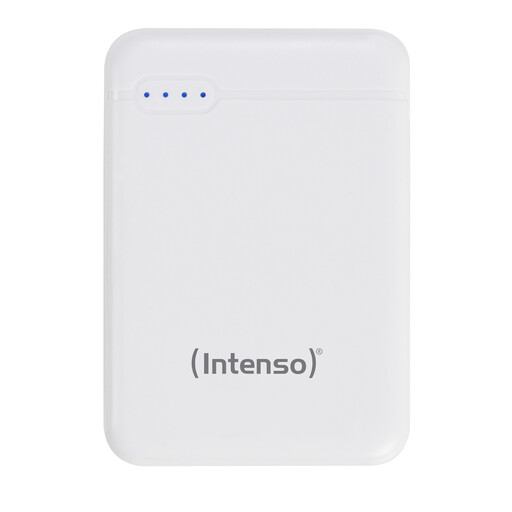
Why it's a good fit: Ideal for users who need a straightforward and ultra-compact emergency power source for their daily commute to work or university. At just 103 grams and the size of a credit card, this small power bank fits in any pocket.
The 5,000 mAh capacity is realistically designed for an emergency smartphone charge, without setting false expectations for multiple charging cycles. It focuses on the essentials: compactness and reliability.
Extremely portable and lightweight. Offers both a USB-A and a USB-C port for broad compatibility.
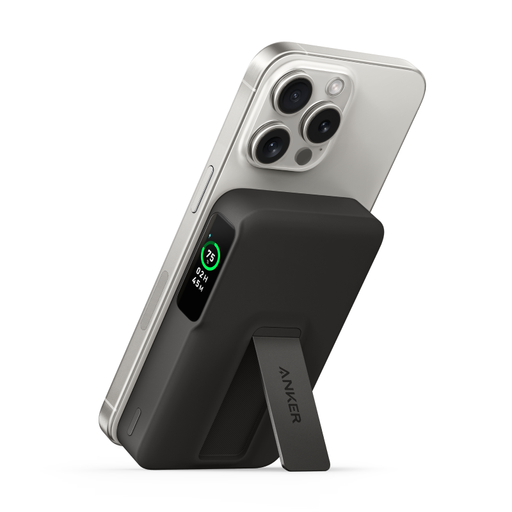
Why it's a good fit: Perfect for iPhone users seeking maximum convenience without cable clutter. The power bank attaches magnetically to the device and charges it wirelessly. The integrated stand is handy for video calls or media consumption on the go.
Instead of a vague fast-charging promise, this model offers Qi2-certified charging at 15W. This is the current standard for fast wireless charging on Apple devices and guarantees a defined, efficient performance.
Combines a 10,000mAh power bank, a MagSafe mount, and a kickstand. The informative display shows the battery level and remaining charging time.
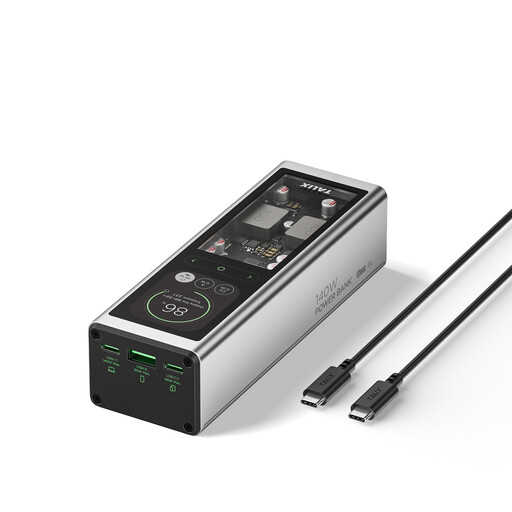
Why it's a good fit: For users who need maximum power for multiple demanding devices like laptops (e.g., MacBook Pro), tablets, and drones. The high 20,000 mAh capacity and enormous power output make it the ideal companion for business trips and digital nomads.
This model relies on the future-proof PD 3.1 standard with up to 140W of power. Instead of a vague fast-charging promise, it delivers a clearly defined, extremely high output that is sufficient even for the most demanding laptops. The display shows the power output in real-time.
Supports charging three devices simultaneously at high speed. The smart display provides detailed information about battery level, temperature, and charging power.
We have compiled a complete, up-to-date list of products that fully meet these strict selection criteria and all relevant safety standards.
That depends on your smartphone's battery capacity and the power bank's efficiency. A typical smartphone has a battery of about 4,000-5,000 mAh. A 10000mAh power bank with a realistic rated capacity of around 7,000 mAh can therefore fully charge such a smartphone about 1.5 times.
Yes, power banks must be carried in your carry-on luggage. They are prohibited in checked baggage. Most airlines limit the capacity to 100 watt-hours (Wh). A 20,000 mAh power bank at 5V is about 100 Wh, while a 25,000 mAh power bank is slightly over but is often still tolerated. When in doubt, check with your airline.
Power Delivery (PD) is a universal fast-charging standard that works via the USB-C port. It allows for significantly higher power outputs than the old USB-A standard. A power bank with PD can dynamically adjust the charging voltage and current to match the connected device, charging it as quickly and safely as possible. This is especially important for charging laptops, tablets, and modern smartphones.