
Lieferung heute & morgen

Qualitätsgarantie

Willkommens-Angebote freischalten: KOSTENLOSE Lieferung | Bis zu 80 % RABATT | Kostenlose 30-Tage-JoyPlus-Testphase
App herunterladen
A dead smartphone on your way to an important meeting or a laptop running out of power on a long-haul drive—these situations are more than just an annoyance. A high-performance USB-C Car Charger promises a solution, but the market is confusing. Many products don't live up to their advertising claims. As your Joybuy Product Recommendation Officer, I'm here to help you separate fact from marketing fiction and make an informed decision.
Before you invest, you should know the typical pitfalls that often lead to disappointment and unnecessary expense.
To avoid a bad purchase, focus on three verifiable criteria. These will determine if a charger meets your needs.
Ignore the heavily advertised total output and check the maximum power output per individual USB-C port. This specification determines which devices you can charge.
Calling a modern fast car charger "fast" requires more than just high wattage. Compatibility with the right protocols is crucial.
Consider how many and what types of devices you need to charge simultaneously. A USB-C cigarette lighter adapter should fit your daily routine.
Here are some recommendations tailored to different usage scenarios that meet the criteria mentioned above.
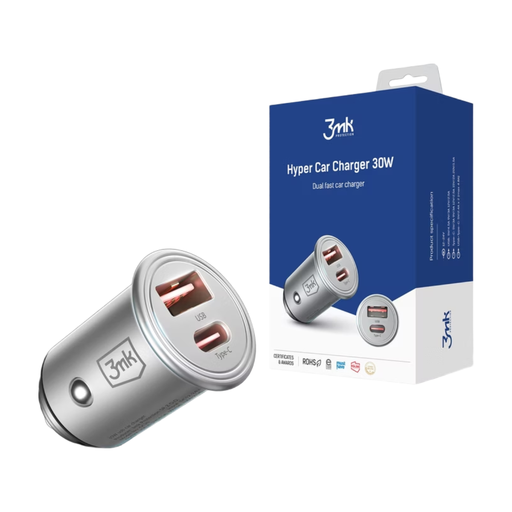
Why This Fits Their Persona: Ideal for commuters who primarily need to fast-charge their smartphone and occasionally power a second device like headphones. Its compact design blends seamlessly into any dashboard.
This charger supports PD, QC, and PPS protocols. It delivers a clear output of up to 30W, sufficient for fast-charging modern smartphones without advertising misleading total wattage figures.
The robust aluminum housing ensures excellent heat dissipation. The dual ports (USB-C and USB-A) offer flexibility for both old and new devices.
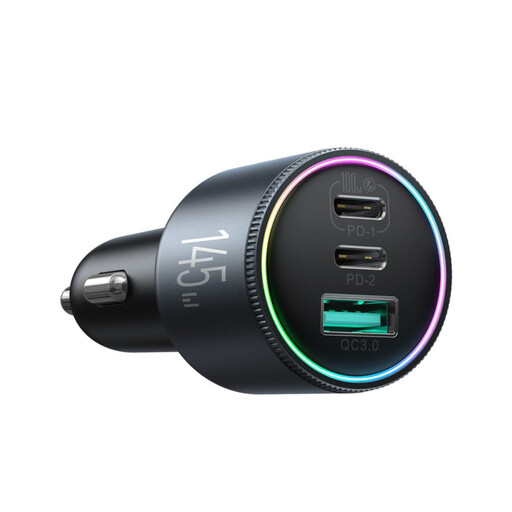
Why This Fits Their Persona: Perfect for users who run a mobile office on the go and need to power a laptop, tablet, and smartphone simultaneously. A true laptop car charger.
This model avoids the "total power" trap by explicitly stating an output of up to 100W on a single USB-C port (PD 100W). This ensures even demanding laptops can be charged reliably.
Broad protocol support (PD 3.0, PPS, QC 4.0+). The metal casing promotes heat dissipation for stable performance. A compatible 100W USB-C cable is included.
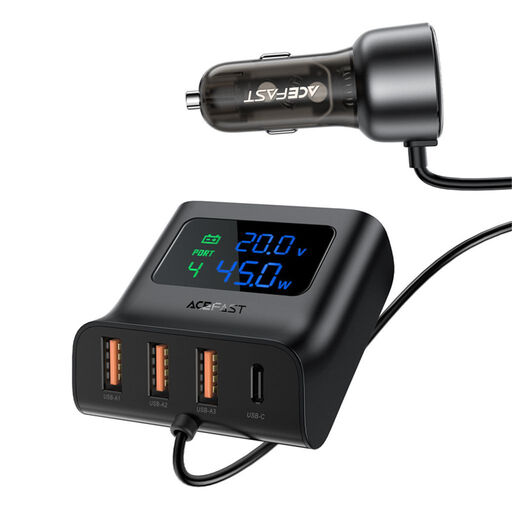
Why This Fits Their Persona: The solution for long family road trips. With six ports and a 1.10m cable, even passengers in the back seat can conveniently charge their tablets, gaming consoles, and smartphones.
This model features a digital display that shows the voltage and power for each port in real-time. This creates transparency about the actual charging performance and eliminates guesswork about power distribution.
An incredible variety of ports (4x USB-A, 2x USB-C) and intelligent power management that distributes the 138W total output to connected devices as needed.
We have compiled a complete, up-to-date list of products that fully meet these strict selection criteria and safety standards.
While the engine is running, this is not a problem, as the alternator constantly recharges the battery. However, in some vehicle models, the cigarette lighter socket remains active even when the engine is off. If you leave the charger plugged into such a vehicle for many hours or days without starting the engine, it can slowly drain the car battery. It is recommended to unplug the charger during extended periods of parking.
This is a classic example of the "total power" trap. The charger may have a total output of 100W, but this power might be split across multiple ports. Check the technical specifications to see if a single USB-C port can deliver the power your laptop requires (e.g., 65W or 100W). Additionally, both the charger and your cable must support the Power Delivery (PD) standard.
No, this is a common misconception. Standard USB-C cables are often only rated for power up to 60W. To take full advantage of a 100W car charger, you need a special USB-C cable that is certified for 100W (or 5A). These cables contain an E-Marker chip that signals to the charger that it can safely deliver full power. Using an unsuitable cable will limit the charging speed and can cause the cable to overheat.