
Lieferung heute & morgen

Qualitätsgarantie

Willkommens-Angebote freischalten: KOSTENLOSE Lieferung | Bis zu 80 % RABATT | Kostenlose 30-Tage-JoyPlus-Testphase
App herunterladen
A conventional bicycle quickly reaches its limits once the pavement ends. For those who love riding off the beaten path or need a bike that performs reliably on challenging surfaces like sand, snow, or muddy forest trails, a specialised solution is required. A fat bike, often described as a mountain bike with fat tyres, delivers exactly this versatility.
This article serves as a comprehensive guide. It explains the key features of a fat bike and presents a selection of models to help you choose the right all-terrain bicycle.
Choosing the right model depends on several technical factors. The following points will help you better understand and evaluate the characteristics of a fat bike.
Tyre size, measured in inches, is crucial for both fit and handling. It should be appropriate for the rider's height.
The characteristic tyre width, typically 4.0 inches, allows you to ride with low air pressure. This increases the contact patch, providing the necessary grip on loose surfaces—making it an ideal bike for snow and sand.
The frame is the foundation of the bicycle. Hi-Ten steel is frequently used for fat bikes. This material is known for its robustness and durability. It effectively absorbs shocks and vibrations, which enhances ride comfort on rough trails.
A reliable braking system is essential for safety on the trail. Mechanical disc brakes on the front and rear wheels provide consistently strong stopping power, even in wet or muddy conditions. Compared to rim brakes, they are less susceptible to weather effects and wear.
A derailleur system with multiple gears is crucial for a versatile all-terrain bicycle. A Shimano 7-speed drivetrain is a proven component for entry-level models. It allows you to adjust the gear ratio to tackle inclines or adapt to changing surface conditions. Shifting is typically managed via an easy-to-use twist shifter on the handlebar, which is also convenient to operate while wearing gloves.
Based on the criteria mentioned above, we have selected a few models from the HILAND Fatbike brand. These bikes are distinguished by their functional features designed for off-road performance.
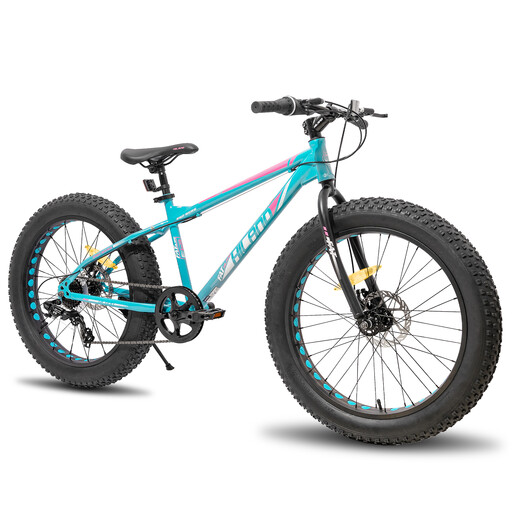
Why It Stands Out This 20-inch model is specifically tailored to the needs of children. The wide 4.0-inch tyres inspire confidence by providing a high degree of safety and stability, which is especially beneficial for young riders on uneven ground.
Key Features
Who It's For This kids' fat bike is an excellent choice for young adventurers looking for an eye-catching and capable bike for off-road excursions.
View Product: HILAND Roon 20-Inch
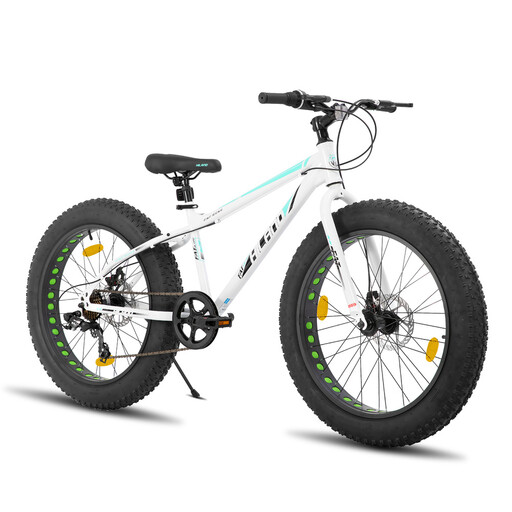
Why It Stands Out The 24-inch model bridges the gap between kids' bikes and full-sized adult bikes. It offers the same robust features as the other sizes but is dimensioned for teenagers and shorter adults.
Key Features
Who It's For Ideal for teenagers and adults of shorter stature who are looking for a versatile mountain bike with fat tyres for leisure and adventure.
View Product: HILAND Roon 24-Inch

Why It Stands Out With its 26-inch wheels, this model is the standard version for adults. It combines a robust build with components designed for durability and off-road functionality.
Key Features
Who It's For This 26-inch fat bike is aimed at adult beginners and recreational riders seeking a reliable bicycle for tours through the woods, across fields, or along the beach.
View Product: HILAND Roon 26-Inch
A fat bike is a specialised type of bicycle. If you are looking for alternative bike types, especially for younger family members, you may find suitable models in other categories.
Looking for more bike models for children? Explore our selection of Kids' and Girls' Bicycles to compare more options.
The key advantage lies in the wide tyres. They allow you to ride with very low air pressure, which increases the tyre's contact patch. This creates exceptionally good traction on loose or soft surfaces like snow, sand, mud, or loose gravel, where standard mountain bikes would struggle.
Fat bikes are generally heavier than road bikes or standard mountain bikes. The increased weight and higher rolling resistance of the tyres require more effort on pavement. Off-road, however, the weight is less of a factor, as the wide tyres provide immense stability and make riding on difficult terrain easier. The gear system helps you tackle climbs with manageable effort.
Yes, a fat bike can be ridden on paved roads. However, it is not optimised for this purpose. The rolling resistance of the wide tyres is significantly higher on smooth surfaces, making it more strenuous to ride than a city or trekking bike. A fat bike truly shines when taken off-road.