
Lieferung heute & morgen

Qualitätsgarantie

Willkommens-Angebote freischalten: KOSTENLOSE Lieferung | Bis zu 80 % RABATT | Kostenlose 30-Tage-JoyPlus-Testphase
App herunterladen
A fat bike e-bike combines the robustness and all-terrain capability of bicycles with extra-wide tires with the effortless assistance of an electric motor. This combination makes it a versatile choice for commuters and recreational riders who don't want to be limited to a single type of terrain. Whether on paved bike paths, unpaved forest trails, or gravel tracks, an e-bike with fat tires offers stability and riding comfort.
This article serves as a guide. It highlights key technical features to consider when making your selection and presents a variety of models to help you make an informed decision.
Selecting the right model depends on your individual needs. The following three criteria are essential for making a well-informed choice.
Range is one of the most crucial factors for an electric bicycle. It is primarily determined by the battery's capacity, which is measured in watt-hours (Wh). A higher watt-hour rating generally means a potentially long e-bike range. However, keep in mind that the actual range depends on many factors: the chosen level of assistance, rider weight, the terrain's topography, and tire pressure. Compare the manufacturer's specifications for battery capacity (often in amp-hours, Ah) and voltage (V) to estimate the total power (Wh = Ah x V).
Due to their higher weight and ability to ride on varied terrain, a reliable braking system is essential. An e-bike with hydraulic disc brakes offers clear advantages over mechanical systems. Hydraulic brakes allow for more precise modulation of braking power with less hand effort and provide consistently high performance, even in wet conditions or on long descents. This significantly contributes to safety, especially in city traffic or on challenging trails.
Clear regulations for electric bicycles exist in many regions. For example, in the EU, standard pedelecs that are legally classified as bicycles may have a motor with a nominal continuous power rating of no more than 250 watts and can only provide assistance up to a speed of 25 km/h (approx. 15.5 mph). Such an e-bike 25 km/h is typically exempt from license, insurance, and registration requirements. Models with more powerful motors or higher speed assistance fall into different vehicle classes (e.g., S-Pedelecs or e-mopeds) and are subject to stricter rules or, like some pure off-road models, are not approved for use on public roads.
Here is a selection of models that cater to different needs and applications.
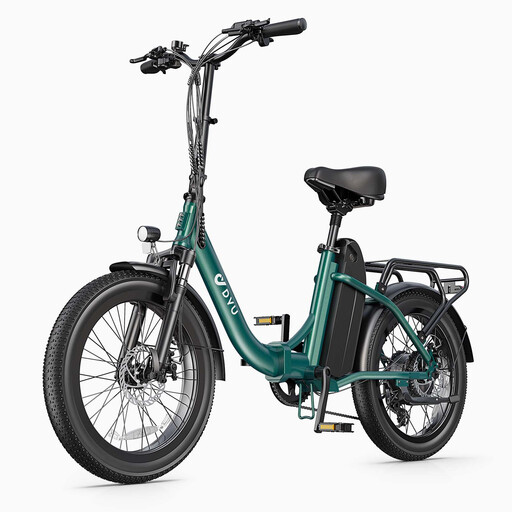
Why It Stands Out The DYU C9 is distinguished by its compact design as a folding fat bike. With its 20-inch tires and folding mechanism, it is a practical solution for commuters who need to take their bike on public transport or store it in a small apartment or office.
Pros
Who It's For This model is aimed at urban commuters and recreational riders looking for a flexible and easy-to-handle 20-inch fat bike e-bike for short to medium distances who value portability.
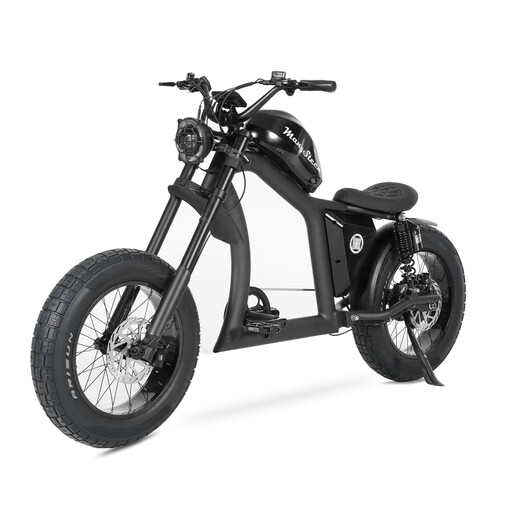
Why It Stands Out The Mangosteen FT02 is designed as a robust all-terrain electric bike. It combines a high-capacity battery for extended tours with dual suspension and hydraulic disc brakes, making it a comfortable and safe companion on a wide variety of surfaces.
Pros
Who It's For Ideal for riders who want a versatile and comfortable fat tire e-bike for adults for long tours, daily commuting, and light off-road excursions. Its comprehensive features appeal to users who prioritize range and comfort.
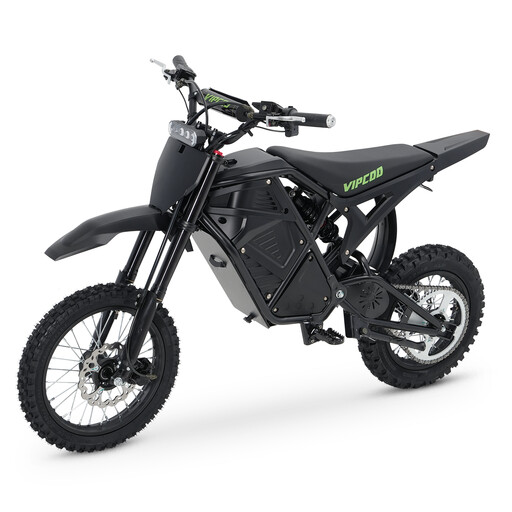
Why It Stands Out The VIPCOO H3 is a pure off-road vehicle designed for use away from public roads. With its extremely powerful motor and robust full suspension, it is engineered for maximum performance on private property and dedicated tracks.
Important Note: This vehicle is a high-performance electric off-road motorcycle (Electric Dirt Bike) and is not approved for use on public roads. It does not require vehicle registration but may only be used on private land or designated off-road tracks.
Pros
Who It's For This model is aimed exclusively at experienced off-road enthusiasts and adventurers seeking a high-performance sport vehicle for use on motocross tracks or private property. It is not an option for daily commuting or touring on public roads.
The models presented here cover only a fraction of the available spectrum. If you are looking for other alternatives or different types of bicycles, you can find a broader selection in our comprehensive category.
Discover more models in the Electric Bikes for Adults category
An e-bike with fat tires offers several benefits. The large contact patch of the tires provides increased stability and traction, especially on loose or uneven surfaces like sand, snow, gravel, or muddy forest trails. Additionally, the voluminous tires act as a natural suspension, noticeably increasing ride comfort by effectively dampening small bumps.
The range varies greatly and depends on the battery capacity (in Wh), rider weight, the selected level of assistance, the terrain, and even the outside temperature. Models with batteries around 500 Wh often achieve ranges between 40 and 70 km (25-43 miles), while versions with larger batteries (750 Wh or more) can exceed 100 km (62 miles) under optimal conditions. Manufacturer specifications serve as a good benchmark.
For most fat bike e-bikes sold as pedelecs, you do not need a license. The requirement is that the motor does not exceed a nominal continuous power of 250 watts and the pedal assistance cuts off at 25 km/h (15.5 mph). In many regions, these models are legally equivalent to traditional bicycles. More powerful or faster models (S-Pedelecs or pure off-road bikes) are subject to different regulations and may require a license, insurance, and registration, or may not be permitted on public roads at all.