
Lieferung heute & morgen

Qualitätsgarantie

Willkommens-Angebote freischalten: KOSTENLOSE Lieferung | Bis zu 80 % RABATT | Kostenlose 30-Tage-JoyPlus-Testphase
App herunterladen
A bike that glides effortlessly over sand, snow, and uneven forest trails significantly expands your opportunities for outdoor adventure. A fatbike, also known as a fat tire mountain bike, is designed for precisely these conditions. Its signature, extra-wide tires provide traction and stability where conventional bikes reach their limits.
This guide will help you understand the essential features of a fatbike. Our goal is to provide an objective foundation so you can make an informed decision when you're ready to buy a fatbike—whether for yourself or as a fatbike for kids.
Choosing the right model depends on several technical factors. Instead of being swayed by marketing promises, it's wise to focus on the core components that are crucial for performance and durability.
Wheel size is one of the first and most important criteria. It significantly determines the bike's handling characteristics and the rider height it's suited for.
An all-terrain bike must perform reliably, especially when the ground gets challenging.
The frame is the heart of the bike. Many entry-level and recreational fatbikes use a Hi-Ten steel frame. This material is known for its high durability and longevity. It effectively absorbs vibrations from the ground, contributing to a more comfortable ride. For a bike intended for use on snow and sand as well as forest trails, a steel frame provides a solid and resilient foundation.
Based on the criteria above, we have curated a selection of models that stand out for their functional features and wide range of applications.
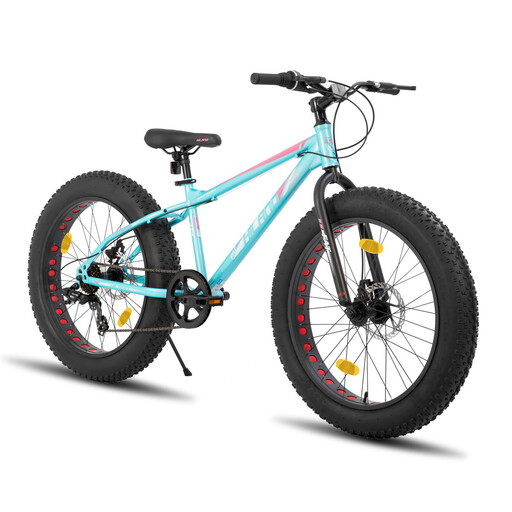
Why it stands out: This model is a classic fat tire bike for adults, designed for versatility and durability. It combines all the essential features needed to get started in the world of fatbiking.
Pros:
Who is it for? Adults and teens looking for a versatile and robust MTB fatbike for recreational rides on challenging surfaces.
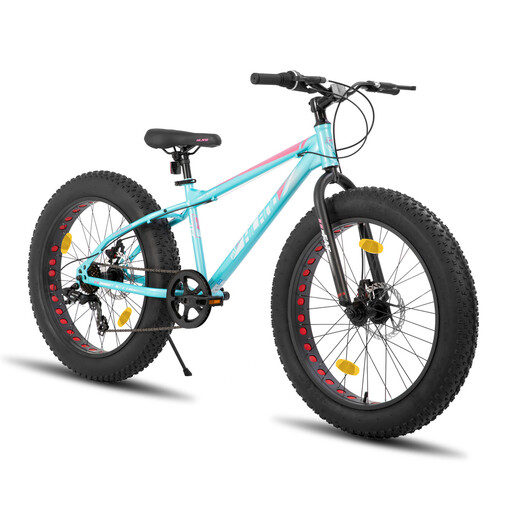
Why it stands out: The 24-inch HILAND fatbike bridges the gap between kids' bikes and full-sized adult models. It offers the same robust features in a more compact format.
Pros:
Who is it for? Teens and shorter adults looking for a fully-equipped fat tire mountain bike tailored to their height.
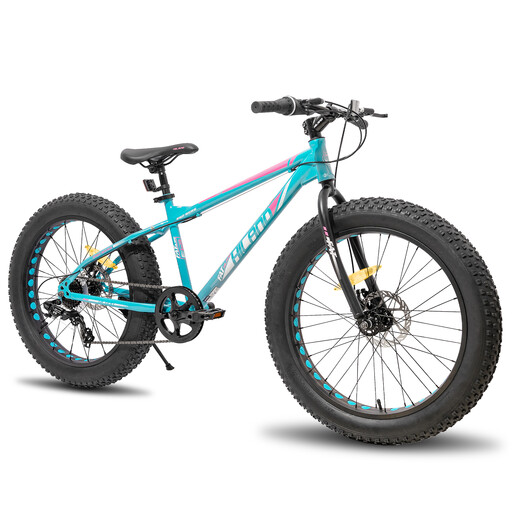
Why it stands out: This kids' fatbike allows even the youngest adventurers to keep up on any terrain. It's built tough and equipped with kid-friendly yet functional components.
Pros:
Who is it for? Kids who want a durable and cool-looking bike for adventures off the beaten path.
A fatbike is an excellent choice for versatile riding fun. However, if your child will be riding mainly on forest trails or in bike parks, a classic mountain bike could be a suitable alternative. They are often lighter and more agile than a fatbike.
Discover our selection of Kids' Mountain Bikes to find the perfect model for your child's adventures.
The biggest advantage is the superior traction and flotation of the wide tires. This allows a fatbike to ride on surfaces that are impassable for regular bikes, such as deep sand, snow, or very muddy ground. Additionally, the large air volume in the tires provides natural suspension, which increases ride comfort on uneven trails.
You can ride a fatbike on the road, but it's not the most efficient choice for that purpose. The rolling resistance of the wide tires is significantly higher on smooth pavement than that of a city or road bike, making it more strenuous to ride. The all-terrain bike truly shines off the beaten path.
The correct size primarily depends on the child's height and inseam. As a general guideline: a 20-inch fatbike is often suitable for children between 120 cm and 135 cm tall. A 24-inch fatbike typically fits children and teens between 135 cm and 155 cm. It is always advisable to check the manufacturer's specific size recommendations.
From your Joybuy Product Recommendation Officer