
Lieferung heute & morgen

Qualitätsgarantie

Willkommens-Angebote freischalten: KOSTENLOSE Lieferung | Bis zu 80 % RABATT | Kostenlose 30-Tage-JoyPlus-Testphase
App herunterladen
A fatbike, with its unmistakably wide tires, promises adventure off the beaten path. Whether on sand dunes, snowy trails, or muddy forest paths, this all-terrain bicycle delivers traction and stability where conventional mountain bikes reach their limits. But the market is crowded, and not every mountain bike with thick tires lives up to its promise. Before making a purchase, it's crucial to understand the common pitfalls that often lead to disappointment and unnecessary expense.
Two common problems when choosing a fatbike are inferior components and an ill-fitting frame design. Many budget-friendly models cut corners on critical parts like the drivetrain or brakes. An unreliable brake system isn't just an annoyance; it's a significant safety hazard, especially on rough terrain. Likewise, a poorly designed frame, while visually appealing, can lead to an uncomfortable riding position and inefficient power transfer on longer rides.
To ensure you purchase a durable and functional fat tire bike, you should closely examine three core areas. These features are the primary determinants of your bike's performance, safety, and ride comfort.
The frame is the heart of any bicycle. For fatbikes, two materials are primarily used: Hi-Ten steel and aluminium.
The frame geometry must match your body size and intended use. A 26-inch fatbike is a common size for adults, while a 20-inch fatbike is better suited for teenagers or smaller individuals. Look for a geometry that allows for an upright to slightly athletic riding position to prevent fatigue on long tours.
For a heavier bike for snow and sand, reliable brakes are critically important. Rim brakes are unsuitable for the wide rims of a fatbike and are unreliable in wet or muddy conditions. Therefore, an MTB with disc brakes is the only sensible choice.
A distinction is made between mechanical and hydraulic disc brakes:
For most fatbike applications, mechanical disc brakes offer an excellent balance of performance, reliability, and ease of maintenance.
The drivetrain allows you to adapt the gear ratio to the specific incline and surface. A proven component group, such as one from Shimano, is an indicator of quality and reliability. A 7-speed drivetrain, often found on models like the HILAND Roon, provides a sufficient range for most recreational and touring applications. It is straightforward to operate and robust enough for off-road use.
Based on the quality criteria mentioned, we have identified several models that are well-suited for different user profiles.
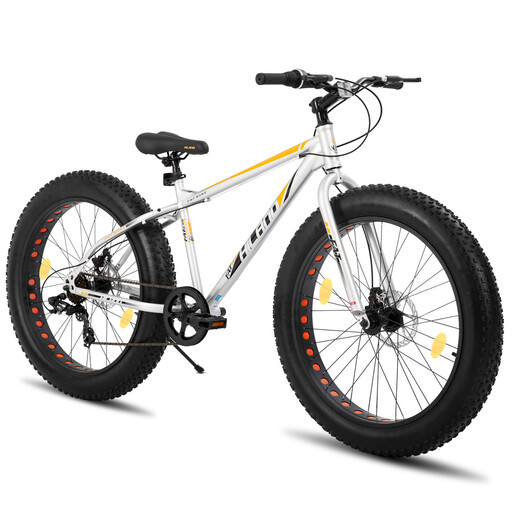
Why This Fits Their Persona: Ideal for adults seeking a versatile bike for weekend trips on forest trails, the beach, or in the snow. It offers a solid set of features for challenging terrain without requiring a professional athlete's budget.
This model avoids the pitfall of inferior components by using a Shimano 7-speed drivetrain and dual mechanical disc brakes. The robust Hi-Ten steel frame is designed for durability.
The 4.0-inch wide tires provide excellent grip and stability. The steel frame ensures good shock absorption on uneven paths.
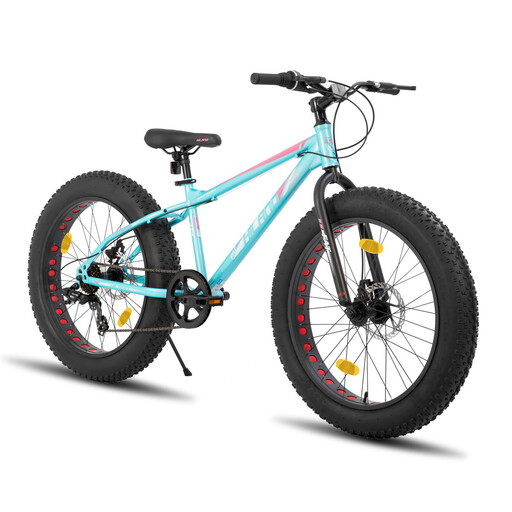
Why This Fits Their Persona: Perfect for newcomers to the world of fatbikes who are looking for a reliable ride for their first off-road experiences without making a large investment. It offers all the essential features of a true fatbike at an accessible price point.
This bike relies on a solid base configuration with brand-name components (Shimano derailleur) and a durable steel frame. This prevents the purchase of an unreliable no-name product that quickly loses its value.
Offers excellent value for money for beginners. The 85% pre-assembly makes setup easier for individuals with less technical experience.
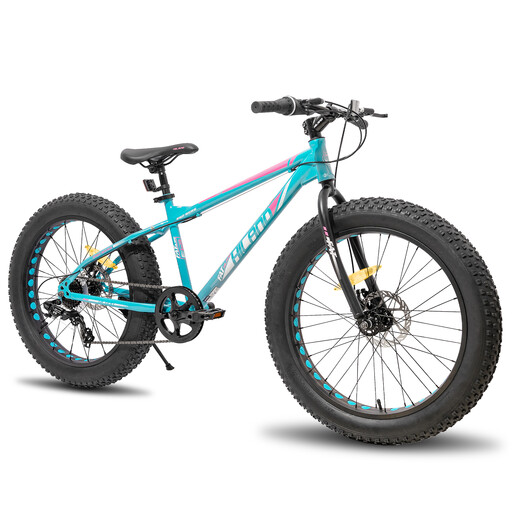
Why This Fits Their Persona: For families who explore nature together and need a safe, robust bicycle for their children that can keep up with the adults' bikes. The 20-inch size is ideal for younger riders.
Unlike many kids' bikes designed as toys, this is a fully-fledged mountain bike with thick tires. It features crucial safety components like disc brakes and a functional Shimano drivetrain.
Allows children and teenagers to ride safely on challenging terrain. The equipment is designed for durability and functionality, not just for looks.
We have compiled a complete, up-to-date list of products that fully meet these strict selection criteria and safety standards.
1. How difficult is it to assemble a fatbike? Most fatbikes, like the HILAND models featured here, are delivered 85% pre-assembled. Final assembly typically involves attaching the front wheel, handlebars, pedals, and saddle. With the included tools and instructions, this can usually be done in about 25 to 30 minutes. It is recommended to check that all screws and components are securely tightened before the first ride.
2. Are fatbikes only suitable for snow and sand? No, that's a common misconception. While they truly excel in these niche environments, fatbikes are extremely versatile all-terrain bicycles. They are excellent for muddy trails, loose gravel paths, and uneven forest terrain. The wide tires provide extra grip and ride comfort on almost any loose surface.
3. What tire pressure should a fatbike have? Tire pressure is a critical factor on a fatbike and is adjusted depending on the surface. As a rule of thumb: