People who make their own popcorn
You want to control how much fat you add and are happy to spend time preparing popcorn kernels using a suitable appliance.


If you want to add as little fat as possible this Father’s Day, starting with popcorn kernels you prepare yourself is a sensible choice: you decide how much oil, butter and seasoning to add. Ready-to-eat and microwave popcorn save time, but if you’re watching your fat intake, check the nutrition information for the specific product. Compare similar popcorn products per 100 g, and remember to factor in anything you add when making popcorn yourself.
You want to control how much fat you add and are happy to spend time preparing popcorn kernels using a suitable appliance.
You’re looking for an easy option for a Father’s Day outing or visit. Before choosing, compare the fat, sugar and salt per 100 g.
You’re after sweet, salted or savoury popcorn, and check the nutrition information for similar varieties rather than choosing on flavour description alone.
First decide whether you want to choose the ingredients yourself or serve popcorn with minimal preparation. Then compare the nutrition information for similar products per 100 g. If you’re making popcorn yourself, remember to include any oil, butter or other additions.
A good fit if: You want to control how much fat you add.
The trade-off: You’ll need time and a suitable appliance; adding oil or butter changes the nutritional values.
A good fit if: You want to serve popcorn without having to prepare it.
The trade-off: The recipe is fixed. Only comparing specific products will tell you whether one variety contains less fat.
A good fit if: You want to prepare popcorn just before serving and have a microwave to hand.
The trade-off: The preparation method doesn’t tell you how much fat a variety contains. Take care of hot steam when opening the bag, too.
| Criteria | What to check when buying | Who it matters to |
|---|---|---|
| Added fat and fat content | Compare fat per 100 g in similar varieties. If you’re making popcorn yourself, include the additions you actually use. | When I make popcorn myself, I want to decide whether to add fat and how much. This is a priority for around 46% of consumers. |
| Serving in a hurry | For ready-to-eat and microwave varieties, compare fat, saturates, sugar and salt per 100 g. | For an outing or a visit, I need popcorn that doesn’t take long to prepare, but I don’t want to rely on the product type alone. This is the main concern for around 36% of consumers. |
| Flavour and labelling | Check the nutrition information for similar flavours. If a product is labelled ‘reduced fat’, read the comparison statement too. | I’m looking for a sweet, salted or savoury variety and want to understand its fat content as well as enjoy the flavour. This is the priority for around 18% of consumers. |
‘Reduced fat’ means a reduction compared with a similar product; it doesn’t automatically mean the product is low in fat overall.
Read the comparison statement and check how many grams of fat per 100 g are listed on the pack.
The preparation method alone doesn’t tell you that. EDEKA lists 21 g of fat and 10 g of saturates per 100 g for a salted GUT&GÜNSTIG microwave popcorn. These figures apply to this product, not to all microwave popcorn.
Check the nutrition information and ingredients on the specific pack.
When comparing popcorn, look at fat and saturates, as well as sugar and salt in sweet or salted varieties. According to the Verbraucherzentrale, the Nutri-Score is useful for comparisons only within the same product group or between products intended for the same use.
Use the nutrition table per 100 g as your starting point, and the Nutri-Score as an additional guide if helpful.
The range and availability of individual popcorn products can vary by location.
Before your Father’s Day shop, check whether your chosen variety is available at your local branch or for delivery to your address.
A useful starting point if you’re looking for microwave popcorn at a supermarket.
REWE has a popcorn category that includes kernels, ready-to-eat varieties and microwave popcorn.
Lidl presents making your own popcorn as an alternative to ready-seasoned products.
Here, popcorn kernels for making your own are shown alongside ready-to-eat caramelised popcorn. If you’re comparing fat content, remember that dry kernels and the finished snack are not like-for-like.
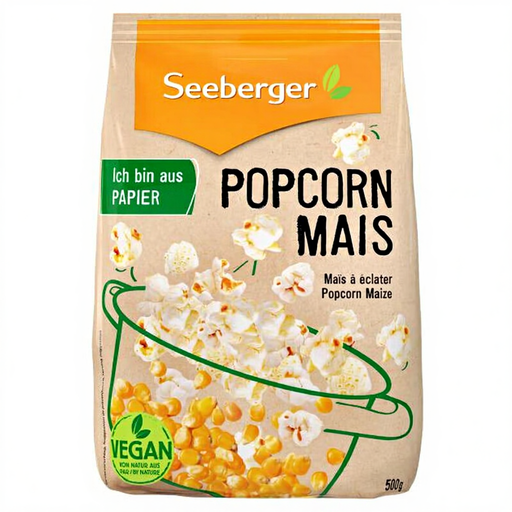 No image available
A good option if you want to make your own popcorn and choose the seasoning. The suggested stovetop method uses oil, so the nutrition information for the kernels doesn’t reflect that of the finished popcorn. If you have a peanut or tree nut allergy, check the pack labelling.
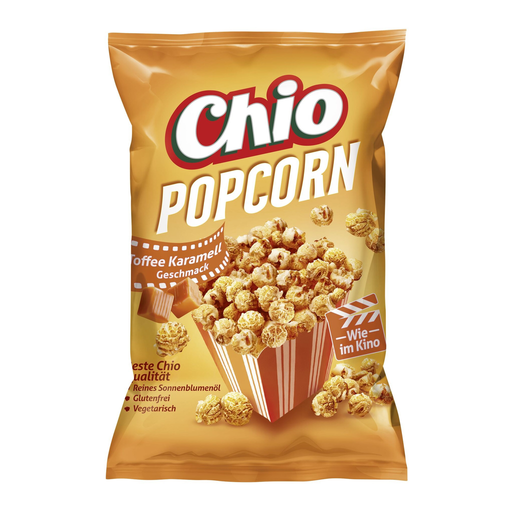 No image available
A good option if you want to serve sweet popcorn without preparing it. This caramelised product contains 52 g of sugar per 100 g, so bear that in mind if you’re comparing sugar as well as fat.
Compare the fat and saturates per 100 g in similar popcorn products. The Verbraucherzentrale lists these as part of the nutrition information on packaged foods. For sweet and salted varieties, it’s also worth checking sugar and salt.
No. The claim refers to a comparison with another suitable product and doesn’t, on its own, mean the popcorn has a low fat content. Check the comparison statement and the amount of fat per 100 g.
EDEKA describes making popcorn in an air fryer with a small amount of fat. First check whether your appliance’s instructions allow this, and don’t overfill the basket. Oil, butter and other additions affect the nutrition information for the finished popcorn.
Follow the preparation instructions on the bag and take care of hot steam when opening it. REWE specifically warns of this for its Beste Wahl microwave popcorn and recommends opening the bag facing away from your body.
No. According to the Verbraucherzentrale, the Nutri-Score is intended for comparisons within the same product group or between products for the same use. It complements the nutrition information and ingredients list, but doesn’t replace them.