
Lieferung heute & morgen

Qualitätsgarantie

Willkommens-Angebote freischalten: KOSTENLOSE Lieferung | Bis zu 80 % RABATT | Kostenlose 30-Tage-JoyPlus-Testphase
App herunterladen
A feather and down duvet 155x220 cm suits many single beds and offers extra length compared to a standard size. However, your choice shouldn’t be based solely on price or an especially fluffy product description. What really matters are fill weight, material distribution, the cover, care instructions, and verifiable certifications.
When it comes to duvets, three common buying mistakes can lead to unnecessary spending:
The dimensions 155x220 cm are ideal for someone who needs more foot room or prefers a longer duvet. Before buying, check that your existing duvet cover has the same measurements. A cover in 155x220 cm prevents the duvet from slipping or bunching up at the ends.
For warmth selection, the fill weight is key:
According to the manufacturer, the DOWNFOCUS summer duvet has a fill weight of 200 GSM. The product uses a blend of 90 per cent feathers and 10 per cent down, as stated by the manufacturer.
A duvet with a feather and down filling combines two different properties. Feathers are more shape-retaining and give the duvet more structure. Down has a finer, softer structure and is often used to reduce weight.
So don’t just compare the down content – also consider:
A cassette or box-quilted pattern can help distribute the filling more evenly. Even so, the duvet should be regularly fluffed up and aired according to the care instructions.
For people with sensitive skin or a house dust mite allergy, a tightly woven cotton cover can be of interest. According to the manufacturer, the DOWNFOCUS duvet features a particularly tightly woven cover designed to act as a barrier against house dust mites. This can support the choice of a down duvet for allergy sufferers, but it does not guarantee individual tolerance.
Also look for verifiable evidence:
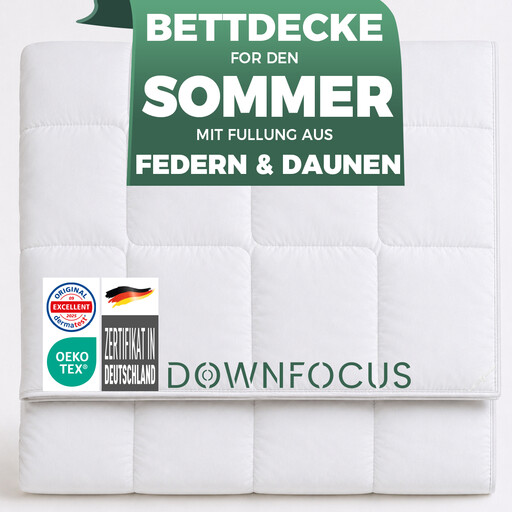
Why this product fits the profile: This model is designed for warm nights and offers a 155x220 cm size that suits many single beds.
The 200 GSM specification makes the seasonal classification clearer than a simple label like “airy” or “light”.
According to the manufacturer: 90 per cent feathers, 10 per cent down, plus OEKO-TEX and RDS certification.
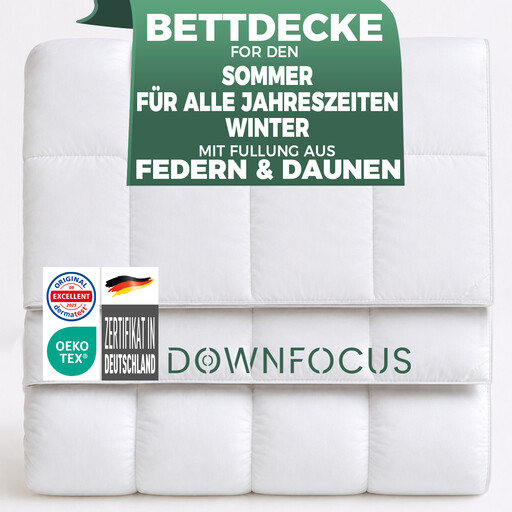
Why this product fits the profile: The two-part design is aimed at those who want to combine a summer duvet with an extra layer for cooler months.
Seasonal use can be better planned thanks to the stated fill weights of 200 GSM and 450 GSM.
According to the manufacturer: 2-in-1 concept, cotton cover, plus OEKO-TEX and RDS certification.
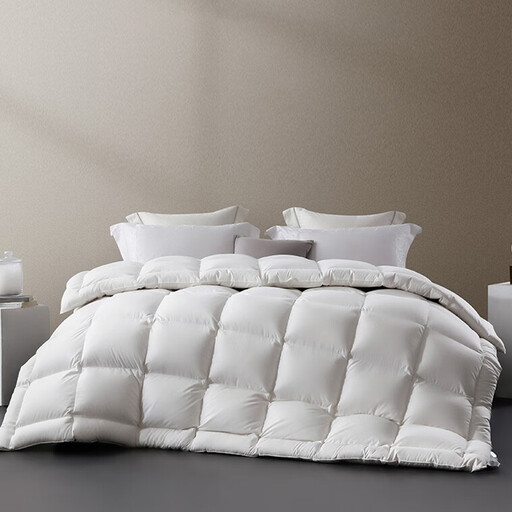
Why this product fits the profile: According to the product name, this duvet is intended for summer, autumn and winter, as well as for particularly warm sleeping situations.
The product name clearly states the intended use. However, you should still check the fill weight and care label before buying.
A suitable length of 220 cm and a purpose designed for multiple seasons, as stated in the product name.
A feather and down duvet shouldn’t be washed unnecessarily often. Regular airing in a dry environment and gentle fluffing help to remove moisture and distribute the filling. Direct, intense heat can damage sensitive fillings and the cover.
Always check the care label before cleaning. Some models are machine-washable, while others should be professionally cleaned. Use a sufficiently large duvet cover and avoid storing the duvet in a very tight space for long periods. With proper care, a duvet can last for several years; the actual lifespan depends on the material, usage, cleaning and storage.
We’ve put together a complete, regularly updated list of products that fully meet these strict selection criteria and the safety regulations in force in the EU.
A lightweight summer duvet 155x220 with a relatively low fill weight is usually more appropriate than a thick all-season duvet. The specific suitability also depends on the room temperature, your bedding and your personal warmth preference. The GSM specification offers better guidance than general terms like “extra airy”.
With gentle care, regular airing and suitable storage, a feather and down duvet can be used for several years. Clumped filling, persistently thin patches, damaged seams or a cover that no longer closes are signs that the duvet should be inspected more closely or replaced.
A hypoallergenic duvet or a tightly woven cover can be a relevant product feature for people with allergies or sensitive skin. However, tolerance is individual. Look for specific material details, care instructions and certificates, and seek medical advice if you have severe symptoms.