
Lieferung heute & morgen

Qualitätsgarantie

Willkommens-Angebote freischalten: KOSTENLOSE Lieferung | Bis zu 80 % RABATT | Kostenlose 30-Tage-JoyPlus-Testphase
App herunterladen
Felt-tip pens are essential for school, home, journalling and creative projects. The range extends from simple colouring pens to extensive sets with brush pens, fineliners or dual-tip marker nibs. However, not every option is suitable for every use.
Three common buying misconceptions frequently lead to disappointing purchases:
If you are looking for felt-tip pens for children, school or longer creative sessions, you should therefore compare the technical details and safety information before buying.
The tip determines how precisely and versatilely a pen can be used.
For children’s felt-tip pens, a robust, rounded tip is often more practical than a very fine one. For lettering and detailed drawing, brush pens or markers with a fineliner are a better choice.
Water-based ink is common in many colouring and writing pens. It generally has a milder smell than alcohol-based ink and is suitable for paper, card and notebooks. For clothing and other textiles, remember that claims such as ‘washable from most fabrics’ should not be treated as a guarantee that every material will remain completely stain-free.
Practical tips:
Some colourful felt-tip pens look vivid on thin school or photocopying paper, but may show through on the reverse side. For journalling and marker cards, paper with a higher basis weight is therefore recommended.
For longer writing or colouring sessions, ergonomic felt-tip pens with a triangular or thicker barrel may feel more comfortable in the hand. This is particularly relevant for schoolchildren and students who regularly highlight, colour or organise notes by colour.
For children aged 3 and over, parents should also look out for the following:
According to STAEDTLER product information, certain Triplus Color models have a ventilated cap complying with ISO 11540 and BS 7272-1/2. These standards relate to the design of safety caps and do not replace the necessary supervision of young children.
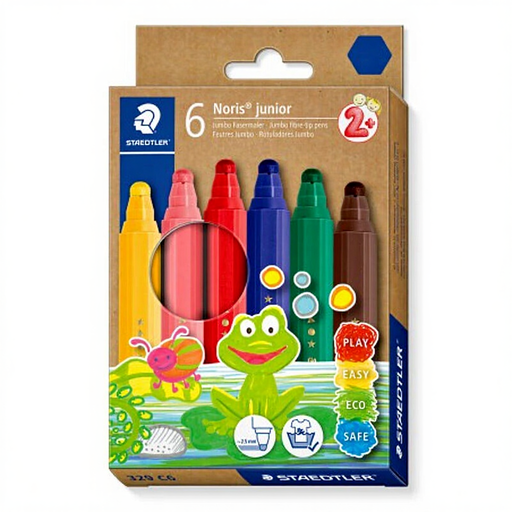
Why this product suits the profile: The 6-piece set offers a manageable selection of colours for nursery, home or first colouring projects.
The broad, rounded tip is designed for even colouring rather than promoting an unnecessarily large number of specialist tips.
6 colours, rounded fibre tip, water-based ink that is washable according to the product information, plus a ventilated safety cap.
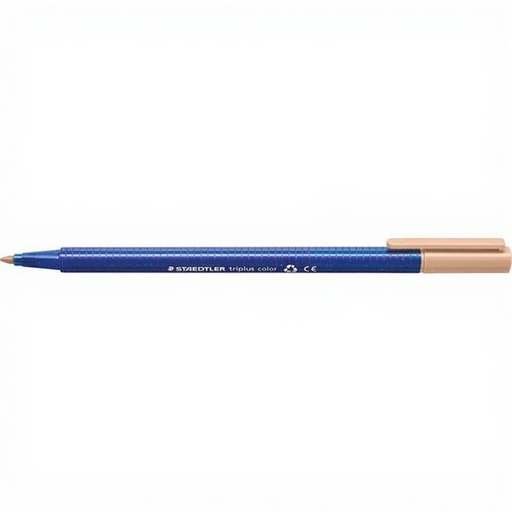
Why this product suits the profile: For regular writing, colouring and colour-coded notes, this model combines a triangular barrel with a defined line width.
According to the product information, the synthetic tip is pressure-resistant; the ink is water-based and washable from most textiles.
Triangular barrel, line width of around 1.0 mm, water-based ink and DRY-SAFE specification according to ISO 554.
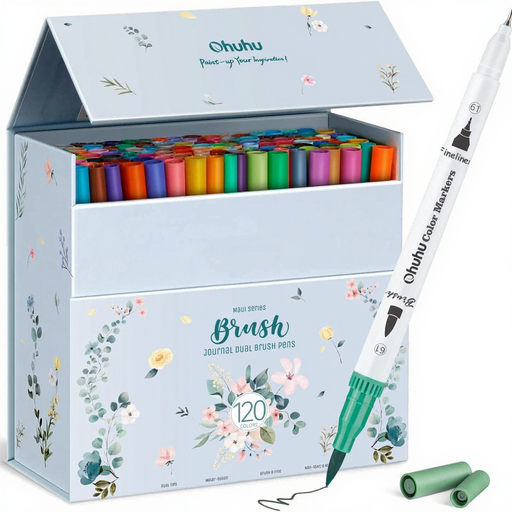
Why this product suits the profile: This set is aimed at hobby artists, lettering enthusiasts and users who need a wide range of numbered colours for extensive projects.
The two tips are clearly specified: a 0.4 mm fineliner and a 1–6 mm brush pen. A colour chart makes it easier to choose the right shade before use.
120 colours, dual-tip design, water-based ink, storage case and eight replacement tips according to the product information.
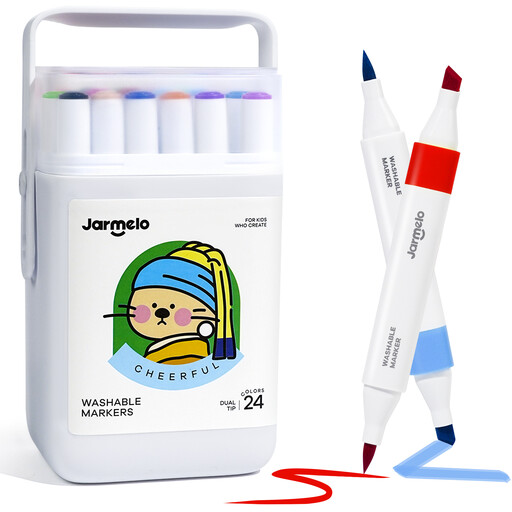
Why this product suits the profile: The combination of 24 colours and two tips is suitable for colouring, drawing and simple lettering projects at home.
The product information specifies washability at 90% for skin and most fabrics. Nevertheless, stains should be treated as soon as possible.
24 dual-tip markers with brush and chisel tips, water-based ink, ventilated caps and storage case.
We have put together a complete, regularly updated list of products that fully meet these strict selection criteria and the safety regulations applicable in the EU.
The actual service life depends on the ink, tip, paper and storage conditions. Even washable felt-tip pens will dry out if they are regularly left uncapped. After colouring, the caps should click securely into place. Storing many water-based pens horizontally can help ensure an even distribution of ink.
With brush pens, replacement tips should only be used if they are intended for the particular model. Pressing hard on rough paper can deform the brush tip more quickly. Before buying a large set, it is also worth checking the colour numbers, replacement tips and included storage solution.
Suitable models have an appropriate age recommendation, a ventilated safety cap and clear warnings. Broad, robust tips are usually easier for younger children to handle. Use should be appropriate to the child’s level of development, and young children should be supervised.
No. Water-based ink may be easier to remove, but washability depends on the fabric and how long the stain has been left. Claims such as ‘washable from most textiles’ are more precise than a blanket guarantee. Stains should be treated as quickly as possible in accordance with the care instructions.
Replace the cap fully after every use, store the pens in a dry place and preferably horizontally, and protect them from direct heat. A DRY-SAFE specification may increase their tolerance of forgotten caps, but it does not replace closing the pens after use.