
Lieferung heute & morgen

Qualitätsgarantie

Willkommens-Angebote freischalten: KOSTENLOSE Lieferung | Bis zu 80 % RABATT | Kostenlose 30-Tage-JoyPlus-Testphase
App herunterladen
Felt-tip pens vary considerably in their nibs, ink, colour range and durability. So a large marker set won’t necessarily suit every purpose. What matters for children is different from what you need for illustration, calligraphy or a bullet journal.
Three common buying misconceptions often lead to the wrong choice:
The nib determines whether a pen is suitable for colouring, writing or adding detail.
If you’re mainly looking for drawing pens or calligraphy pens, don’t just focus on the number of colours. Check the specific line width and how well the nib holds its shape.
Water-based markers generally have a less noticeable smell than alcohol-based products. They’re often suitable for paper, but can bleed through thin pages or roughen the paper. For watercolour effects, use water-soluble colours on suitable watercolour or mixed-media paper.
Alcohol-based markers usually dry quickly and can be used for layering and blending. However, they need a suitable surface and should be used in a well-ventilated room. For children and school use, water-based colouring pens that are explicitly labelled as washable are usually more practical.
Pigmented, waterproof ink is useful for permanent drawings and certain lettering applications. According to the manufacturer’s product information, the Faber-Castell Pitt Artist Pen set contains pigmented, waterproof and permanent drawing ink. This is a technical feature, but it doesn’t mean the ink should be used on unsuitable surfaces.
For children, parents should look for ventilated safety caps, an appropriate age recommendation and pens that close securely. The EN 71 standard covers toy safety requirements; it should only be mentioned when it’s explicitly stated in the product information. According to the manufacturer, the Crayola Mini Kids set has ventilated, EN 71-certified safety caps.
Caps should be kept away from children under three, as small parts can be swallowed. Always replace caps as soon as you’ve finished using the pens. Brush pens and dual-tip markers are often best stored horizontally, as advised by the manufacturer. This can help keep the ink evenly distributed between the tips.
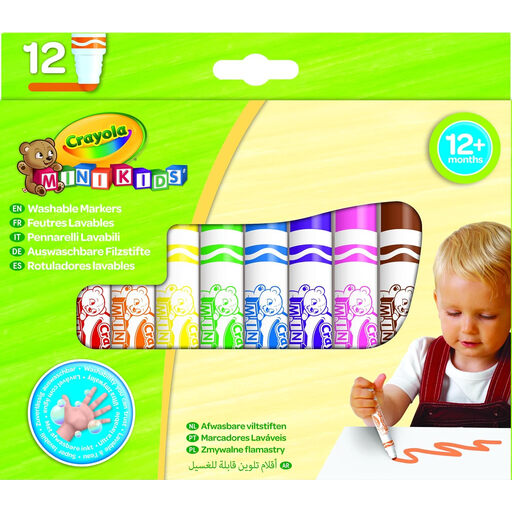
Why this product suits this user: The set includes 12 colours, an easy-to-grip maxi design and a rounded, pressure-resistant nib for first attempts at drawing on paper.
The product information describes the ink as water-based, non-toxic and especially easy to wash off. However, the set isn’t intended for use on walls or furniture, as stated in the product information.
12 shades, an easy-grip maxi design and ventilated safety caps, according to the manufacturer.
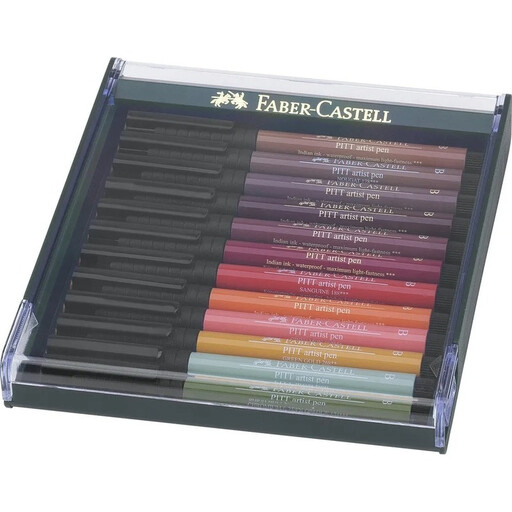
Why this product suits this user: The 12 earth tones and flexible brush pen nib are ideal for illustration, hand lettering, sketching and bullet journalling.
The product description explicitly states that the ink is permanent and waterproof. This makes it clear that these pens aren’t designed to be washable felt-tip pens.
Flexible B nib, 12 earth tones and pigmented drawing ink, according to the manufacturer.
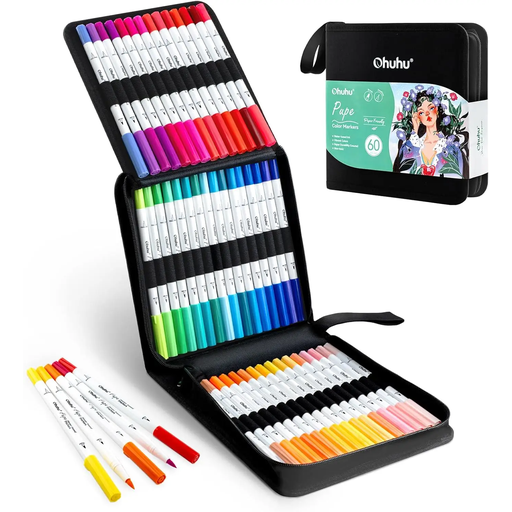
Why this product suits this user: 59 colours and a colourless blender cover a wide range of lettering, journalling and illustration projects.
The two nibs make the intended uses clear: a 0.4 mm fineliner for details and a 1–5 mm brush pen for broader strokes.
60 pens including a blender, water-based ink and a storage case, according to the product description.
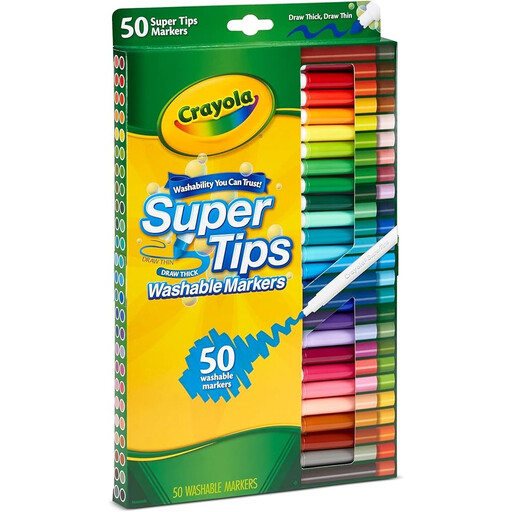
Why this product suits this user: The wide choice of colours is ideal for school projects, colouring sheets, writing and drawing on suitable paper surfaces.
The product information describes the ink as washable and water-based. Even so, protect fabrics and surfaces, as washability isn’t guaranteed for every material.
50 shades, fibre tips and suitable for colouring, writing and drawing.
We’ve put together a complete, regularly updated list of products that meet these strict selection criteria and fully comply with the safety regulations in force in the EU.
Before buying a marker set, ask yourself:
Look for products with a clear age recommendation, caps that close securely or are ventilated, and water-based ink. Washable felt-tip pens can make cleaning easier, but should still only be used on the intended paper surfaces. Take extra care with children under three, as small parts can be swallowed.
Their lifespan depends on how they’re used, the amount of ink, the nib and the cap. Leaving the caps off will make the ink dry out more quickly. With dual-tip marker sets, make sure both ends are securely closed after every use. It isn’t possible to give a general estimate of how long they’ll last without information from the manufacturer.
The price depends on factors such as the number of colours, the type of nib, the ink base and accessories such as a case or replacement nibs. A smaller set is often enough for basic schoolwork. If you want to combine brush pens, fineliners and colour blending, compare the nibs and paper types you need before choosing based on the number of colours.